Our Top Picks
Thinking about playing Teenage Mutant Ninja Turtles: Shredder’s Revenge on PC and wondering what hardware you actually need? The short answer is: very little. This is a 2D pixel-art beat-em-up in the spirit of the arcade originals, released in June 2022, and its official requirements are among the lowest you will find for any modern release — the minimum graphics list even includes integrated Intel HD 4600 graphics. Even so, there is still a difference between a PC that technically launches the game and one that holds a steady frame rate through a six-player co-op session. This guide breaks down the official PC requirements for Teenage Mutant Ninja Turtles: Shredder’s Revenge, the best GPU for each resolution, and build recommendations that make sense for a game this light.
How Demanding Is Teenage Mutant Ninja Turtles: Shredder’s Revenge?
Teenage Mutant Ninja Turtles: Shredder’s Revenge is one of the lightest games on PC. It renders hand-drawn sprite work on a fixed side-scrolling plane rather than a fully 3D world, so there is no heavy lighting, no complex geometry, and no ray tracing to budget for. The official minimum calls for a 2011-era Intel Core i3-2100 or AMD FX-4300, 4 GB of RAM and just 1 GB of storage, with graphics as modest as an Intel HD 4600 integrated chip. The recommended specification only steps up to an Intel Core i5-2400 or AMD FX-6300 and a GeForce GTS 450-class card. In practice that means almost any desktop or laptop sold in the last decade can run it, and running at 1080p, 1440p or even 4K is limited far more by your display and cable than by your graphics card.
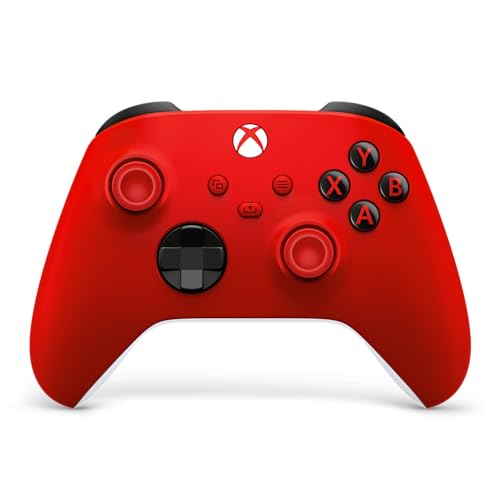
XBOX Wireless Gaming Controller | Pulse Red | Textured triggers and bumpers, Hybrid D-pad, XBOX Wireless, Bluetooth, USB-C, Play across Console & PC & Cloud Devices
Chosen because it specifies Pulse Red and Consoles.
View on Amazon
8Bitdo Ultimate 2C Wireless Controller for Windows PC and Android, with 1000 Hz Polling Rate, Hall Effect Joysticks and Triggers, and Remappable L4/R4 Bumpers (Green)
Chosen because it specifies with 1000 Hz Polling Rate and Hall Effect Joysticks and Triggers.
View on Amazon
Xbox Wireless Gaming Controller | Elite Series 2 | Black | Adjustable Thumbsticks, Trigger Locks, Interchangeable Components, XBOX Wireless, Bluetooth, USB-C
Chosen because it specifies Elite Series 2 and Black.
View on Amazon
GameSir Nova Lite 2 Wireless PC Controller Hall Effect Sticks | Hall Effect Triggers,2.4G & Wired 1000Hz Polling Rate, Remappable Buttons - Compatible with PC/Switch/Steam/Android
Picked as a relevant option in this category.
View on AmazonTeenage Mutant Ninja Turtles: Shredder’s Revenge Official PC System Requirements
| Component | Minimum (official) | Recommended (official) |
|---|---|---|
| OS | Windows 7, 64-bit | Windows 10, 64-bit |
| Processor | Intel Core i3-2100 or AMD FX-4300 | Intel Core i5-2400 or AMD FX-6300 |
| Memory | 4 GB RAM | 4 GB RAM |
| Graphics | NVIDIA GeForce GT 320, 1 GB or AMD Radeon HD 5570, 1 GB or Intel HD 4600 | NVIDIA GeForce GTS 450, 1 GB or AMD Radeon R7 250, 1 GB or Intel HD 630 |
| Storage | 1 GB available space | 2 GB available space |
Source: the official Teenage Mutant Ninja Turtles: Shredder's Revenge Steam store listing (app 1361510), checked October 2026. Publishers can update these specs after patches.
Those are the published figures from the store page, and they are unusually low by modern standards: the minimum graphics list includes integrated Intel HD 4600 graphics, memory is 4 GB at both tiers, and the whole install fits in a couple of gigabytes.
Best GPU for Teenage Mutant Ninja Turtles: Shredder’s Revenge by Resolution
1080p
At 1080p you are already well past what Teenage Mutant Ninja Turtles: Shredder’s Revenge needs. The official minimum graphics — GeForce GT 320, Radeon HD 5570 or Intel HD 4600 — can drive this game at 1080p, so any modern discrete card is enormous headroom. If you want a card that will also carry you through far heavier games, the AMD Radeon RX 7600 is a comfortable pick, and current-generation options such as the NVIDIA GeForce RTX 5060 or the AMD Radeon RX 9060 XT are more than enough for high-refresh 1080p here. Upscaling such as DLSS or FSR is not needed for a 2D title like this; leave it off unless you specifically want the lower power draw.
1440p
1440p changes very little for a sprite-based beat-em-up. The AMD Radeon RX 7600 still has headroom to spare at 1440p in Teenage Mutant Ninja Turtles: Shredder’s Revenge, and much older cards such as a GeForce GTX 1050 Ti or Radeon RX 570 also run it comfortably. If you are buying for a high-refresh 1440p monitor and also play demanding 3D games, something in the RTX 5070 or Radeon RX 9070 class makes more sense — but for this game specifically, that is well beyond what is required.
4K
4K is not the hurdle it usually is. Teenage Mutant Ninja Turtles: Shredder’s Revenge is a light 2D title, so even a modest card renders it at 3840×2160 without trouble — the NVIDIA GeForce RTX 4060 is a sensible entry point and will run it at 4K with room to spare. For high-refresh 4K, or if you want one card that also handles modern 3D games at this resolution, look at the RTX 5060 or RTX 5070 from NVIDIA, or the Radeon RX 9060 XT or RX 9070 from AMD. No upscaling is required here; native 4K is well within reach for this game.
CPU, RAM and Storage for Teenage Mutant Ninja Turtles: Shredder’s Revenge
Processor requirements are minimal, and that is no surprise: a side-scrolling beat-em-up with sprite-based combat is not a CPU-heavy workload the way a large strategy, simulation or massively multiplayer game is. The official minimum is an Intel Core i3-2100 or AMD FX-4300, with an Intel Core i5-2400 or AMD FX-6300 recommended — parts that launched around 2011. Any current budget CPU is far beyond both. If you are building a general-purpose gaming PC, the AMD Ryzen 5 7600 is excellent value, the AMD Ryzen 7 7800X3D is one of the fastest mainstream gaming chips, and Intel buyers can consider the Intel Core i5-14600K. None of them will be stressed by this game.
Memory is equally undemanding: 4 GB is both the official minimum and the recommended figure. 8 GB is a comfortable baseline for a modern Windows install, 16 GB is plenty if you keep a browser and chat apps open alongside your games, and a kit like the Corsair Vengeance DDR5 32GB is far more than this title will ever use — worth it only if you multitask heavily or play memory-hungry simulations. Storage is the same story: the game needs 1 GB of space at minimum and 2 GB recommended. An SSD such as the Samsung 990 Pro 2TB NVMe SSD will shorten load times and is a strong general-purpose drive, but it is not a requirement here — even a mechanical hard drive handles a game this small without complaint.
Recommended PC Builds for Teenage Mutant Ninja Turtles: Shredder’s Revenge
Because the official requirements are so low, every build below is already well beyond what Teenage Mutant Ninja Turtles: Shredder’s Revenge needs. Treat them as builds for your wider game library that happen to run this one perfectly.
1080p budget build: AMD Radeon RX 7600 + AMD Ryzen 5 7600 + 16 GB DDR5 — comfortable high-refresh 1080p in this game and enough for most modern 3D titles at 1080p. Much older hardware also runs Shredder’s Revenge, so this configuration is really a floor for everything else you play.
1440p sweet-spot build: AMD Radeon RX 7600 + AMD Ryzen 7 7800X3D + 32 GB DDR5 + 2TB NVMe SSD — overkill for a 2D beat-em-up, but a well-balanced all-round machine that will not need touching for years.
4K high-end build: NVIDIA GeForce RTX 4060 + AMD Ryzen 7 7800X3D + 32 GB DDR5 + fast NVMe SSD — native 4K in Teenage Mutant Ninja Turtles: Shredder’s Revenge is easy for this configuration, and it leaves headroom for demanding 3D games as well.
Is It Worth Upgrading Your PC for Teenage Mutant Ninja Turtles: Shredder’s Revenge?
For this game specifically, an upgrade is almost never necessary. If your PC runs Windows and has any discrete graphics card from the last decade — or even a reasonably recent integrated GPU — you already meet or exceed the official specification. Only consider spending money if you are upgrading for other, heavier games at the same time. If you do upgrade, the graphics card still delivers the biggest jump in overall gaming performance, so start there. A CPU from the last several years will not hold back a modern GPU in this game, and the official recommended processor is a 2011 part, so there is no reason to replace a working CPU for this title. Memory is a cheap upgrade if you are running 4 GB on a modern Windows install — 8 GB makes everyday use noticeably smoother — and moving games to an SSD is a nice quality-of-life improvement, though this particular title is only a couple of gigabytes. Target the weakest link in your build rather than replacing everything at once.
Can You Play Teenage Mutant Ninja Turtles: Shredder’s Revenge on a Laptop or Handheld?
Yes — this is one of the easiest games to run on portable hardware. The official minimum graphics list includes Intel HD 4600 integrated graphics, so most laptops from the past several years will run Teenage Mutant Ninja Turtles: Shredder’s Revenge without a discrete GPU at all. A gaming laptop with something like an RTX 4060 mobile GPU is vastly more powerful than this game needs and will run it at 1080p with high frame rates while barely working — though battery life and thermals still depend on the laptop rather than the game. Handhelds are an ideal fit: the Steam Deck, ROG Ally and similar Windows and Linux handhelds run a light 2D beat-em-up like this comfortably, and with a 1–2 GB install you can keep it on internal storage without thinking about it, or use a microSD card if you prefer. Because the game is so light, it is a great candidate for long battery life and quick pick-up-and-play sessions in portable mode.
How to Boost FPS in Teenage Mutant Ninja Turtles: Shredder’s Revenge
Low frame rates in a game this light usually point to a configuration problem rather than a hardware one. Start by checking that the game is actually using your discrete graphics card if your PC or laptop has one — laptops in particular sometimes default to integrated graphics, and forcing the correct GPU in Windows graphics settings or your GPU control panel usually resolves stutter on its own. Update your graphics drivers, close background applications and overlays, and make sure the system is not being throttled by a power-saving plan. Inside the game, capping the frame rate to match your monitor’s refresh rate, or toggling vertical sync if you see judder, often makes motion feel smoother than chasing the highest possible number. Upscaling technologies such as DLSS, FSR or XeSS are not needed for a 2D title like this and are best left off, since the game does not require the extra headroom. If you are still short on performance on very old hardware, lowering the output resolution is the most effective single change, followed by reducing any effects or display options your version of the game offers. Driver updates and a clean background are usually enough here.
Frequently Asked Questions
Can my PC run Teenage Mutant Ninja Turtles: Shredder’s Revenge?
Almost certainly. The official minimum is an Intel Core i3-2100 or AMD FX-4300, 4 GB of RAM, 1 GB of storage, and graphics as modest as a GeForce GT 320, Radeon HD 5570 or Intel HD 4600. If your PC runs a 64-bit version of Windows and can display a desktop, it can very likely run this game. The recommended specification — a Core i5-2400 or FX-6300 with a GeForce GTS 450, Radeon R7 250 or Intel HD 630 and 4 GB of RAM — is still more than a decade old.
Is Teenage Mutant Ninja Turtles: Shredder’s Revenge demanding on PC?
No. Teenage Mutant Ninja Turtles: Shredder’s Revenge is one of the least demanding games released in recent years. It is a 2D, sprite-based beat-em-up with no meaningful 3D rendering load, and it runs on integrated graphics.
What GPU do I need for Teenage Mutant Ninja Turtles: Shredder’s Revenge at 1440p 60fps?
Almost any discrete card from the last decade will hold 60fps or better at 1440p in this game, and integrated graphics can manage it at reduced settings. The AMD Radeon RX 7600 is far more than this title requires at 1440p, but it is a sensible choice if you also play demanding 3D games, and it gives you comfortable headroom.
How much RAM does Teenage Mutant Ninja Turtles: Shredder’s Revenge need?
The official requirement is 4 GB, and 4 GB is also the recommended figure — unusually low. 8 GB is a comfortable baseline for a modern Windows system, and 16 GB is plenty if you keep a browser and other apps open while playing. This game will not benefit from more than that.
Do I need an SSD for Teenage Mutant Ninja Turtles: Shredder’s Revenge?
No. Teenage Mutant Ninja Turtles: Shredder’s Revenge needs 1 GB of storage space at minimum and 2 GB recommended, so it fits almost anywhere and loads quickly even from a mechanical drive. An NVMe drive like the Samsung 990 Pro will shave a little off load times and is a good drive to own generally, but it is not a requirement for this game.