
Key takeaways
- Ages 1-3: Look for 6V ride-ons with a wide wheelbase, low center of gravity, push-button start, and automatic brakes when the foot pedal is released. Examples in this class include Peg Perego ride-ons and other licensed push-car styles. No need for a remote override at walking speed, but a handle for parents to push is useful.
- Ages 3-5: This is the core 12V category. Models like the Power Wheels Dune Racer and Best Choice Products 12V Land Rover-style ride-ons dominate this segment. Check for a 2-speed switch with a lockout screw that lets you physically lock out high speed until your child is ready.
- Ages 5-8: Choose 12V dual-motor or 24V with rubber or foam-rubber traction strips. These models typically offer 2 seats and support 100+ lbs, which is essential if siblings will ride together or if you want two seasons of use.
The best electric ride on cars for kids are 6V single-motor models for toddlers ages 1-3, 12V models with 2.5-3.5 mph speed limits for kids ages 3-5, and 12V or 24V dual-motor models with parental controls and higher weight limits for kids ages 5-8 who need to handle grass and inclines.
Decision Matrix: Match Age, Weight, and Use Case to Voltage
Voltage determines speed, weight capacity, and where the car can actually drive. Choosing by voltage first prevents buying a car that stalls on grass or outgrows your child in six months.

Winado 12V Licensed Mercedes Benz AMG GTR Kids Ride on Electric Car, Black
Included for 'Best Electric Ride-On Cars for Kids' because the listing specifies Black, details this guide uses to compare options.
View on Amazon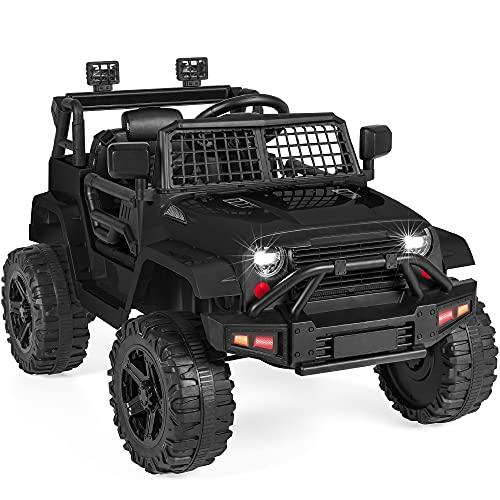
Best Choice Products 12V Kids Electric Vehicle Toy Ride On Car with Parent Remote Control for Toddlers, Seat Harness, 61 lbs Weight Capacity, Locking Doors, Spring Suspension, Bluetooth - Black
Included for 'Best Electric Ride-On Cars for Kids' because the listing specifies Seat Harness and 61 lbs Weight Capacity, details this guide uses to compare options.
View on Amazon
ELEMARA Licensed Mercedes-Benz AMG G63 Ride on Toys,Electric Car for Kids W/Parents Control,Electric Powered G Wagon Ride On Truck Toy,Low Battery Prompt,Bluetooth,Flickering Lights/LED Lights, White
Included for 'Best Electric Ride-On Cars for Kids' because the listing specifies Electric Car for Kids W/Parents Control and Electric Powered G Wagon Ride On Truck Toy, details this guide uses to compare options.
View on Amazon| Spec Class | Best For Age | Weight Limit | Top Speed | Best Terrain | Battery Life Per Charge | Price Range in 2026 |
|---|---|---|---|---|---|---|
| 6V Single Motor | 1-3 years | 40-55 lbs | 1.5-2.0 mph | Flat hard floors, low-pile carpet, smooth driveway | 45-60 minutes | usually $80-$150 |
| 12V Single Motor | 2-4 years | 55-65 lbs | 2.0-3.0 mph | Pavement, short grass | 45-75 minutes | usually $130-$250 |
| 12V Dual Motor | 3-6 years | 66-110 lbs | 3.0-3.7 mph | Grass, packed dirt, slight inclines | 60-90 minutes | usually $180-$350 |
| 24V Dual Motor / 4×4 | 5-8 years | 110-150 lbs | 4.0-5.5 mph | Grass, gravel, moderate hills | 60-120 minutes | usually $250-$500 |
If your child is at the top end of a weight limit, move up one class. A 12V single-motor car rated for 65 lbs will struggle to move a 62 lb child on grass uphill, overheat faster, and cut runtime by 30% or more.
How to Choose the Best Electric Ride On Cars for Kids
1. Age and Weight Limits Are Non-Negotiable Safety Filters
Manufacturers set weight limits based on motor torque and frame stress, not just seat size. Exceeding the limit voids safety certifications and burns out gearboxes.
- Ages 1-3: Look for 6V ride-ons with a wide wheelbase, low center of gravity, push-button start, and automatic brakes when the foot pedal is released. Examples in this class include Peg Perego ride-ons and other licensed push-car styles. No need for a remote override at walking speed, but a handle for parents to push is useful.
- Ages 3-5: This is the core 12V category. Models like the Power Wheels Dune Racer and Best Choice Products 12V Land Rover-style ride-ons dominate this segment. Check for a 2-speed switch with a lockout screw that lets you physically lock out high speed until your child is ready.
- Ages 5-8: Choose 12V dual-motor or 24V with rubber or foam-rubber traction strips. These models typically offer 2 seats and support 100+ lbs, which is essential if siblings will ride together or if you want two seasons of use.
Check the seat-to-pedal distance. If your child’s knees are fully extended or they have to stretch to reach the pedal, they cannot brake quickly. Adjustable seats or an extended footrest add 12-18 months of usable life.
2. Speed Settings and Parental Control
Top speed matters less than how the speed is controlled. The safest designs offer three layers of control:
- Low/High gear lockout: Low is typically 2.0-2.5 mph, high is 3.5-5.0 mph. A screw or switch under the seat locks the car in low.
- Soft start acceleration: Prevents wheelspin and neck-jerk starts. Motors ramp up over 1-2 seconds instead of delivering full torque instantly. This also protects plastic gears.
- 2.4GHz parental remote with stop button: Essential for ages 2-4. Unlike older 27MHz remotes, 2.4GHz has no interference and allows steering, forward/reverse, and emergency stop from 15-20 feet away. If your yard is near a street or driveway slope, do not buy a car without it.
For beginner drivers, keep the car in low speed for the first 3-5 charges. Kids need that time to learn to steer under power, not just while pushing.
3. Battery Life: A Worked Runtime Calculation You Can Use
Listed runtime of “1-2 hours” is measured on flat pavement with a light child. Real runtime depends on battery capacity (Ah), motor draw, and terrain. You can estimate it before buying.
Formula: Runtime (hours) = Battery Capacity (Ah) x Usable Factor / Average Current Draw (A)
Most lead-acid batteries in ride-ons should not be drained below 30% if you want them to last a season, so use a Usable Factor of 0.7.
Example 1 – 12V 7Ah single-motor on pavement: Motor draws ~7A on flat pavement. Runtime = 7 x 0.7 / 7 = 0.7 hours = 42 minutes. This matches real-world tests for lightweight kids.
Example 2 – Same battery on grass with a heavier child: Draw rises to ~12A due to rolling resistance. Runtime = 7 x 0.7 / 12 = 0.40 hours = 24 minutes. Runtime drops by 43% on grass alone.
Example 3 – 24V system with two 12V 7Ah batteries in series (24V 7Ah total) and dual motors drawing 14A combined: Runtime = 7 x 0.7 / 14 = 0.35 hours = 35 minutes at full load, but 24V systems typically use 10Ah packs. With 10Ah: 10 x 0.7 / 14 = 0.5 hours = 50-60 minutes even on grass.
What this means for your decision:
- If you will drive primarily on grass, add 3Ah to the battery size or move from 12V 7Ah to 12V 10Ah / 24V. The extra capacity is cheaper than replacing a burnt motor.
- Lithium-ion upgrades (usually found in newer 12V and 24V models) provide ~20% more usable capacity and are 3-4 lbs lighter, but require their specific charger. Do not use a lead-acid charger on a lithium pack.
- Charge time is 8-12 hours for lead-acid, 3-5 hours for lithium. Never leave a lead-acid battery on the charger for more than 15 hours, and recharge within 24 hours after use to prevent sulfation.
4. Safety Features That Actually Prevent Injuries
Beyond helmets, the car itself should include:
- Automatic electromagnetic brake: When the foot leaves the pedal, power cuts and the motor acts as a brake. Cars without this coast and roll on inclines.
- Seat belt: A 2-point lap belt is sufficient for 2-3 mph. A 3-point harness is better for 4+ mph and off-pavement use.
- Traction control and wide rear wheels: Plastic wheels with no rubber strips slip on grass and wet pavement, causing the car to fishtail. Look for rubber inlays, textured tread, or EVA foam tires.
- Speed-dependent steering limit: Some 24V models reduce steering angle at high speed to prevent rollovers. This is a premium but valuable feature for UTV-style ride-ons.
- Thermal fuse and low-voltage cutoff: Prevents motor/controller damage if the car gets stuck against a wall with the pedal pressed.
Avoid aftermarket speed modifications or 12V-to-24V battery swaps. The wiring, fuse, and gearbox are not rated for the extra current and can melt or fail under load.
5. Terrain Capability: Pavement vs. Grass vs. Dirt
Terrain is the most common reason for returns. Use this guide:
- Smooth pavement and indoor floors: Any 6V or 12V works. Plastic wheels are acceptable and even faster on concrete.
- Short, dry grass on flat ground: Requires 12V dual-motor minimum. Single-motor 12V will move but will be slow and drain quickly.
- Thick grass, mulch, gravel, or a 5-10 degree incline: Requires 24V dual-motor with rubber-traction wheels and at least 35W per motor. Check the motor rating on the spec sheet, not just voltage.
- Hills over 10 degrees: No consumer ride-on is designed for this. Even 24V models will stall or tip back. Use them only on gentle slopes.
Ground clearance also matters. Sports-car style ride-ons have 2-3 inches of clearance and bottom out on lawn edges. Truck, Gator, and UTV styles like the Peg Perego John Deere Gator or Power Wheels Jeep Wrangler have 4-6 inches and handle transitions from driveway to yard without getting stuck.
6. Assembly and Long-Term Ownership
Most ride-on cars ship with wheels, seats, and steering wheel detached. Expect 20-40 minutes for 6V/12V models and 30-60 minutes for 24V UTVs. You will typically need a Phillips screwdriver and included Allen key; no soldering is required.
- Before first use: Charge the battery for the full initial charge period stated in the manual (usually 12-14 hours for lead-acid) even if the light turns green earlier. This conditions the cells.
- Monthly maintenance: Check wheel nuts and steering column bolt for loosening, wipe battery terminals with a dry cloth, and keep tires free of hair and string wrapped around the axle.
- Off-season storage: Store indoors, charge to full, then top up every 30 days. A battery left discharged over winter will often not recover in spring.
- Replacement parts: Choose brands with available replacement batteries, chargers, and gearboxes sold by spec class. 12V 7Ah and 12V 10Ah batteries are standard sizes with cross-compatibility, while proprietary connectors are not.
Which Model Class Should You Buy?
If you want one answer without overthinking specs, use this mapping:
- For a 2-year-old on a patio or driveway: 6V single-motor coupe. Low speed, light weight for you to carry, simplest charging.
- For a 3-4-year-old who will drive on grass at home: 12V dual-motor with parental remote and rubber tire strips. This is the best overall value for the best electric ride on cars for kids.
- For 5-7-year-olds, siblings who share, or a yard with slopes: 24V 4×4 UTV or truck with 10Ah battery and two seats. The higher weight limit and power prevent frustration and extend usable years.
- For mostly off-road or farm-style play: Peg Perego Gator-style or similar utility vehicle with dump bed and high ground clearance. Built specifically for dirt and grass.
FAQ
How long does a 12V ride-on battery actually last before replacement?
A sealed lead-acid 12V battery lasts 150-250 full charge cycles or about 1-2 years with regular use if recharged after each use and not left discharged. Lithium-ion packs typically last 400-600 cycles and hold voltage better at the end of a run, so speed does not sag as much.
Can a 24V ride-on go 10 mph?
No. Consumer 24V ride-ons are limited to 5-6 mph for safety and liability. Claims of 10 mph require illegal modifications and unsafe gearing that will destroy the gearbox and create tip-over risk.
Are ride-on cars safe on inclines?
Only on gentle inclines under 10 degrees and only going straight up or down. Never drive sideways across a slope. Always use low speed and ensure the automatic brake engages when the pedal is released, so the car does not roll backward.

