
Key takeaways
- Fit and Seal: Must conform to the orbital bone around the eye to prevent leaks when you tilt your head back. Oval, anatomically contoured rims outperform round cups.
- Material Safety: Must be non-porous, hypoallergenic, and not leach chemicals into saline. Medical-grade silicone and borosilicate glass are preferred.
- Ease of Cleaning: The cup must be fully sterilizable after each use. If it cannot be boiled or disinfected without degrading, it becomes a source of bacteria.
- Solution Compatibility: Must work with sterile, preservative-free isotonic solutions (0.9% sodium chloride or balanced eyewash) without reacting or degrading.
The best eye wash cups for irritation relief are soft, medical-grade silicone cups with a contoured oval rim and a 15-20ml capacity, because they seal comfortably around the eye socket, work with most sterile isotonic eyewash solutions, and are easy to sterilize between uses.
For gamers and long-session screen users dealing with dust, dry air, or minor irritants, a proper eye wash cup delivers solution to the eye more effectively than a splash or spray bottle alone. The wrong cup – too rigid, too small, or made from porous material – leaks, irritates the skin, or cannot be cleaned safely. This guide breaks down what to look for by fit, material, cleaning, and solution compatibility so you can choose the right type for home use.

Dr.Jim Glass Eye Wash Cup for Eye Rinse,Cleansing with Storage Container
Included for 'Best Eye Wash Cups for Irritation Relief' because the listing specifies Cleansing with Storage Container, details this guide uses to compare options.
View on Amazon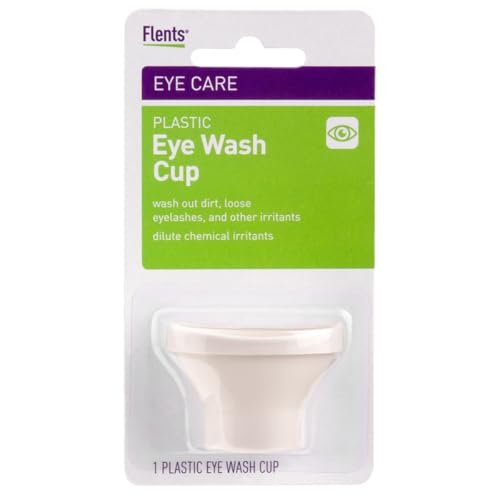
Flents Eye Wash Cup for Eye Rinse, Reusable Cleaning Aid, Durable, White
Included for 'Best Eye Wash Cups for Irritation Relief' because the listing specifies Reusable Cleaning Aid and Durable, details this guide uses to compare options.
View on Amazon
AITIME Eye Wash Cup, Portable Reusable Silicon Eyewash Cups,Green
Included for 'Best Eye Wash Cups for Irritation Relief' because the listing specifies Portable Reusable Silicon Eyewash Cups and Green, details this guide uses to compare options.
View on AmazonHow to Choose the Best Eye Wash Cup: 4 Decision Criteria
An eye wash cup is not a medical device that treats infection or injury. It is a delivery tool to flush the eye surface with sterile solution. Performance comes down to four factors:
- Fit and Seal: Must conform to the orbital bone around the eye to prevent leaks when you tilt your head back. Oval, anatomically contoured rims outperform round cups.
- Material Safety: Must be non-porous, hypoallergenic, and not leach chemicals into saline. Medical-grade silicone and borosilicate glass are preferred.
- Ease of Cleaning: The cup must be fully sterilizable after each use. If it cannot be boiled or disinfected without degrading, it becomes a source of bacteria.
- Solution Compatibility: Must work with sterile, preservative-free isotonic solutions (0.9% sodium chloride or balanced eyewash) without reacting or degrading.
Best Eye Wash Cups for Irritation Relief Compared
Most reusable cups fall into three spec classes. Single-use sterile cups (usually polyethylene) are also available pre-packaged with solution, but this comparison focuses on reusable cups you buy separately.
| Type | Typical Capacity | Rim Dimensions (L x W) | Material Hardness / Thickness | Cleaning Method | General Market Price Range |
|---|---|---|---|---|---|
| Soft Silicone Contoured Cup | 15-20 ml | 52-58 mm x 38-42 mm | 30-40 Shore A, 2.0-2.5 mm wall | Boil 3-5 min, steam sterilize, or soak in 70% isopropyl then rinse with sterile water | usually $6–$15 for 2-4 pack |
| Borosilicate Glass Cup | 12-15 ml | 48-52 mm x 34-38 mm | Rigid, 2.5-3.0 mm wall | Boil, autoclave-safe, dishwasher safe | usually $8–$18 single |
| Hard Plastic (Polypropylene) Cup | 10-15 ml | 50-54 mm x 36-40 mm | Rigid, 1.5-2.0 mm wall | Hand wash with mild soap, limited heat tolerance (max ~90°C) | usually $4–$10 for 2-6 pack |
| Single-Use Sterile Polyethylene Cup | 14-16 ml | Standardized oval | Flexible, thin wall 0.8-1.0 mm | Do not reuse, dispose after one use | usually $10–$25 for 20-30 pack with or without solution |
1. Best Overall for Comfort and Seal: Soft Silicone Contoured Cup
Soft silicone is the most forgiving option for irritation relief at home. The low Shore A hardness allows the rim to flex against different face shapes and create a suction-like seal without pressing hard on the brow or cheekbone. This matters when you need to tilt your head back and blink inside the cup to flush debris. Look for models with a graduated fill line at 10ml and 15ml and a small vent or pour spout on one side.
Pros: Best seal for most adults, comfortable for sensitive skin, boilable for sterilization, compatible with all standard sterile eyewashes.
Cons: Can retain a slight odor if stored while damp, needs air-drying on a clean lint-free cloth.
Best for: Daily dust and allergen flushing, dry eye relief with preservative-free saline, contact lens wearers who need a gentle rinse before reinsertion.
2. Best for Sterilization: Borosilicate Glass Cup
Glass cups are completely non-porous and chemically inert, so they will not absorb solution, oils, or cleaning agents. They are the easiest to fully sterilize and they last for years without discoloration. The downside is rigidity. A glass rim does not conform, so you must hold it firmly and may need to apply slight pressure to prevent leaking. People with a narrow or deep-set eye socket often find glass less comfortable for longer rinses.
Pros: Most hygienic long-term, fully autoclavable and boilable, no interaction with saline or boric acid-based washes.
Cons: Heavier, can feel cold and hard on skin, risk of chipping if dropped.
Best for: Users who prioritize maximum hygiene and want a single long-life cup for occasional use.
3. Most Affordable: Hard Plastic Polypropylene Cup
Polypropylene cups are lightweight and inexpensive, often sold in multi-packs. They are adequate for short, quick rinses but they are the least comfortable and least durable of the reusable options. The rigid rim leaks more easily and the plastic can cloud or develop micro-scratches after repeated cleaning, which makes thorough disinfection harder. Do not boil polypropylene at a rolling boil, as warping can occur.
Pros: Very low cost, lightweight for travel, adequate for infrequent use.
Cons: Poor seal compared to silicone, limited heat tolerance, degrades faster.
Best for: Backup cups in a first-aid kit or travel bag where weight and cost matter more than comfort.
Decision Matrix: Which Cup Matches Your Situation
Use this matrix to map your primary need to the right material class without overthinking brand names.
| If You Need… | Choose This Type | Why |
|---|---|---|
| Daily relief from dust, pollen, or long screen sessions | Soft Silicone Contoured | Comfortable seal for repeated use and full compatibility with preservative-free saline |
| Maximum hygiene and chemical resistance | Borosilicate Glass | Zero porosity and highest heat tolerance for sterilization |
| Cheap backup for first-aid kits at home and in the car | Hard Plastic or Single-Use Polyethylene | Low cost and disposable, no cleaning needed for single-use |
| Sensitive skin or allergies to plastics | Medical-Grade Silicone or Glass | Hypoallergenic, BPA-free, and does not leach plasticizers |
| Care for children or small facial features | Small-Sized Silicone (45-50 mm length) | Smaller oval seals better on narrow sockets than standard glass |
Compatibility With Sterile Eyewash Solutions
The cup and the solution must be considered together. Do not use tap water, distilled water, or homemade salt water in a wash cup. These are not sterile and are not isotonic.
- Use: Sterile 0.9% sodium chloride (isotonic saline) or commercial sterile eyewash labeled as isotonic and buffered. Both are usually priced at usually $5–$12 per 16oz bottle and are preservative-free in single-use vials.
- Avoid: Solutions containing preservatives like benzalkonium chloride for repeated cup use, hydrogen peroxide, or contact lens multipurpose solution unless specifically labeled for eyewash. These can irritate the cornea if used as a flush.
- Temperature: Use solution at room temperature or slightly lukewarm (approx. 20-25°C). Cold solution can cause blinking and poor flushing.
How much solution do you actually need? A single flush of one eye typically uses 15-20ml. If you are flushing both eyes sequentially, plan for 30-40ml plus an extra 20ml to rinse the cup before and after. A standard 500ml (16.9 oz) sterile eyewash bottle provides approximately 25 single-eye flushes at 20ml per flush (500 / 20 = 25). For a household that flushes lightly 2-3 times per week, one 500ml bottle lasts about 8-12 weeks if kept sealed and within its expiration date.
How to Use and Clean an Eye Wash Cup Correctly
Proper technique prevents re-introducing contaminants and ensures the solution actually irrigates the eye surface.
Step-by-Step Use
- 1. Sterilize and rinse the cup: Boil silicone or glass cups for 3-5 minutes or wash thoroughly with mild fragrance-free soap, then rinse twice with sterile eyewash solution itself, not tap water. Discard the rinse.
- 2. Fill to 1/2 to 2/3: Pour fresh sterile saline to the 10-15ml mark. Underfilling reduces contact time, overfilling causes immediate spill when you lean forward.
- 3. Create the seal: Lean forward, press the rim gently around the eye socket with the eye open, then tilt your head back while maintaining pressure so the solution covers the eye. The cup should sit on bone, not on the eyeball.
- 4. Flush with movement: Blink 3-5 times and rotate the eye in a slow circle for 15-30 seconds. This moves solution under the lids where dust and pollen collect. Do not rub the eye before or after.
- 5. Dispose and dry: Discard solution after a single use. Never return used solution to the bottle. Wash the cup again immediately and air-dry inverted on a clean paper towel.
Cleaning Frequency and Storage
Clean before and after every use. Store the dry cup in a clean zip bag or sealed container, not loose in a drawer or medicine cabinet where dust settles. Replace silicone cups every 6-12 months if you notice clouding, stickiness, or a persistent odor. Replace glass only if chipped. Single-use polyethylene cups should never be reused.
When to Skip Home Flushing and Seek Medical Care
An eye wash cup is for minor irritation only. It does not replace professional evaluation for injury or infection.
Seek immediate medical care if you experience any of the following:
- Chemical splash (acid, alkali, cleaner, fuel) – flush with sterile eyewash or clean water for at least 15 minutes continuously and go to an emergency department. Do not stop to find a cup if a chemical burn is suspected; use a gentle continuous stream.
- Penetrating injury, object embedded in the eye, or visible scratch on the cornea
- Sudden vision change, severe pain, sensitivity to light that does not resolve after flushing, or persistent redness beyond 24-48 hours
- Purulent discharge (yellow-green), swelling of eyelids, or fever, which may indicate infection
- Contact lens-related pain or irritation that does not improve after removing lenses and flushing once
For gamers experiencing recurring dryness, burning during long sessions, or reliance on frequent flushing (more than 2-3 times daily), consult an eye care professional about artificial tears, humidity control, blink rate, and screen setup rather than increasing wash frequency. Over-flushing can wash away the natural tear film.
Final Recommendation
For most people seeking irritation relief at home in 2026, a 2-pack of soft, medical-grade silicone contoured cups offers the best balance of fit, material safety, cleaning ease, and solution compatibility. Keep one at your desk setup and one in a first-aid kit, paired with single-use vials or a sealed 500ml bottle of sterile isotonic eyewash. If you prefer a single lifetime cup and do not mind a firmer rim, borosilicate glass is the most durable and sterilizable alternative.
Choose based on your face shape and hygiene preference, follow the sterilize-fill-seal-flush sequence, and reserve the cup for minor dust and allergen relief – not for chemical injuries or infections, which require immediate professional care.

