Key takeaways
- The best grinder for drip coffee is the Baratza Encore ESP for most people, while the Fellow Ode Gen 2 is the better upgrade for cleaner, more refined cups and the DF54 is the strongest value if you want low…
The best grinder for drip coffee is the Baratza Encore ESP for most people, while the Fellow Ode Gen 2 is the better upgrade for cleaner, more refined cups and the DF54 is the strongest value if you want low retention and broad control.
Quick picks
| Grinder | Best for | Burr type | Typical price range | Main limitation |
|---|---|---|---|---|
| Baratza Encore ESP | Most home drip brewers | 40 mm conical steel | Usually $150–$200 | More plastic construction and less premium workflow |
| Fellow Ode Gen 2 | Clarity and low-noise brewing | Large flat steel | Usually $300–$400 | Not intended for espresso-fine grinding |
| DF54 | Fine control and single dosing | 54 mm flat steel | Usually $230–$300 | More manual workflow and less established service coverage in some regions |
| Eureka Mignon Specialita | Quiet, premium all-purpose use | 55 mm flat steel | Usually $500–$700 | Designed around a hopper and timed dosing rather than simple single dosing |
| Fellow Opus | Compact, flexible kitchens | 40 mm conical steel | Usually $150–$200 | Adjustment can be slower to dial in than a stepped drip-focused grinder |
What matters in a drip coffee grinder
Drip coffee does not require espresso-level pressure control, but it is sensitive to uneven particle size. A grinder that produces too many fines can make a filter clog and create bitterness, while too many large particles can leave the cup thin and sour. Burr geometry, alignment, adjustment design and retention therefore matter more than motor wattage alone.

OXO Brew Conical Burr Electric Coffee Bean Grinder - 12 Oz, Matte Black
Included for 'Best Grinders for Drip Coffee' because the listing specifies 12 Oz and Matte Black, details this guide uses to compare options.
View on Amazon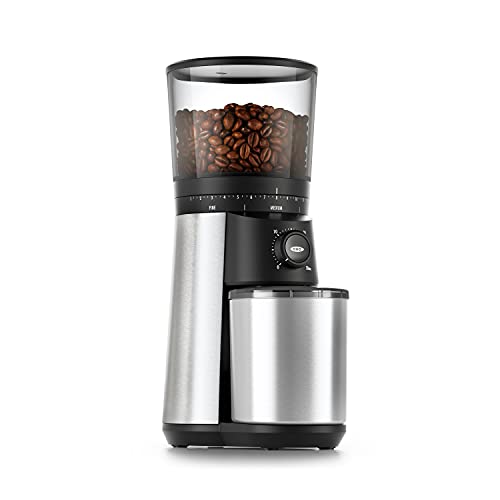
OXO Brew Conical Burr Electric Coffee Bean Grinder - 12 Oz, Silver
Included for 'Best Grinders for Drip Coffee' because the listing specifies 12 Oz and Silver, details this guide uses to compare options.
View on Amazon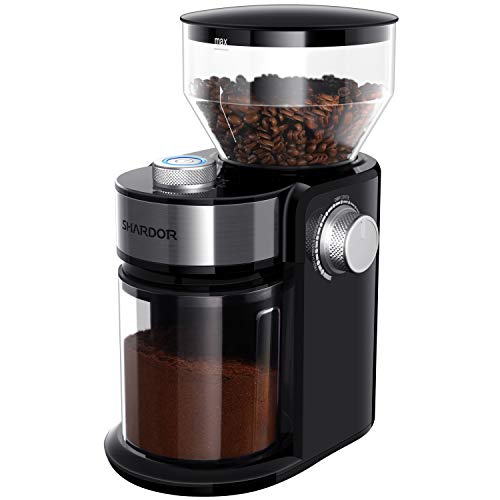
SHARDOR Electric Burr Coffee Grinder 2.0, Automatic Coffee Bean Grinder for Home Use, Adjustable Burr Mill with 16 Precise Settings for Espresso & French Press, Glossy Black
Included for 'Best Grinders for Drip Coffee' because the listing specifies Automatic Coffee Bean Grinder for Home Use and Glossy Black, details this guide uses to compare options.
View on Amazon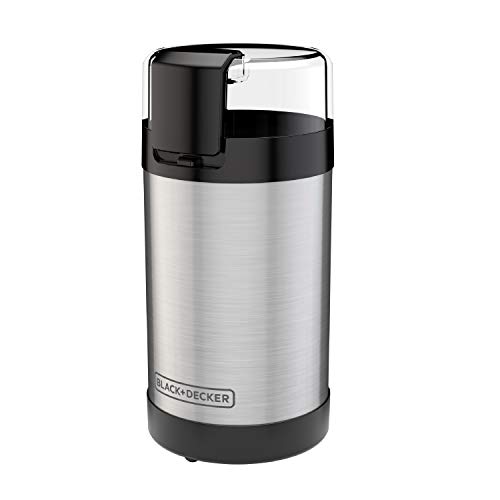
BLACK+DECKER One Touch Coffee Grinder, 2/3 Cup Coffee Bean Capacity, Spice Grinder, One Touch Push-Button Control -150 Watts -Stainless Steel Blades
Included for 'Best Grinders for Drip Coffee' because the listing specifies 2/3 Cup Coffee Bean Capacity and Spice Grinder, details this guide uses to compare options.
View on AmazonBurr type and grind consistency
Conical burrs are efficient, relatively compact and usually affordable. They work very well for everyday filter coffee, especially when paired with a sensible stepped adjustment system. Flat burrs can provide a more uniform particle distribution and often emphasize separation between flavors, although the result also depends on burr design, alignment and roast choice.
For a balanced household brewer, a 40 mm conical grinder is enough. Larger 54–64 mm flat burrs become more attractive when you regularly brew light roasts, compare different coffees or want a cleaner cup with less muddled flavor. A larger burr does not automatically make better coffee, but it can grind a dose faster and give a more controlled adjustment range.
Adjustment range
Drip coffee generally falls in the medium to medium-fine range, but one setting will not suit every brewer. A cone dripper, flat-bottom brewer, automatic machine and immersion-style filter basket may each need a different grind. The grinder should offer enough steps to move between these methods without a large jump from under-extracted to over-extracted.
The Encore ESP is particularly approachable because its numbered range gives useful control around filter settings, even though its name emphasizes espresso. The Ode Gen 2 is more directly optimized for filter brewing. The DF54 offers continuous adjustment, which is excellent for small changes but requires you to record settings carefully because there are no fixed clicks to return to.
Hopper size versus single dosing
A hopper is convenient if you use the same coffee every morning. A capacity of roughly 200–300 grams covers most household routines and avoids frequent refilling. However, a large hopper is not automatically better: beans left inside can lose freshness, and changing coffees becomes less convenient.
Single dosing is preferable if you rotate coffees, buy small quantities or want to weigh every dose. For example, a 30-gram morning brew can be added directly to the grinder, with the remaining beans stored in an airtight container. Look for a removable hopper, accessible burr chamber and low retention rather than judging the grinder by hopper capacity alone.
Noise, retention and workflow
Noise is mostly determined by the motor, gearing, burr speed and housing. Flat-burr grinders are not necessarily quieter, but models with heavy construction and slower operation often produce a less harsh sound. The Fellow Ode Gen 2 and Eureka Mignon Specialita are appealing when early-morning noise matters, while compact budget grinders can sound sharper even when they finish quickly.
Retention is the amount of coffee left in the burr chamber and chute after grinding. A grinder that retains 0.1–0.5 grams may be perfectly manageable for a consistent daily routine. It becomes more important when switching between coffees, because old grounds can contaminate the next dose. A brief bellows pulse or gentle tap can reduce carryover, but excessive static and clumping can still complicate cleanup.
Head-to-head: the best grinders for drip coffee
Baratza Encore ESP: best overall for most people
The Encore ESP is the safest recommendation when you want dependable drip coffee without paying for a premium workflow. Its conical steel burrs, compact body and straightforward controls make it easy to use, and replacement parts and servicing are comparatively accessible in many markets.
Its stepped adjustment is a benefit for beginners: you can write down a setting and return to it later. It is not as quiet or refined as more expensive flat-burr grinders, and its grounds may show a wider particle spread. Still, for an automatic brewer or pour-over routine, it offers the most useful balance of price, consistency and repairability.
Fellow Ode Gen 2: best for clarity and quiet operation
The Ode Gen 2 is a filter-focused grinder with large flat burrs and a workflow built around brewed coffee rather than espresso. It is a strong choice for light and medium roasts when you value distinct flavors, a clean finish and a less aggressive motor sound.
Its main restriction is intentional: it is not the right purchase for someone who may later want espresso. The adjustment range is excellent for pour-over, batch brew and French press, but not for espresso-fine settings. If drip coffee is your permanent focus, that limitation is rarely a problem.
DF54: best for single dosing and fine control
The DF54 suits brewers who like weighing each dose and making small, repeatable grind changes. Its flat burr design and stepless adjustment give it the potential for very precise dialing in, particularly when a coffee changes as it ages or when you alternate between recipes.
The trade-off is a more involved routine. You may need to purge retained grounds, use a bellows or brush, and note the position of the adjustment collar. It is a better fit for an enthusiast who enjoys controlling variables than for someone who wants to press one button before work.
Eureka Mignon Specialita: best premium hopper grinder
The Specialita is a substantial option for households that keep one coffee loaded and want a quiet, durable grinder that can also handle espresso. Its 55 mm flat burrs and timed dosing make repeated preparation convenient, while its adjustment system allows fine changes between brewing methods.
For drip-only use, it can be more grinder than necessary. The hopper-oriented design is less convenient if you constantly change beans, and the price is difficult to justify unless low noise, premium construction or future espresso capability matters.
Fellow Opus: best compact all-rounder
The Opus is a sensible choice for a small kitchen or a brewer who wants one compact machine for filter coffee and occasional finer grinding. Its conical burrs cover a broad range, and the integrated dosing cup keeps the footprint manageable.
Dialing in can take more patience because the internal and external adjustments interact. Once you learn to make small changes and record your settings, it becomes flexible. It is less immediately intuitive than the Encore ESP, but more versatile if your brewing methods vary.
Decision matrix: which grinder fits your routine?
| Your situation | Recommended choice | Why |
|---|---|---|
| Automatic drip machine, one coffee, simple routine | Baratza Encore ESP | Clear stepped control and low learning curve |
| Pour-over, light roasts and flavor separation | Fellow Ode Gen 2 | Filter-focused flat burr platform |
| You change beans often and weigh every dose | DF54 | Single-dose workflow and stepless control |
| You need drip now and espresso later | Eureka Mignon Specialita | Quiet premium grinder with a broad usable range |
| Limited counter space and several brew methods | Fellow Opus | Compact body and wide adjustment range |
How to dial in drip coffee
Start with a brew ratio of 60 grams of coffee per litre of water. That means a 500 ml brew uses approximately 30 grams of coffee. Use a medium setting as a starting point, then change only one variable at a time.
- Brew the first cup. Note the grinder setting, dose, water amount and total brew time.
- Taste before adjusting. Sour, sharp or weak flavors usually indicate under-extraction; bitterness, dryness or a harsh finish usually indicate over-extraction.
- Move one or two steps finer if the cup tastes thin and sour, or if water passes through unusually quickly.
- Move one or two steps coarser if the cup tastes dry and bitter, or if the filter stalls.
- Keep the dose and water constant. This makes the grinder adjustment meaningful rather than confusing several changes at once.
As a practical example, suppose 30 grams of coffee through 500 grams of water finishes in 2 minutes 20 seconds and tastes sour. Moving from setting 18 to 16 on a stepped grinder may increase contact time and extraction. If the next brew takes 4 minutes and tastes bitter, setting 17 is the logical compromise. The exact numbers vary by grinder, but recording them turns dialing in from guesswork into a repeatable process.
Final verdict
Choose the Baratza Encore ESP if you want the best balance for ordinary drip coffee. Choose the Fellow Ode Gen 2 for a quieter, more filter-specialized upgrade with an emphasis on clarity. Choose the DF54 if low retention, single dosing and precise adjustment matter more than convenience. The right grinder is the one whose burr consistency and workflow match how you actually brew, not simply the one with the largest burrs or hopper.