
Key takeaways
- Short body trim: a professional blade around 10 to 15 is commonly used, but the exact finish depends on coat condition and grooming style.
- Longer body finish: a longer blade or snap-on guard can leave more coat, but guards work best on a thoroughly brushed, straightened coat.
- Feet and sanitary areas: shorter blades provide control, but use extra care because skin folds and loose skin can enter the cutting path.
- Face and detail work: a slower speed and a narrow, controlled movement are safer than forcing a high-speed clipper into small areas.
The best clippers for poodles at home are professional two-speed or variable-speed models with detachable blades, strong torque, manageable heat, and enough cordless runtime for the size of your dog: the Andis Pulse ZR II is the most convenient premium choice, while the Wahl KM10 and Andis AGC2 are strong corded alternatives.
Quick comparison: the best clippers for poodles
| Model | Power and speeds | Runtime or cord | Best for | Typical market range |
|---|---|---|---|---|
| Andis Pulse ZR II | Two speeds; detachable-blade design | About 2 hours per battery, depending on coat and speed | Owners wanting cordless convenience and professional-level cutting | Usually $350–$500 |
| Wahl KM10 | Two speeds; high-torque rotary motor | Corded | Dense, curly coats and long grooming sessions | Usually $250–$400 |
| Andis AGC2 | Two speeds; detachable blades | Corded | Reliable home grooming without battery management | Usually $180–$300 |
| Oster Volt | Two speeds; detachable-blade design | About 2 hours per charge, depending on use | Large poodles or owners who prefer a substantial cordless clipper | Usually $300–$450 |
Prices vary by blade bundle and included accessories. These are general market ranges rather than fixed prices.

oneisall Low Noise Dog Clippers Grooming Kit for Dogs Cats Pets
Included for 'Best Clippers for Poodles at Home' as a relevant option in this category; details come from the product listing.
View on Amazon
oneisall Dog Clippers and Paw Trimmer Kit for Small Large Dogs Cats
Included for 'Best Clippers for Poodles at Home' as a relevant option in this category; details come from the product listing.
View on Amazon
oneisall Dog Clippers for Grooming Thick Heavy Coats
Included for 'Best Clippers for Poodles at Home' as a relevant option in this category; details come from the product listing.
View on Amazon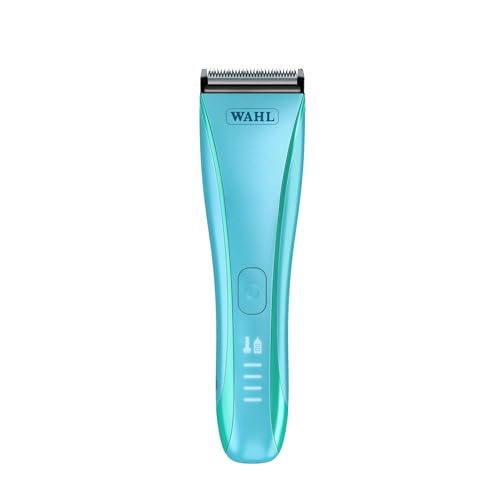
Wahl Pro Animal Motiva2, Professional Pet Clipper, Blue Ivy
Included for 'Best Clippers for Poodles at Home' because the listing specifies Professional Pet Clipper and Blue Ivy, details this guide uses to compare options.
View on AmazonWhat poodle coats demand from a clipper
A poodle’s coat is not merely thick; it is dense, curly, and capable of trapping loose hair against the skin. That combination creates more resistance than a straight, fine coat. A clipper that sounds powerful on a clean test surface may slow down, pull hair, or leave uneven tracks when confronted with a matted or inadequately brushed coat.
Look for a rotary motor or another high-torque motor designed to maintain blade movement under load. Speed alone is not the whole story. A faster blade can cut efficiently, but a motor with poor torque may stall or heat up when the coat becomes compacted. Two speed settings are useful because the higher setting handles dense areas, while the lower setting gives better control around legs, feet, and sensitive areas.
Head-to-head recommendations
Andis Pulse ZR II: best cordless option
The Pulse ZR II is a strong fit when you want professional detachable blades without keeping a power cable near a moving dog. Its two-speed setup lets you use a higher speed on the body and a slower speed for detail work. The detachable-blade system also gives you access to standard professional blade sizes rather than locking you into one fixed cutting length.
Its main advantage is workflow. You can move from one side of the dog to the other without repositioning a cord, and a spare battery can make long sessions practical. The trade-off is cost: you are paying for the battery platform as well as the clipper. Battery runtime also falls when cutting a dense, damp, or tangled coat at high speed.
Wahl KM10: best for sustained corded power
The Wahl KM10 is a sensible choice for owners who groom several dogs, maintain a large standard poodle, or do not want to plan around charging. Its corded motor provides continuous power, so the clipper does not gradually lose available runtime during a long session.
The disadvantage is handling. The cord must remain clear of the dog, table, and your feet, and the clipper cannot be used safely near water. A corded model is especially attractive when cutting takes more than one battery cycle, but less convenient for a nervous dog that moves frequently.
Andis AGC2: best value professional-style corded model
The AGC2 offers a practical balance of power, detachable blades, and relatively simple operation. It is a good choice for an owner who wants more capability than a basic single-speed home trimmer but does not need cordless operation.
It can manage a poodle coat when the coat is clean, fully dry, and brushed through. It is not a substitute for dematting. If the blade repeatedly meets tight mats, even a capable clipper can heat quickly and produce an uncomfortable pulling sensation.
Oster Volt: best for a substantial cordless tool
The Oster Volt is worth considering if you prefer a heavier, full-size cordless clipper and want detachable-blade flexibility. It suits larger dogs and owners who find lightweight trimmers underpowered on thick coats.
Its extra weight can become tiring during detailed work, particularly around feet and face. Choose it for cutting capacity and cordless freedom rather than for the lightest possible hand feel.
Blade and guard choices that actually matter
Detachable-blade clippers are generally more useful for poodles than fixed-blade trimmers because you can select the cutting length and replace a blade that becomes dull. Ceramic cutters can help reduce heat at the cutting surface, although the clipper body, drive components, and blade still need regular cooling breaks.
- Short body trim: a professional blade around 10 to 15 is commonly used, but the exact finish depends on coat condition and grooming style.
- Longer body finish: a longer blade or snap-on guard can leave more coat, but guards work best on a thoroughly brushed, straightened coat.
- Feet and sanitary areas: shorter blades provide control, but use extra care because skin folds and loose skin can enter the cutting path.
- Face and detail work: a slower speed and a narrow, controlled movement are safer than forcing a high-speed clipper into small areas.
Guards do not make a matted coat easy to cut. They tend to ride over uneven mats, snag, or leave a patchy result. If a guard will not glide with light pressure, stop and brush, scissor carefully where appropriate, or seek professional grooming help.
Heat control: the factor that prevents bad sessions
Blade heat is affected by friction, coat density, blade sharpness, lubrication, and continuous running time. Do not judge temperature by touching the cutting teeth directly to your dog’s skin. Instead, pause regularly and check the blade with the back of your fingers after removing it from the dog.
A practical routine is to work for roughly 10–15 minutes, then inspect the blade and switch to a cooled, clean blade if necessary. A blade-cooling spray can provide a short-term temperature reduction, but it does not replace cleaning and lubrication. Spray according to the product instructions and allow excess liquid to evaporate before returning the blade to the coat.
Keep at least two blades available for a full poodle groom. Rotating blades is more effective than trying to force one increasingly hot blade through the entire coat. Never place a hot blade directly against thin skin, the inside of the legs, or the armpits.
Corded versus cordless: a simple decision calculation
Estimate your real clipping time before choosing. Suppose a standard poodle needs 75 minutes of clipper work, excluding brushing and bathing. A cordless clipper rated for about 120 minutes in light use has a theoretical reserve of 45 minutes:
120 minutes rated runtime − 75 minutes required runtime = 45 minutes remaining.
That reserve may disappear if the coat is dense, the high speed is used continuously, or the battery is older. For a large dog requiring 110 minutes, the same battery leaves only 10 minutes on paper, which is too little practical margin. In that situation, choose a corded model or buy a second battery and rotate it.
| Your situation | Better choice | Reason |
|---|---|---|
| Small or miniature poodle, short regular trims | Cordless detachable-blade clipper | Convenience matters more than maximum continuous capacity |
| Standard poodle, 60–90 minute grooming session | Premium cordless with spare battery, or corded model | Provides enough runtime reserve and reduces mid-groom interruptions |
| Very dense coat or several dogs | High-torque corded clipper | Continuous power and less concern about battery heat or depletion |
| Frequent foot and face detailing | Light cordless clipper or secondary detail tool | Lower hand fatigue and easier positioning |
How to get better results from any clipper
- Wash and dry the coat completely. Dirt acts like abrasive grit, while damp curls increase resistance and encourage uneven cutting.
- Brush and comb to the skin. A slicker brush followed by a metal comb reveals whether the coat is actually free of tangles.
- Start on the back or side. This lets you confirm the blade length, speed, and temperature before working on delicate areas.
- Use light, overlapping passes. Pressing harder does not improve cutting; it increases friction and heat.
- Clean and oil the blade during the session. Hair buildup between the teeth restricts movement and makes the motor work harder.
- Stop when the coat resists. Resistance usually means a mat, a dirty blade, insufficient brushing, or excessive heat—not that more force is needed.
Final verdict
Choose the Andis Pulse ZR II if cordless freedom and professional blade compatibility are your priorities. Choose the Wahl KM10 for long, demanding sessions where uninterrupted power matters most. The Andis AGC2 is the sensible corded value choice, while the Oster Volt suits owners who want a powerful, full-size cordless tool.
Whichever model you select, the largest performance improvement usually comes from preparation: a clean, completely dry, combed coat, sharp lubricated blades, and planned cooling breaks. No clipper is designed to make severe mats safe or comfortable to remove at home.
