Our Top Picks
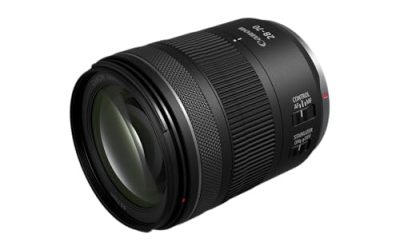
 Sony E 55-210mm F4.5-6.3 Telephoto Lens for E-Mount1004.49 x 4.33 x 7.87 inches0.8 PoundsCheck on Amazon
The Sony A7C is a full-frame camera in a compact body, so the lens you pair with it decides whether the package stays pocketable or turns into a heavy rig. Most buyers searching “best lens for Sony A7C” are balancing three things: keeping the setup small, getting full-frame image coverage, and avoiding lenses that were designed for smaller sensors. That last point trips up many first-time buyers, because Sony E-mount lenses come in both full-frame (FE) and APS-C (E) versions.
This guide is for A7C and A7C II owners picking a first or second lens in 2026, whether for travel, portraits, vlogging, or macro. The picks below come from the product titles only, so focal lengths, apertures, and stabilization are described as listed. Where a title hints that a lens is for APS-C, the review says so plainly, since using it on a full-frame body can crop the image.

Sony Alpha 7C II Full-Frame Camera with 28-60mm Lens (Silver) Bundle with Pixel Advanced Accessories | Sony a7C II Lens Kit (Renewed)
Chosen because it specifies Sony a7C II Lens Kit (Renewed).
View on Amazon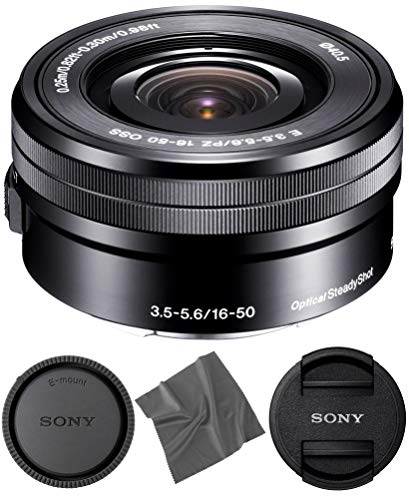
Sony SELP1650 16-50mm OSS Lens: Sony E PZ 16-50mm f/3.5-5.6 OSS Lens (Black) + Pro Starter Bundle Kit Combo - International Version (1 Year Warranty)
Chosen because it specifies International Version (1 Year Warranty).
View on Amazon
Sony - FE 50mm F1.8 Standard Lens (SEL50F18F/2), Black
Chosen because it specifies FE 50mm F1.8 Standard Lens (SEL50F18F/2) and Black.
View on Amazon
Sony FE 100mm F2.8 GM OSS Macro Lens with 1.4X Magnification (Sony E-Mount) | 1.4x magnification with f/2.8 aperture and OSS for macro photography, nature videography and professional portraits
Chosen because it specifies nature videography and professional portraits.
View on AmazonSony E 55-210mm F4.5-6.3 Telephoto Lens for E-Mount Cameras | E-Mount Aps-C 55-210mm, F/4.5-6.3, Oss Stabilization, 49mm Filter, 1.0m Min Focus, 345 G
Chosen because it specifies E-Mount Aps-C 55-210mm and F/4.5-6.3.
View on AmazonQuick Picks
| Product | Best for | Key spec from the title |
|---|---|---|
| Sony Alpha 7C II with 28-60mm lens | First lens, travel kit | 28-60mm kit lens, full-frame body |
| Sony FE 50mm F1.8 | Budget portrait prime | 50mm, F1.8, FE full-frame |
| Sony FE 100mm F2.8 GM OSS Macro | Macro and portraits | 1.4X magnification, f/2.8, OSS |
| Sony E 55-210mm F4.5-6.3 OSS | Budget telephoto, cropped use | APS-C, OSS, 345 g |
| Sony E PZ 16-50mm f/3.5-5.6 OSS | Video-friendly power zoom | E PZ, OSS |
How to Choose
FE versus E: full-frame or APS-C coverage
FE lenses cover the full-frame sensor in the A7C. E lenses are designed for APS-C bodies; mounted on a full-frame camera they typically trigger a crop mode that reduces resolution. One listing here states APS-C in its title and another uses the E designation without FE, so treat them as compromise options rather than first choices.
The A7C and A7C II share the same E-mount, so every lens here physically attaches to either body. What changes is the sensor coverage and the resolution you keep. If you plan to shoot mostly video, the crop is less painful, because video modes already crop on many cameras. For stills, FE glass is the safer long-term investment.
Focal length for your subject
For travel and everyday photos, 28-60mm covers wide landscape to a modest portrait length. For portraits, 50mm and longer begin to flatter faces. For wildlife or distant subjects, you need 200mm or more, but long lenses on a compact body quickly add weight.
A useful way to decide is to list the three subjects you shoot most. If two of them are people and pets at close range, a 50mm prime covers a lot. If one is product work or flowers, a macro lens earns its place. If you rarely change lenses and want to travel light, a single standard zoom is hard to beat.
Aperture, stabilization, and size
F1.8 and f/2.8 give shallow depth of field and low-light capability. OSS marks optical stabilization inside the lens, which helps handheld video and low-light stills, although the A7C already has in-body stabilization. The point of the A7C is size, so check weight: the 55-210mm is listed at 345 g, and the 50mm F1.8 is lighter.
Filter thread size also affects the cost of accessories: the 49mm thread on the 55-210mm is small and cheap to fit, while larger lenses need bigger, pricier filters. If you plan to use ND or polarizing filters for video, factor that into the total.
What to ignore and budget cut corners
Ignore bundle accessories such as starter kits and focus on glass. Budget lenses often use plastic barrels and slower autofocus, and kit zooms have narrow variable apertures. Renewed or international listings may lack a warranty, so check the seller terms.
The search results for this keyword also contained several camera bodies, including a different full-frame model, renewed body-only listings, and duplicate kit listings. Those are bodies rather than lenses, so only one kit listing is kept below to represent the 28-60mm lens.
The 5 Best Options
Sony Alpha 7C II with 28-60mm Kit Lens
This is a camera kit rather than a standalone lens, but the title makes the 28-60mm the point: it is the standard compact zoom that comes with the A7C II. The listing is described as a lens kit with a full-frame mirrorless body, so it works for buyers who still need the body.
- Strength: 28-60mm is a practical everyday range from wide to portrait length.
- Strength: Designed alongside the compact A7C family.
- Trade-off: Buying it as a kit makes little sense if you already own a body.
Skip it if you only need a lens. Owners of an existing A7C should look at the primes below instead. Think of the kit as the baseline against which any prime or tele purchase should be judged, since it sets the minimum coverage and weight you will carry every day.
Sony FE 50mm F1.8
The FE 50mm F1.8 is a standard prime for full-frame E-mount cameras. The title calls it a standard lens in black, and the FE prefix confirms full-frame coverage. It suits anyone starting with portraits and low-light photos.
- Strength: F1.8 aperture produces background blur and handles dim rooms.
- Strength: FE design uses the full sensor of the A7C.
- Trade-off: A fixed 50mm cannot zoom, so you move your feet.
Skip it if you want wide landscapes or macro. It is a smart, small first prime for the A7C. Its modest size matches the philosophy of the body, so the whole kit stays easy to carry on a walk, and it pairs well with street, family, and travel photography.
Sony FE 100mm F2.8 GM OSS Macro
The most specialized and premium lens here. The title lists 1.4X magnification, an f/2.8 aperture, OSS, and the GM label for Sony’s top-tier line. It doubles as a flattering portrait lens and a close-up tool.
- Strength: 1.4X magnification gives true macro capability.
- Strength: GM positioning and OSS suggest premium optics and steady handheld shots.
- Trade-off: As a GM lens, it is the most expensive and heavier than primes.
Skip it if you want a compact setup or do not shoot close-ups. It is for product, flower, and detail photographers. Portrait shooters who want a longer, more compressed look will also appreciate the focal length, provided they accept that it makes the camera noticeably less compact than the body alone suggests.
Sony E 55-210mm F4.5-6.3 OSS
The title identifies it as a telephoto lens for E-mount APS-C, with a 49mm filter, a 1.0m minimum focus distance, and 345 g weight. It is a low-cost way to reach distant subjects.
- Strength: 55-210mm range reaches distant subjects at a modest weight.
- Strength: OSS stabilization helps at long focal lengths.
- Trade-off: Designed for APS-C, so the A7C will crop the image.
Skip it if you want full-resolution full-frame images. Treat this as a casual-use option for occasional zoom. Hikers and parents at sports fields get reach without the cost of a full-frame telephoto, but they should expect lower resolution than the sensor can deliver, and aperture that narrows at the long end.
Sony E PZ 16-50mm f/3.5-5.6 OSS
A power zoom with OSS, sold in a bundle with accessories according to the title. The E PZ naming points to an APS-C design, so on the A7C it will usually crop. It is compact and suited to casual video.
- Strength: Power zoom is smooth for video framing.
- Strength: OSS and a compact design suit walk-around use.
- Trade-off: APS-C lens on a full-frame body reduces image area.
Skip it if you want full-frame coverage or a fast aperture. A better primary pick is a FE lens. Because it ships as a starter bundle, check what extras are included and whether the seller offers a warranty before deciding it is a bargain.
Which One Fits Your Situation
Start with the subject you photograph most often, then confirm the lens covers the full-frame sensor. The scenarios below name the product whose listed specs fit each habit, along with the compromise you accept. Remember that the A7C is valued for staying small, so weight and size should weigh as heavily as focal length when you choose.
You need a lens for travel
Buy the Sony Alpha 7C II kit if you lack a body, or pair your A7C with the FE 50mm F1.8 for a small footprint. Both keep the bag light and the setup quick to use at a viewpoint or in a market.
You shoot portraits
Sony FE 50mm F1.8 for a budget route, or Sony FE 100mm F2.8 GM OSS Macro if you want premium flattering compression. Either one will separate a subject from the background better than the kit zoom.
You want distant subjects on a budget
Sony E 55-210mm F4.5-6.3 OSS works if you accept the crop.
You vlog or film short clips on the go
Start with the kit 28-60mm on the Alpha 7C II, which gives a usable wide end for arm’s-length framing. Add the E PZ 16-50mm only if you accept the crop in exchange for a power zoom, and remember that the FE 50mm F1.8 is too tight for selfie-style shots.
For flowers, jewelry, or small products, the Sony FE 100mm F2.8 GM OSS Macro is the clear choice thanks to the 1.4X magnification in its title. Use a tripod or steady surface for the sharpest close-ups, and expect to pay for that specialization.
Common Mistakes
- Buying an APS-C E lens and wondering why resolution drops.
- Choosing a heavy GM lens for a compact travel camera.
- Paying for body-and-lens kits when you already own the body.
- Ignoring warranty terms on renewed or international listings.
- Shooting a macro lens like a casual walk-around lens.
Frequently Asked Questions
The answers below assume you shoot with an A7C or A7C II and want the lens to use the whole sensor wherever possible.
Can I use APS-C lenses on the A7C?
Yes, but the camera crops the image, which reduces resolution. FE lenses make better use of the sensor. If you only share photos on social media, the crop may not matter, but large prints will show the difference.
Is the 28-60mm kit lens good enough?
For travel and everyday photos it is practical. Primes give better low-light and background blur. A common path is to start with the kit zoom, learn which focal lengths you use most, and then add a prime that matches those habits.
Do I need OSS if the body is stabilized?
Lens stabilization can add help at long focal lengths and in video, but it is not essential for short lenses.
Which lens suits vlogging?
A wide, stabilized zoom is usually easiest. Check the focal length against arm’s-length framing before buying. A lens that starts at 28mm is easier to hold at arm’s length than a 50mm, which crops tightly on a single face.