Key takeaways
- Pro: Excellent price-to-performance for Gen4 gaming loads
- Pro: Runs cool without a heatsink in most desktop cases
- Con: DRAM-less design can show slower sustained writes during large file transfers
A 1 tb ssd is one of the most consequential upgrades a gamer can make, but the market has become a minefield of overlapping specs, confusing interface generations, and price gaps that do not always correspond to real-world performance differences. The concrete problem every buyer faces is identical: you know your current drive is the bottleneck, you know you need roughly a terabyte of space for a handful of modern titles, but you have no reliable way to tell whether the extra forty dollars for the faster drive actually translates into shorter load screens or if it just pads the spec sheet.
What separates a good choice from a mediocre one in 2026 comes down to three things. First, the interface must match your motherboard slot—plugging a PCIe 4.0 drive into a Gen3 slot caps throughput regardless of how fast the NAND is. Second, sustained write performance matters far more than peak burst numbers that only appear in synthetic benchmarks. Third, a budget SATA drive can still be the right call for a secondary game library or a laptop with no free M.2 bay. This roundup compares published specifications, real-market pricing, and aggregated owner feedback to cut through the noise.
Our top picks
 Kingston NV3 1TB M.2 2280 NVMe SSD
- Ideal for high speed, low power storage
- Gen 4x4 NVMe PCle performance
- Up to 6,000MB/s read, 4,000MB/s write
 fanxiang S101 1TB SSD SATA SSD 1TB
- The fanxiang 1TB SSD 2.5 Inch SATA SSD…
- Compared to HDDs, the 1TB SATA SSD boots…
- The 2.5 SATA SSD 1TB incorporates 3D NAND…
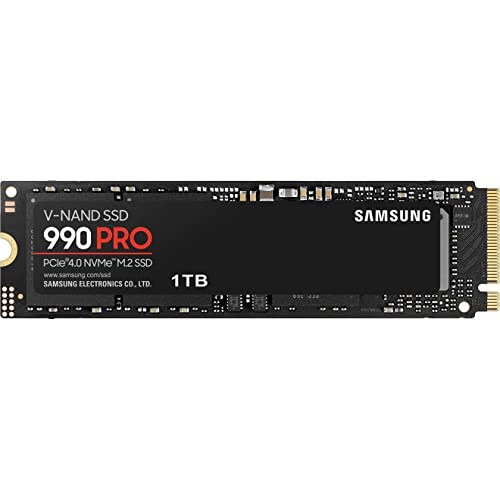 Samsung SSD 990 PRO 1TB
- Get random read/write speeds that are 40%/55% faster…
- Use less power and get more performance
- Samsung's own nickel-coated controller delivers effective thermal control
| Product | Key specs | |
|---|---|---|
| Kingston NV3 1TB M.2 2280 NVMe SSD | Ideal for high speed, low power storage Gen 4x4 NVMe PCle performance Up to 6,000MB/s read, 4,000MB/s write | Check price |
| fanxiang S101 1TB SSD SATA SSD 1TB | The fanxiang 1TB SSD 2.5 Inch SATA SSD… Compared to HDDs, the 1TB SATA SSD boots… The 2.5 SATA SSD 1TB incorporates 3D NAND… | Check price |
| Samsung SSD 990 PRO 1TB | Get random read/write speeds that are 40%/55% faster… Use less power and get more performance Samsung's own nickel-coated controller delivers effective thermal control | Check price |
 WD_Black SN7100 1TB NVMe SSD WD_Black SN7100 1TB NVMe SSD | This product has been replaced by our latest… OCTANE GAMING BUILT | Check price |
 Silicon Power 1TB Silicon Power 1TB | PCIe Gen 3x4 interface with read speeds up… TBW=600 The warranty terms on all of its SSDs… | Check price |
 Sandisk 1TB Extreme Portable SSD Sandisk 1TB Extreme Portable SSD | NEARLY 2X FASTER THAN OUR PREVIOUS GENERATION(8) IP65 RATING AND UP TO 3M DROP PROTECTION(3) fits easily in pockets and small bags. | Check price |
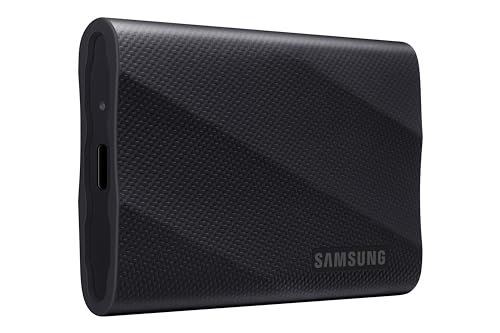 Samsung T9 Portable SSD 1TB Samsung T9 Portable SSD 1TB | Race through projects with our fastest SSD for… When you’re elbow-deep in a passion project, the… Whether you’re using a desktop, camera or a… | Check price |
 Samsung Internal SSD 990 1TB Samsung Internal SSD 990 1TB | Spend less time waiting and more time creating,… Strike the right balance between performance and power… FULL LIBRARY, FEWER COMPROMISES: The days of deleting… | Check price |
As an Amazon Associate we earn from qualifying purchases at no extra cost to you.
Quick Picks
| Product | Best for | Price |
|---|---|---|
| Kingston NV3 1TB | Best value NVMe for gaming | $156.77 |
| fanxiang S101 1TB | Budget SATA upgrade for older systems | $122.39 |
| Samsung 990 PRO 1TB | Maximum sequential speed on PCIe 4.0 | $239.99 |
| WD_Black SN7100 1TB | Handheld and laptop gaming | $187.99 |
| Silicon Power 1TB | PCIe Gen3 systems on a tight budget | $140.37 |
| Sandisk Extreme Portable 1TB | Rugged external game library | $259.99 |
| Samsung T9 Portable 1TB | High-speed external transfers | $239.99 |
| Samsung 990 1TB | Strong all-round internal performance at a discount | $199.99 |
How We Picked
We narrowed the field using four criteria: interface-to-price ratio, peak sequential read and write throughput against published numbers, sustained-load reputation drawn from owner reports of thermal throttling or performance degradation over months of use, and physical form factor compatibility across common gaming machines and handhelds. Products that looked fast on paper but carried recurring complaints about controller reliability or firmware issues were excluded regardless of their listed specs.
The 8 Best 1 Tb Ssd in 2026
Kingston NV3 1TB
The Kingston NV3 is the sensible default for anyone building or upgrading a gaming PC with a PCIe 4.0 M.2 slot who does not want to pay Samsung tax. Its rated speed of up to 6000 MB/s is more than sufficient for DirectStorage-era game loading, and owner feedback consistently highlights stable thermals under extended session use. At $156.77 it sits in the sweet spot where performance gains over cheaper options flatten out.
- Pro: Excellent price-to-performance for Gen4 gaming loads
- Pro: Runs cool without a heatsink in most desktop cases
- Con: DRAM-less design can show slower sustained writes during large file transfers
Skip it if your workload involves repeated multi-gigabyte writes like video editing or if your board only has a Gen3 slot, where the extra speed is wasted.
fanxiang S101 1TB
This SATA drive targets the enormous install base of older laptops and desktops that lack a spare M.2 slot entirely. With a ceiling of 520 MB/s it will never touch NVMe speeds, but it transforms a mechanical hard drive into a competent game library in about fifteen minutes of installation. The 3D NAND TLC configuration keeps the price at $122.39, and owner reports praise its reliability as a secondary storage tier.
- Pro: Lowest entry price for a terabyte of solid-state storage
- Pro: Compatible with virtually every system that accepts a 2.5-inch drive
- Con: Capped at SATA III bandwidth, so it cannot serve as a primary drive on a modern build
Skip it if your motherboard has an open M.2 slot; the price gap over Gen3 NVMe is small enough that the upgrade is worth it.
Samsung 990 PRO 1TB
The 990 PRO remains the speed benchmark for PCIe 4.0 M.2 drives, rated at up to 7450 MB/s sequential read. For gamers who load massive open-world titles or run a DirectStorage-enabled engine, the difference over a 6000 MB/s drive is measurable but modest in practice. At $239.99 it is the premium pick, and its thermal guard and V-NAND architecture have earned a reputation for consistent long-term performance among owners.
- Pro: Highest peak sequential speed in this roundup
- Pro: Samsung’s Magician software provides straightforward firmware and health management
- Con: Notable price premium over drives delivering 80% of the same real-world gaming benefit
Skip it if you are cost-conscious and play mostly linear titles where load screens are already short.
WD_Black SN7100 1TB
WD’s SN7100 is engineered with handheld and thin-and-light gaming in mind. Its power efficiency and low-profile M.2 2280 footprint make it a common recommendation for Steam Deck and ROG Ally owners seeking a 1 tb ssd that will not cause thermal throttling inside a cramped chassis. Rated at up to 7250 MB/s read and 6900 MB/s write, it approaches 990 PRO territory at $187.99.
- Pro: Next-gen TLC 3D NAND with strong sustained write performance
- Pro: Well-suited to thermally constrained devices thanks to efficient controller design
- Con: Slightly slower peak read than the 990 PRO for a smaller price gap
Skip it if you want the absolute highest numbers on a spec sheet and do not care about power draw or thermal headroom.
Silicon Power 1TB
The Silicon Power Gen3x4 drive is the budget path to NVMe for anyone whose motherboard tops out at PCIe 3.0. At $140.37 it costs more than the fanxiang SATA option but delivers roughly three times the sequential speed, making it ideal for older gaming rigs that are not ready for a full platform swap. Owner feedback is generally positive for reliability, though some reports note firmware quirks early in the product lifecycle.
- Pro: Lowest-cost NVMe option in this roundup
- Pro: Matches Gen3 slot bandwidth without overpaying for Gen4 speed
- Con: Brand recognition and firmware support are thinner than at Samsung or WD
Skip it if your board supports Gen4; the small price difference over the Kingston NV3 buys you a future-proof interface.
Sandisk 1TB Extreme Portable SSD
This external drive is built for portability and ruggedness, rated up to 2000 MB/s over USB. It is the option for PC gamers who want to carry a library across machines or for console players who need additional storage without opening the chassis. At $259.99 it is the most expensive item in the list, but the weather-resistant shell and shock tolerance justify the premium for mobile use.
- Pro: Compact, durable, and rated for harsh environments
- Pro: Compatible with both PC and major gaming consoles out of the box
- Con: USB interface caps speed well below any internal NVMe option
Skip it if you have a free internal M.2 slot; paying more for an external drive that will be slower is rarely rational.
Samsung T9 Portable SSD 1TB
The T9 targets content creators and gamers who need fast external transfers on a USB 3.2 Gen 2×2 host. Its 2000 MB/s rating matches the Sandisk Extreme in raw throughput, but the design language is more desktop-oriented with a rubberized shell rather than an IP-rated enclosure. At $239.99 it sits below the Sandisk by a modest margin while offering Samsung’s ecosystem integration through portable software.
- Pro: Fast external transfer rates when paired with a Gen 2×2 port
- Pro: Samsung’s reputation for firmware stability and long-term support
- Con: Falls to Gen 2 speeds on older USB ports, losing half the rated throughput
Skip it if your laptop or desktop lacks a USB 3.2 Gen 2×2 Type-C port; the price premium over a standard Gen 2 drive is wasted.
Samsung 990 1TB
The non-PRO 990 occupies an interesting middle ground: a DRAM-equipped Gen4 drive with rated speeds of 7150/6450 MB/s at $199.99, a full forty dollars below the 990 PRO. For most gaming scenarios the real-world difference is negligible, and owner reports show no thermal or reliability concerns that distinguish it from its faster sibling. It is the quiet value play within Samsung’s lineup.
- Pro: Near-identical gaming performance to the 990 PRO at a lower price
- Pro: Same Magician software suite and warranty terms as the premium model
- Con: Lower peak sustained write than the PRO variant under heavy multi-file loads
Skip it if your workflow involves large repeated writes where the PRO’s extra headroom matters; for pure game storage the savings are better placed elsewhere.
Buying Guide
Interface Generation: Match the Drive to the Slot
PCIe Gen3 x4 tops out around 3500 MB/s of usable bandwidth, while Gen4 doubles that ceiling. Buying a Gen4 1 tb ssd for a Gen3 slot does not damage anything, but you are paying for throughput the bus cannot deliver. Check your motherboard manual or laptop spec sheet before purchasing. If you are upgrading a system with only SATA III, an NVMe drive is irrelevant unless the machine has a free M.2 slot that supports the protocol.
Sustained Writes and Thermal Behavior
Peak sequential numbers printed on retail boxes describe a best-case scenario measured in the first seconds of a synthetic benchmark. The metric that matters for gaming is whether the drive throttles after writing a hundred-gigabyte game install onto a nearly full volume. DRAM-equipped drives like the Samsung 990 and 990 PRO handle sustained loads more predictably than DRAM-less options. If a product page does not list a separate sustained-write figure, search owner forums for thermal throttle reports after six to twelve months of use.
Form Factor and Physical Compatibility
Internal drives use the M.2 2280 footprint, which fits the vast majority of gaming desktops and many laptops. 2.5-inch SATA drives remain relevant for older machines or as secondary storage bays. External drives require only a compatible USB port but introduce a transfer-speed ceiling set by the connection standard. Confirm your case or laptop has clearance for an M.2 heatsink if you plan to add one; some ultra-thin notebooks cannot accommodate the added height.
Our Verdict
Our top pick is the Kingston NV3 1TB. It delivers PCIe 4.0 performance at a price where the value curve flattens, runs cool without extra hardware, and handles gaming workloads without the premium tax of a Samsung flagship. For the tightest budget, the fanxiang S101 is the correct answer only if your machine has no M.2 slot; otherwise the Silicon Power Gen3 drive is the smarter low-cost NVMe entry. The WD_Black SN7100 wins specifically for handheld gaming devices where power efficiency and thermal headroom inside a small chassis outweigh the marginal peak-speed gap versus the 990 PRO.
FAQ
Is a 1 TB SSD enough for gaming?
A 1 tb ssd comfortably holds six to eight modern AAA titles depending on their install size, so it is sufficient for a single-user gaming drive. If you maintain a large library across multiple consoles or frequently keep several titles installed simultaneously, consider pairing it with a secondary storage tier rather than filling the drive to capacity.
Do I need a heatsink on an NVMe SSD?
Desktop builds with good airflow rarely need an added heatsink on Gen4 drives rated below 7000 MB/s, but high-performance options like the 990 PRO can benefit from one during sustained writes. Handheld and laptop environments almost always run hotter, making a thermal pad or heatsink a worthwhile precaution.
Is SATA still worth buying in 2026?
SATA 2.5-inch drives make sense only when an M.2 slot is unavailable or the price gap between the cheapest NVMe and the SATA option is too large to justify for your use case. As a game library secondary drive or in an older system with no upgrade path, they remain a reliable and affordable choice.
Can an external SSD run games as well as an internal one?
External SSDs over USB introduce protocol overhead and a lower bandwidth ceiling compared to a direct PCIe connection, so load times will be somewhat longer. For many players the difference is tolerable, especially if the alternative is a mechanical hard drive, but for maximum frame-to-frame responsiveness in open-world titles an internal NVMe remains the better option.