Key takeaways
- GPU vs. Integrated Graphics: A dedicated GPU like the RTX 3050 or RTX 4050 handles modern AAA titles far better than integrated graphics, which are best suited for esports titles and lighter games.
- RAM Capacity: 16GB is the practical minimum for smooth multitasking and modern game requirements; 8GB laptops will feel limiting within a year or two.
- Display Refresh Rate: A 144Hz panel makes fast-paced games noticeably smoother than a standard 60Hz screen, especially in competitive shooters.
- Storage Speed and Space: Look for at least 512GB of PCIe NVMe SSD storage; game install sizes have grown significantly, and SSD speed affects load times.
- Thermal Design and Build: Entry-level laptops vary widely in cooling quality, which directly affects sustained performance during longer gaming sessions.
What's inside
Shopping for a first gaming laptop can feel like a minefield of confusing specs, inflated marketing claims, and prices that swing wildly for machines that look nearly identical on paper. Buyers often end up either overpaying for horsepower they don’t need or underbuying and getting stuck with stutters in the games they actually want to play.
This guide cuts through the noise and breaks down six of the most popular entry-level gaming laptops available right now, covering what each one does well, where it falls short, and how to match the right machine to your budget and gaming habits.
As an Amazon Associate we earn from qualifying purchases at no extra cost to you.



🎮 Get More From Your Setup — Free
Prime Gaming gives you free PC games every month, in-game loot, and a free Twitch channel sub — plus fast free shipping on all the gear above. New members get a 30-day free trial.
Watch: Best Entry Level Gaming Laptop — Video Review
How to Choose an Entry Level Gaming Laptop (2026)
- GPU vs. Integrated Graphics: A dedicated GPU like the RTX 3050 or RTX 4050 handles modern AAA titles far better than integrated graphics, which are best suited for esports titles and lighter games.
- RAM Capacity: 16GB is the practical minimum for smooth multitasking and modern game requirements; 8GB laptops will feel limiting within a year or two.
- Display Refresh Rate: A 144Hz panel makes fast-paced games noticeably smoother than a standard 60Hz screen, especially in competitive shooters.
- Storage Speed and Space: Look for at least 512GB of PCIe NVMe SSD storage; game install sizes have grown significantly, and SSD speed affects load times.
- Thermal Design and Build: Entry-level laptops vary widely in cooling quality, which directly affects sustained performance during longer gaming sessions.
The Best Entry Level Gaming Laptop (2026)s Reviewed
HP Victus 15.6″ RTX 3050
The Victus pairs a 12th Gen Intel Core i5 with an RTX 3050 and a 144Hz FHD display, making it one of the most balanced picks here for actual gaming performance rather than just spec-sheet appeal. It’s the safest choice for buyers who want a real dedicated GPU without stepping up to a premium price tier.
Acer Nitro 5 RTX 3050
The Nitro 5 offers similar core gaming performance to the Victus with a Core i5-12500H and RTX 3050, plus a 144Hz IPS panel and Killer Wi-Fi 6 for lower-latency online play. Its 8GB of RAM is a bit tight for heavier multitasking, so budgeting for a RAM upgrade is worth considering.
ASUS TUF Gaming F16 RTX 4050
Stepping up to an RTX 4050 and 16GB of DDR5 RAM, the TUF F16 delivers noticeably more graphical headroom and a larger 16:10 144Hz display, making it the strongest long-term investment on this list for players who want to run newer titles at higher settings. It costs more than the others, but the performance gap justifies it for serious gamers.
NIMO 15.6″ Ryzen 5 6600H
The NIMO relies on AMD’s Radeon 660M integrated graphics rather than a discrete GPU, but its Ryzen 5 6600H and 16GB of fast DDR5 RAM make it surprisingly capable for esports titles and older AAA games at modest settings. It’s a solid budget option for casual gamers who prioritize portability and battery efficiency over raw graphical power.
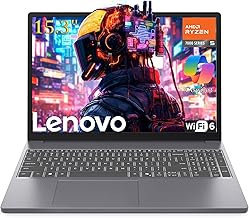
Lenovo 15 Gaming Laptop Ryzen 5 7535HS
This Lenovo leans on integrated Radeon graphics and 8GB of RAM, positioning it as an entry point for light gaming and everyday use rather than demanding titles. It’s a reasonable choice for beginners on a tight budget who mainly play less graphically intensive games.
Frequently Asked Questions
Do I need a dedicated GPU for entry-level gaming?
For modern AAA titles, yes—a dedicated GPU like the RTX 3050 or RTX 4050 provides significantly better frame rates than integrated graphics. If you mainly play esports titles or older games, integrated graphics can still deliver a playable experience.
Is 8GB of RAM enough for gaming in 2026?
8GB is workable for lighter titles but increasingly restrictive as games and background software grow more demanding. 16GB is the more future-proof choice and is recommended if your budget allows it.
How important is refresh rate for casual gaming?
For casual or single-player gaming, a 60Hz display is perfectly fine. A 144Hz panel matters most for competitive, fast-paced games where smoother motion gives a real gameplay advantage.
Should I prioritize CPU or GPU on a budget?
For gaming specifically, prioritize the GPU first since it has the largest impact on frame rates and visual settings. The CPU matters more for overall system responsiveness and multitasking outside of games.
Final Thoughts
For most buyers, the HP Victus and Acer Nitro 5 offer the best balance of dedicated GPU performance and price, while the ASUS TUF Gaming F16 is worth the upgrade for gamers who want extra graphical headroom and are willing to spend a bit more for it.