Key takeaways
- Hardware encoder: An RTX GPU’s NVENC encoder streams high-quality video with almost no impact on game frames, which is why discrete Nvidia laptops are the safe streaming pick.
- CPU cores and RAM: OBS, your game, and a browser all want resources; 8-plus cores and 16GB minimum keep the stream smooth, with 32GB ideal for heavy multitasking.
- Display refresh rate: A 144Hz to 165Hz panel gives you a smooth local experience while you also broadcast; the audience sees your encoded feed, but you feel the high refresh.
- Cooling and sustained clocks: Streaming is a long, steady load, so a laptop with strong cooling holds clocks better across a multi-hour broadcast.
- Connectivity: USB4 or Thunderbolt and Wi-Fi 6E/7 help you attach capture gear and keep a stable upload, which matters as much as the GPU for live video.
Streaming while you game asks a laptop to do two demanding jobs at once: run the game at a high frame rate and simultaneously encode video for Twitch or YouTube. That means you want more than raw GPU muscle; you want a machine with enough CPU cores and RAM to handle OBS in the background, plus modern hardware encoders that offload the stream without tanking your in-game frames. In 2026, laptops from budget to premium can do this well if you pick the right balance.
This roundup collects gaming laptops suited to creators, from an ASUS ROG Strix G16 with an RTX 5060 down to value AMD Ryzen machines with fast USB4 and generous RAM. We weighted GPU encoder quality, CPU cores, RAM capacity, and display refresh rate, then matched each to a specific kind of streamer so you buy the right amount of laptop.
Our top picks





As an Amazon Associate we earn from qualifying purchases at no extra cost to you. Ratings are shown as listed on Amazon.
⚡ Save on Your Next PC — Amazon Prime
Prime members get fast free shipping on the systems above, plus early access to Prime Day & Black Friday PC deals. New members get a 30-day free trial.
Watch: Best Gaming Laptop for Streaming — Video Review
How to Choose
- Hardware encoder: An RTX GPU’s NVENC encoder streams high-quality video with almost no impact on game frames, which is why discrete Nvidia laptops are the safe streaming pick.
- CPU cores and RAM: OBS, your game, and a browser all want resources; 8-plus cores and 16GB minimum keep the stream smooth, with 32GB ideal for heavy multitasking.
- Display refresh rate: A 144Hz to 165Hz panel gives you a smooth local experience while you also broadcast; the audience sees your encoded feed, but you feel the high refresh.
- Cooling and sustained clocks: Streaming is a long, steady load, so a laptop with strong cooling holds clocks better across a multi-hour broadcast.
- Connectivity: USB4 or Thunderbolt and Wi-Fi 6E/7 help you attach capture gear and keep a stable upload, which matters as much as the GPU for live video.
The Best Picks Reviewed
ASUS ROG Strix G16 (2025) RTX 5060, i7-14650HX
At around $1,590 this is the premium streaming pick. The RTX 5060’s NVENC encoder produces clean, high-bitrate video with negligible frame-rate cost, while the 14-core i7 and 16GB DDR5 handle OBS and your game together. The 165Hz 16:10 display and Wi-Fi 7 round out a machine built for serious creators.
MSI Cyborg 17 RTX 5060, Core 7-240H
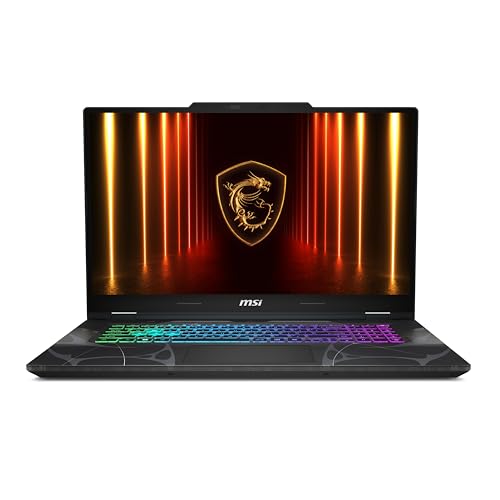
Near $1,260, this 17.3-inch laptop pairs the same class of RTX 5060 encoder with a bigger 144Hz screen and a 1TB NVMe SSD. The larger display gives you room for OBS and chat side by side, and the discrete Nvidia GPU keeps stream quality high, making it a strong value for Nvidia-focused streamers.
NIMO 17.3 Ryzen 7 8745HS, 32GB, 1TB
At roughly $900 this AMD machine is the multitasking value pick, with a fast 8-core Ryzen 7, a full 32GB of RAM, and USB4. It relies on Radeon 780M graphics rather than a discrete GPU, so it is best for streaming lighter or esports titles and for creators who juggle many background apps.
NIMO 15.6 Ryzen 7 8745HS, 16GB, 100W PD
Around $850, this 15.6-inch Ryzen 7 laptop with 100W USB-C power delivery is the portable creator pick. The 16GB of RAM and strong integrated graphics handle 1080p streaming of less demanding games, and the compact size and PD charging make it easy to stream on the go.
15.6 AI-Ready Ryzen 7 7735HS, 8GB, 512GB
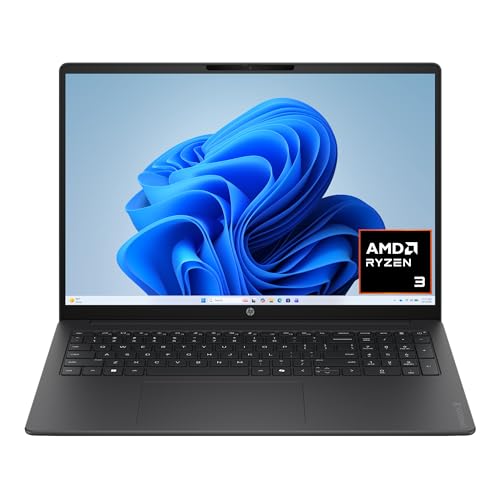
At about $569 this is the budget entry point for aspiring streamers, with an 8-core Ryzen 7 and a 512GB SSD. The 8GB of RAM is the limiting factor, so plan to upgrade it before streaming seriously, but the CPU has the cores to start broadcasting lighter titles affordably.
Frequently Asked Questions
Do I need an Nvidia GPU to stream games?
Not strictly, but NVENC on RTX laptops is the gold standard because it encodes high-quality video with almost no hit to your game’s frame rate. AMD and integrated encoders work for lighter titles but give up quality or frames under heavy load.
How much RAM do I need for streaming while gaming?
16GB is the realistic minimum with a game, OBS, and a browser open; 32GB is ideal if you also run chat overlays, alerts, and multiple background apps. On 8GB machines, upgrade before streaming seriously.
Can a budget laptop stream to Twitch?
Yes, for esports and lighter games at 1080p. A strong CPU with 8 cores can encode acceptably, but you will want more RAM and ideally a discrete GPU as you move to demanding AAA titles or higher bitrates.
Does display refresh rate matter for streaming?
It matters for you, not your viewers. Your audience sees the encoded feed, but a 144Hz to 165Hz panel makes your local gameplay feel smooth and responsive, which helps you play and react better on stream.
Final Thoughts
For clean, high-quality streams with minimal frame loss, a discrete RTX laptop like the ROG Strix G16 or MSI Cyborg 17 is the reliable choice. For creators on a budget or those streaming lighter titles, the AMD NIMO machines deliver strong CPUs and generous RAM for less, provided you accept integrated graphics. Decide what games you stream and how many background apps you run, then prioritize the encoder and RAM accordingly.