Key takeaways
- Portability: A lightweight laptop is easier to carry between classes and the library. Weight and size matter when you are on the move all day.
- Battery life: Long battery keeps you productive through back-to-back lectures without hunting for an outlet. Prioritize all-day endurance.
- Performance and RAM: For writing, browsing, and video calls, a modern processor with 8GB of RAM is fine; 16GB adds comfort for heavier multitasking.
- Storage: An SSD keeps the laptop responsive. 256GB is a workable baseline, while 512GB gives more room for files and apps.
- Screen size: A 14 to 15-inch screen balances portability and usability, while 17 inches suits those who want more workspace at their desk.
What's inside
The right laptop can carry you through four years of essays, lectures, group projects, and late-night study sessions. For college, the priorities are usually portability, dependable battery life, and enough performance for everyday academic work, all without the premium price of a high-end machine you do not need.
This roundup covers the best laptops for college students, spanning lightweight ultraportables to larger-screen options with numeric keypads. Here is how to choose a laptop that fits your coursework, your backpack, and your budget.
As an Amazon Associate we earn from qualifying purchases at no extra cost to you.



🎮 Get More From Your Setup — Free
Prime Gaming gives you free PC games every month, in-game loot, and a free Twitch channel sub — plus fast free shipping on all the gear above. New members get a 30-day free trial.
Watch: Best Laptop For College — Video Review
How to Choose a Laptop for College
- Portability: A lightweight laptop is easier to carry between classes and the library. Weight and size matter when you are on the move all day.
- Battery life: Long battery keeps you productive through back-to-back lectures without hunting for an outlet. Prioritize all-day endurance.
- Performance and RAM: For writing, browsing, and video calls, a modern processor with 8GB of RAM is fine; 16GB adds comfort for heavier multitasking.
- Storage: An SSD keeps the laptop responsive. 256GB is a workable baseline, while 512GB gives more room for files and apps.
- Screen size: A 14 to 15-inch screen balances portability and usability, while 17 inches suits those who want more workspace at their desk.
The Best College Laptops Reviewed
HP 14 Laptop (2026 Edition)
The HP 14 is an ideal everyday college companion, weighing just over three pounds with 8GB of RAM, a 256GB SSD, and long battery life. It includes Microsoft 365 and Copilot AI, ready for essays and research out of the box. For students who want a light, affordable laptop that handles all the academic basics, it is a superb choice.
Acer Aspire Go 15 AI
The Acer Aspire Go 15 pairs a capable Ryzen 7 7730U with 16GB of RAM and a fast 512GB Gen 4 SSD on a 15.6-inch FHD display. The generous RAM and storage make it great for multitasking across tabs, documents, and calls. For students who want a bit more power and headroom, this well-rounded laptop delivers strong value.
HP Pavilion Laptop (2026, Intel N100)
The HP Pavilion offers a portable design with 16GB of RAM, a 256GB SSD, Wi-Fi 6, and a numeric keypad, plus Copilot AI and Office 365. Its long battery life and comfortable keyboard suit note-taking and writing. For students who value a numpad and solid everyday performance at a friendly price, it is a practical pick.
HP 17.3 Laptop (Ryzen 5 7520U)
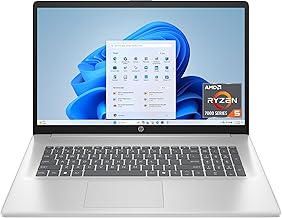
The HP 17.3-inch laptop gives students who want a larger workspace a big HD+ display, a Ryzen 5 7520U, 16GB of RAM, and a 512GB SSD. The roomy screen and numpad make it comfortable for spreadsheets and multitasking at a desk. If portability is less critical than screen size, this is a spacious, capable option.
HP 15.6 Touchscreen Laptop
The HP 15.6-inch touchscreen model offers an intuitive touch display, a Ryzen 3 7320U, 8GB of RAM, and a 128GB SSD running Windows 11 in S Mode. It is a budget-friendly choice for browsing, writing, and streaming, with the added convenience of touch input. For students on the tightest budgets who want touch, it is a sensible entry option.
Frequently Asked Questions
How much RAM does a college laptop need?
8GB handles writing, browsing, and video calls comfortably. 16GB, as in several picks here, adds headroom for heavier multitasking and keeps the laptop smooth for longer.
Is battery life important for students?
Very. All-day battery lets you move between classes and study spots without searching for an outlet, which is one of the most valuable features for campus life.
Do I need a large screen or a portable one?
A 14 to 15-inch laptop balances portability and usability for most students. Choose a 17-inch model only if you prioritize desk workspace over carrying it around all day.
Is an SSD necessary?
Yes. An SSD keeps the laptop fast and responsive, with quick boot and load times. All of these picks use SSD storage rather than slow mechanical drives.
Final Thoughts
The best college laptop fits your workload and lifestyle. The HP 14 is a lightweight, well-equipped everyday pick, while the Acer Aspire Go 15 offers more power for multitasking. The HP Pavilion adds a numpad and strong value, the HP 17.3 gives you a larger workspace, and the touchscreen HP 15.6 keeps costs low. Prioritize portability, battery, and enough RAM, and you will have a reliable partner for all four years.