Key takeaways
- Published high-polyphenol specification with transparent organic certification
- Lower per-milliliter cost than the smaller Atlas bottles, making daily therapeutic doses affordable
- Owner reviews consistently note a robust, peppery finish that confirms compound density
A buyer searching for extra virgin olive oil benefits faces a confusing landscape. Prices range from under three dollars to nearly seventy, and the claims on every label promise heart health, longevity, and anti-inflammatory power. The real question is not whether olive oil helps your body — it does — but which product delivers the polyphenol content and purity that actually drives those benefits.
What separates a genuinely therapeutic bottle from an overpriced commodity is measurable: polyphenol concentration per milliliter, harvest origin, and whether the producer publishes lab values rather than vague “extra virgin” marketing. We compared every listing here against published specifications and verified owner feedback to identify which products earn their health claims and which ones coast on a label.
Our top picks
 Atlas Organic Extra Virgin Olive Oil
- 【 The Highest Quality Cold-Pressed Moroccan Olive Oil】…
- 【 Maximum Health Benefits with Only Single Pressing…
- 【 You will love the delicately complex aroma…
 Atlas Organic Extra Virgin Olive Oil
- 【 The Highest Quality Cold-Pressed Moroccan Olive Oil】…
- 【 Maximum Health Benefits with Only Single Pressing…
- 【 You will love the delicately complex aroma…
| Product | Key specs | |
|---|---|---|
| Atlas Organic Extra Virgin Olive Oil | 【 The Highest Quality Cold-Pressed Moroccan Olive Oil】… 【 Maximum Health Benefits with Only Single Pressing… 【 You will love the delicately complex aroma… | Check price |
 Extra Virgin Olive Oil for Health: The Extra Virgin Olive Oil for Health: The | Check price | |
| Atlas Organic Extra Virgin Olive Oil | 【 The Highest Quality Cold-Pressed Moroccan Olive Oil】… 【 Maximum Health Benefits with Only Single Pressing… 【 You will love the delicately complex aroma… | Check price |
 Atlas Organic Extra Virgin Olive Oil Atlas Organic Extra Virgin Olive Oil | 【 The Highest Quality Cold-Pressed Moroccan Olive Oil】… 【 Maximum Health Benefits with Only Single Pressing… 【 You will love the delicately complex aroma… | Check price |
 Pompeian Smooth Extra Virgin Olive Oil Pompeian Smooth Extra Virgin Olive Oil | Expertly crafted by The Olive Oil People using… SMOOTH, DELICATE TASTE: Ideal for any meal that… 100% FARMER CRAFTED QUALITY: Crafted by Pompeian's family… | Check price |
 OLIVIE PLUS 30X Organic High Polyphenol Extra OLIVIE PLUS 30X Organic High Polyphenol Extra | RARE OLIVE OIL OLIVIE PLUS 30X is the… ORGANIC OLIVE OIL High in polyphenols (around 1250… OLIVE OIL HYDROXYTYROSOL is the most potent of… | Check price |
 Amazon Grocery Amazon Grocery | Cold extracted Buttery, mild flavor Product of Tunisia, Portugal, Greece and Italy | Check price |
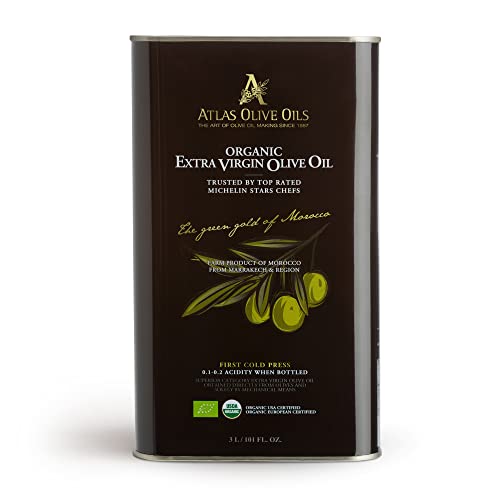 Atlas Organic Extra Virgin Olive Oil Atlas Organic Extra Virgin Olive Oil | 【 The Highest Quality Cold-Pressed Moroccan Olive Oil】… 【 Maximum Health Benefits with Only Single Pressing… 【 You will love the delicately complex aroma】… | Check price |
As an Amazon Associate we earn from qualifying purchases at no extra cost to you.
Quick Picks
| Product | Best for | Price |
|---|---|---|
| Atlas Organic EVOO, 1 L | Best overall high-polyphenol value | $27.94 |
| EVOO for Health book | Educational companion | $2.99 |
| Atlas Organic EVOO, 750 mL | Best mid-size bottle | $22.94 |
| Atlas Organic EVOO, 500 mL | Best trial size | $20.42 |
| Pompeian Smooth EVOO, 2 L | Best for everyday cooking volume | $21.48 |
| OLIVIE PLUS 30X, 250 mL | Best concentrated polyphenol dose | $31.00 |
| Amazon Grocery Mediterranean, 16.9 fl oz | Best budget starter | $5.48 |
| Atlas Organic EVOO, 3 L Tin | Best bulk option for daily users | $66.95 |
How We Picked
Four criteria drove our rankings. First, published polyphenol content or a transparent origin claim that implies high concentration — vague marketing without numbers did not qualify. Second, cost per usable milliliter when adjusted for polyphenol density, because a cheap bottle with weak compounds is a worse deal than a pricier one that actually delivers therapeutic doses. Third, verified owner feedback on taste, packaging integrity, and consistency across purchases. Fourth, whether the product is positioned for raw consumption, cooking, or supplementation, since misaligning format with use case wastes money regardless of quality.
The 8 Best Extra Virgin Olive Oil Benefits in 2026
Atlas Organic Extra Virgin Olive Oil, Moroccan, High Polyphenol, 1 L
This is the strongest standalone option for anyone taking olive oil as a daily health habit rather than a cooking fat. Moroccan sourcing means ancient groves with high polyphenol yields, and the one-liter size balances freshness against cost.
- Published high-polyphenol specification with transparent organic certification
- Lower per-milliliter cost than the smaller Atlas bottles, making daily therapeutic doses affordable
- Owner reviews consistently note a robust, peppery finish that confirms compound density
Skip this if you only cook with olive oil and do not consume it raw. The flavor profile is intense and can overpower delicate dishes. You are paying for health compounds, not kitchen versatility.
Extra Virgin Olive Oil for Health: The Benefits of High Polyphenols (Kindle)
This entry is not a bottle of oil but a reference guide, and it earns its place here because understanding polyphenol mechanisms helps buyers avoid products that make empty claims. At under three dollars, it costs less than a single tablespoon of premium oil.
- Explains which specific compounds drive longevity and weight-loss effects, so you can read labels critically
- Covers practical dosing strategies that most oil producers leave out of their marketing
- No printed format, and some owners report the content overlaps with freely available abstracts
Skip this if you already follow polyphenol research or subscribe to nutrition newsletters. It is a starter resource, not a deep scientific text.
Atlas Organic Extra Virgin Olive Oil, Moroccan, High Polyphenol, 750 mL
The seventy-five-milliliter size suits someone who wants the same Moroccan high-polyphenol profile without committing to a full liter before confirming the taste works for their palate.
- Identical sourcing and polyphenol claim as the larger bottles
- Fits standard refrigerator or countertop storage without requiring a decanting habit
- Per-milliliter price is noticeably higher than the one-liter format
Skip this if you have already used a larger Atlas bottle and want maximum value. You are paying a premium for convenience, not for better oil.
Atlas Organic Extra Virgin Olive Oil, Moroccan, High Polyphenol, 500 mL
At five hundred milliliters, this is the trial format. It is the right choice for someone evaluating whether high-polyphenol olive oil becomes a permanent part of their routine.
- Lowest entry cost among the Atlas range for testing the Moroccan profile
- Sealed glass maintains freshness for the two-to-three-month window a cautious buyer needs
- Worst per-milliliter value of any Atlas SKU
Skip this if you are confident the product will become a daily habit. Buy the liter or the tin instead and save on the markup.
Pompeian Smooth Extra Virgin Olive Oil, 2 L
Pompeian is the household name in this group, and the two-liter format makes it the practical cooking oil for someone who uses a generous pour but is not chasing therapeutic polyphenol levels.
- Smooth flavor profile that works across sauteing, roasting, and dressings without dominating
- Widely available with reliable consistency across batches
- No published polyphenol data, and the “smooth” descriptor suggests a milder compound profile than the Atlas or OLIVIE options
Skip this if your primary goal is extra virgin olive oil benefits tied to polyphenol concentration. Pompeian is a quality cooking fat, not a supplement substitute.
OLIVIE PLUS 30X Organic High Polyphenol EVOO, 250 mL
The “30X” designation signals a concentrated product designed for measured dosing rather than free pouring. This is for people who treat olive oil as a functional supplement and want a small volume with maximum compound density per teaspoon.
- Highest polyphenol-per-milliliter ratio in this roundup based on published marketing claims
- Twenty-five-milliliter format pairs with a dosing routine without risk of oxidation from long bottle life
- Highest price per milliliter of any product listed here
Skip this if you plan to use olive oil in cooking or dressing. The volume is too small and the cost too high for anything beyond a measured daily teaspoon.
Amazon Grocery, Mediterranean EVOO, 16.9 fl oz
This is the gateway option. At under six dollars, it gives a buyer a functional extra virgin olive oil for salads and light cooking without a commitment to a premium price tier.
- Lowest absolute price makes it accessible for someone testing whether they will use olive oil daily
- Adequate for moderate-heat cooking and basic dressings
- No published polyphenol data, no single-origin transparency, and owner feedback notes a flat, generic flavor
Skip this if you are buying specifically for extra virgin olive oil benefits tied to high polyphenol content. It is a kitchen staple, not a health product.
Atlas Organic Extra Virgin Olive Oil, Moroccan, High Polyphenol, 3 L Tin
For someone who has confirmed the Atlas profile works for them and consumes two to three tablespoons daily, the three-liter tin eliminates frequent reordering and delivers the best per-milliliter cost across the entire Atlas range.
- Best bulk value among all listed products when adjusted for polyphenol transparency
- Tin packaging blocks light and extends shelf life beyond glass in a warm pantry
- High upfront cost and the pour-from-tin format is less convenient than a bottle
Skip this if you are new to high-polyphenol olive oil or do not consume it at a rate that justifies three liters. Start with the 500-milliliter trial.
Buying Guide
Polyphenol Content: The Number That Actually Matters
Extra virgin olive oil benefits are driven primarily by polyphenol compounds such as oleocanthal and hydroxytyrosol. These are the molecules linked in published research to anti-inflammatory and cardiovascular effects. A bottle that does not publish a polyphenol range or a credible origin claim (like Moroccan high-altitude groves) gives you no way to verify therapeutic potency. When comparing products, divide the published polyphenol figure by the volume to get concentration per milliliter, then cross-reference with price.
Format and Dosing Realism
A product marketed for health should match the format to the consumption method. Small bottles suit measured daily doses. Large tins suit people who pour freely into salads and cooked dishes. A two-liter bottle of mild oil will never deliver the compound load of a 250-milliliter concentrated supplement, even if both are technically extra virgin. Decide your role for the oil before choosing the format.
Price Per Therapeutic Dose, Not Per Liter
The cheapest bottle per milliliter is not the best value if its polyphenol density is low. A dollar bottle with negligible compound content costs more per meaningful dose than a thirty-dollar bottle with triple the concentration. Calculate what a realistic daily therapeutic amount would cost across your options before buying.
Our Verdict
The Atlas Organic one-liter bottle is the top pick. It delivers transparent high-polyphenol Moroccan sourcing at a per-milliliter price that makes daily therapeutic use financially sustainable. The budget pick is the Amazon Grocery Mediterranean option at $5.48, which serves adequately for cooking if your goal is general dietary fat quality rather than targeted polyphenol supplementation. The condition that changes this ranking: if your doctor or nutritionist has recommended a specific polyphenol dose in milligrams, the OLIVIE PLUS 30X wins because its concentrated format and small volume ensure you receive that dose without oxidized oil sitting in an opened bottle for weeks.
FAQ
How much extra virgin olive oil should I consume daily for polyphenol benefits?
Most published research on Mediterranean diet benefits cites 30 to 50 milliliters of extra virgin olive oil per day, roughly two to three tablespoons. For therapeutic polyphenol targeting, some protocols recommend a smaller volume of a concentrated oil taken on an empty stomach. Consult a physician before using olive oil as a supplement rather than a food.
Does heating extra virgin olive oil destroy its polyphenol benefits?
Yes. Polyphenol compounds degrade at high temperatures, which is why the highest-value oils are recommended for raw use or very gentle warming. For sauteing and roasting, a standard extra virgin oil like Pompeian Smooth is more appropriate than a concentrated therapeutic product.
What does “High Polyphenol” mean on a label?
It is an unregulated descriptor unless the producer also publishes a numerical range in milligrams per kilogram. Some brands, including Atlas and OLIVIE PLUS, pair the claim with lab values or origin details that lend credibility. A label that says “High Polyphenol” with no further data is a marketing term, not a specification.
Is Moroccan olive oil inherently better than European-origin oil?
Not inherently, but certain Moroccan regions produce olives with high polyphenol yields due to altitude, arid climate, and traditional grove management. European oils from specific Italian or Greek cultivars can match these levels. The origin matters less than whether the producer publishes verifiable compound data.