Key takeaways
- For most gaming and home-theater setups, the best Dolby Atmos receivers are the Denon AVR-X3800H for flexible layouts and room correction, the Onkyo TX-RZ50 for value with Dirac Live, and the Denon AVR-X6800H for larger systems that need more channels…
For most gaming and home-theater setups, the best Dolby Atmos receivers are the Denon AVR-X3800H for flexible layouts and room correction, the Onkyo TX-RZ50 for value with Dirac Live, and the Denon AVR-X6800H for larger systems that need more channels and power. The right pick depends less on the Atmos logo than on how many speakers you plan to run, which HDMI features your gaming display needs, and whether you want to add external amplification later.
Choose by speaker layout first
Dolby Atmos uses overhead or upward-firing height speakers in addition to the usual front, center, surround, and subwoofer channels. In a layout such as 5.1.2, the final digit means two height channels; it does not mean two subwoofers. A receiver’s processing-channel count and its built-in amplifier count are also different: some models can process more channels than they can power without an external amp.

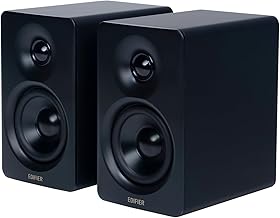
Yamaha RX300A 5.2-Channel Home Theater AV Receiver with Dolby Atmos, 4K120/8K HDMI and Bluetooth Multipoint (Black)
Included for 'Best Dolby Atmos Receivers for Immersive Sound' because the listing specifies 4K120/8K HDMI and Bluetooth Multipoint (Black), details this guide uses to compare options.
View on Amazon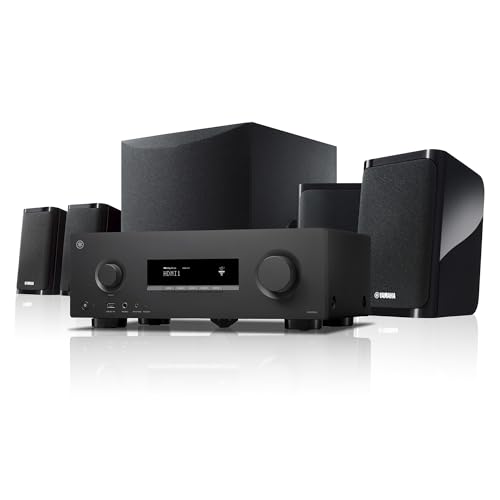
YAMAHA YHT-4970U 5.1-Channel Home Theater System - Dolby Atmos 4K120 8K AV Receiver, 5 Speakers and Powered Subwoofer - HDMI eARC, Bluetooth Wireless Streaming
Included for 'Best Dolby Atmos Receivers for Immersive Sound' because the listing specifies Dolby Atmos 4K120 8K AV Receiver and 5 Speakers and Powered Subwoofer, details this guide uses to compare options.
View on Amazon| Receiver | Processing / powered channels | Useful HDMI and gaming features | Calibration | Best fit |
|---|---|---|---|---|
| Denon AVR-X1800H | 7.2 / 7 | Three 8K-capable HDMI inputs; 4K/120, VRR, and ALLM support | Audyssey MultEQ XT | 5.1.2 Atmos or 7.1 without external amplification |
| Onkyo TX-RZ50 | 11.2 / 9 | Three 8K-capable HDMI inputs; 4K/120, VRR, and ALLM support | Dirac Live room correction included | 5.1.4 or 7.1.2, with an external two-channel amp |
| Denon AVR-X3800H | 11.4 / 9 | Six 8K-capable HDMI inputs; 4K/120, VRR, and ALLM support | Audyssey MultEQ XT32; optional Dirac Live upgrade | 5.1.4 or 7.1.2, with two channels externally amplified |
| Denon AVR-X6800H | 13.4 / 11 | Seven 8K-capable HDMI inputs; 4K/120, VRR, and ALLM support | Audyssey MultEQ XT32; optional Dirac Live upgrade | 5.1.6 or 7.1.4, with two channels externally amplified |
Channel counts and feature support can vary by region and firmware. Check the receiver’s current specification and your display’s supported formats before buying, particularly if you need 4K/120Hz pass-through, HDR formats, or a specific HDMI input arrangement.
Best picks, matched to real setups
Denon AVR-X3800H: best all-rounder for a growing Atmos system
The X3800H is a strong choice if you want four height speakers and room to expand. It can process 11.4 channels but has nine built-in amplifier channels, so a 5.1.4 or 7.1.2 setup can run without an added amp. To power 7.1.4, add a two-channel amplifier. Its four subwoofer outputs are useful for connecting multiple subs and managing them separately, though the number of outputs alone does not guarantee that every subwoofer receives independent optimization.
Its six 8K-capable HDMI inputs make it easier to connect several consoles, a PC, and a streaming device without constantly swapping cables. Audyssey XT32 is built in; Dirac Live is available as an optional upgrade. That combination makes the receiver appealing to buyers who want a capable baseline now and the option to explore more advanced correction later.
Onkyo TX-RZ50: value for Dirac Live and four height speakers
The RZ50 offers 11-channel processing and nine amplified channels, making it a practical route to 5.1.4 or 7.1.2 without an external amplifier. Its built-in Dirac Live room correction is a major differentiator: it can help address room-related frequency response and timing problems, but it cannot fix poor speaker placement or eliminate deep acoustic nulls. Budget for the optional Dirac Bass Control license only if you need its additional bass-management features.
Compared with the X3800H, it has fewer HDMI inputs and fewer subwoofer outputs. It suits a system with one or two subs and a manageable number of HDMI sources. Confirm the exact HDMI capabilities of the unit sold in your region if your setup depends on particular 4K/120Hz or HDR combinations.
Denon AVR-X1800H: the sensible entry point for 5.1.2
If you want a conventional 5.1 system plus two height speakers, the X1800H’s seven amplified channels cover that layout without an external amp. It also supports a 7.1 arrangement, but not both layouts at once: there are only seven amplifier channels to allocate. Its Audyssey MultEQ XT calibration provides useful setup assistance, while its smaller channel count keeps the cost and wiring simpler than higher-tier models.
Choose it when you know you do not need four height speakers or a larger surround layout. If you expect to move to 5.1.4 soon, stepping up to a nine-channel-amplifier model can be cheaper and tidier than replacing the receiver later.
Denon AVR-X6800H: for large rooms and 7.1.4
The X6800H processes 13.4 channels and has 11 built-in amplifier channels. That is enough to power 7.1.4 directly, or to support layouts such as 5.1.6 with the appropriate speaker assignment. Its extra processing channels provide flexibility, but they do not mean it can power every possible layout on its own. Check the setup menu and manual for permitted assignments, and plan on an external amp if your chosen layout exceeds 11 amplified channels.
This is the premium option for a larger room, a substantial speaker collection, and multiple HDMI sources. It is poor value if you will only run 5.1.2: more channels do not automatically make a basic layout sound better.
Match the receiver to your room and gaming gear
| Your situation | Good starting choice | Why |
|---|---|---|
| 5.1.2, one console, one TV or projector | Denon AVR-X1800H | Seven powered channels cover the layout; fewer unused capabilities to pay for |
| 5.1.4 or 7.1.2, Dirac correction wanted | Onkyo TX-RZ50 | Nine powered channels and included Dirac Live |
| 5.1.4 or 7.1.2, many HDMI sources or multiple subs | Denon AVR-X3800H | More HDMI inputs, four subwoofer outputs, and 11-channel processing |
| 7.1.4 powered from the receiver, or 5.1.6 | Denon AVR-X6800H | Eleven built-in amplifier channels and 13-channel processing |
For gaming, the receiver is only one link in the video chain. A 4K/120Hz signal needs a compatible console or PC, a suitable receiver input, and a display input that accepts the same signal format. If the receiver causes a handshake problem, connect the console directly to the TV and send audio back over eARC. This can preserve video features while the TV returns supported audio to the receiver, although format support depends on the TV, source, and connection settings.
Power: why the wattage number needs context
Published receiver power is usually measured with specific test conditions, often fewer channels driven than in a full movie scene. A rating such as 100 watts per channel does not mean the receiver can deliver that power to every speaker simultaneously. Real requirements depend on speaker sensitivity, listening distance, room size, and how loudly you listen.
As a rough example, a speaker rated at 88dB sensitivity at 1 watt and 1 meter produces about 88dB at that distance with 1 watt. In free-field conditions, doubling the distance to 2 meters costs roughly 6dB, while increasing power from 1 watt to 16 watts adds about 12dB. That suggests around 94dB at 2 meters before accounting for room effects and system headroom. This is an estimate, not a guarantee: speaker impedance, dynamic peaks, and multiple speakers sharing receiver power all matter. If you listen at high levels in a large room, choose efficient speakers, sit closer, or use an external power amplifier rather than relying on a headline wattage figure.
Calibration and placement matter more than an extra badge
Room correction can balance speaker levels, delays, and frequency response, but it cannot turn a poor layout into a good one. Place the front stage symmetrically, keep surround speakers around the listening area, and position height speakers according to the chosen Dolby Atmos layout. In-ceiling speakers provide direct overhead sound; upward-firing modules depend more on ceiling height, shape, and reflectivity.
During calibration, keep the microphone at seated ear height on a tripod, not held in your hand. Measure several nearby listening positions rather than moving the microphone across the entire room. After calibration, verify that each speaker is identified correctly and that distances look plausible. A small bookshelf speaker set to “Large” may send bass to itself instead of the subwoofer; setting speakers to “Small” with a crossover around 80Hz is a useful starting point, not a universal rule. Adjust the crossover to suit the speakers’ real low-frequency capability.
Bottom line
Buy for the layout you intend to use, not the largest channel count on the box. The AVR-X1800H is enough for 5.1.2, the TX-RZ50 offers a strong Dirac-equipped route to four height speakers, the AVR-X3800H is the most flexible choice for many expanding systems, and the AVR-X6800H fits installations that need 11 powered channels or more processing headroom. Before choosing, count your speakers, list your HDMI sources, check your display’s gaming formats, and decide whether your room and speaker sensitivity call for external amplification.