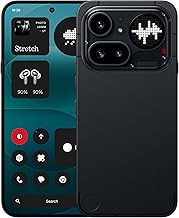
Key takeaways
- Display: 6.8-inch, 120Hz refresh rate, NXTPAPER panel treatment
- Memory and storage: 8GB RAM, 128GB internal storage
- Connectivity: 5G
- Platform: Unlocked Android
Top 3 Picks
The best unlocked phone deal for most people in 2026 is the Samsung Galaxy A57 5G — it’s the only phone in this roundup that combines a 5000mAh battery, IP68 water resistance, an AMOLED display and a triple camera at a price tier that sits below true flagship money, and because it’s sold unlocked directly, you’re free to move it between carriers whenever a better plan appears. If your ceiling is tighter, the TCL 60 XE NXTPAPER 5G is the budget pick worth taking seriously, thanks to a 6.8-inch 120Hz display that feels far more expensive than its tier. And if you want the longest useful life and the best camera hardware on this list, the Samsung Galaxy S26 Ultra is the premium choice — provided you actually plan to keep it for four or more years.
Quick Comparison
The table below covers every model in this roundup. Prices are given as tiers rather than figures because unlocked pricing moves constantly with promos, trade-in offers and regional stock.
| Product | Best for | Key specs | Price tier |
|---|---|---|---|
| TCL 60 XE NXTPAPER 5G | Big-screen media on a budget | 6.8″ 120Hz NXTPAPER display, 8GB RAM, 128GB storage, 5G | Budget |
| Motorola Moto g (2026) | Clean software and easy setup | 4GB RAM, 128GB storage, 50MP camera, Pantone Slipstream finish, 5G | Mid-range |
| Samsung Galaxy A17 5G | Long software support on a budget | 128GB storage, 5G, 1-year manufacturer warranty | Mid-range |
| Samsung Galaxy S26 Ultra | Photography and maximum longevity | 256GB storage, flagship SoC, top-tier camera array | Premium |
| Samsung Galaxy A57 5G (2026) | All-round value with IP68 | 128GB, AMOLED display, triple camera, IP68, 5000mAh | Premium |
| Rogue R67S | Emergency or secondary line | 4G LTE, T-Mobile & AT&T, Android 15 Go, 6.8″ HD+, 3GB RAM | Budget |
How We Chose
This roundup was assembled from published manufacturer specifications, carrier network documentation, and the pattern of software-support commitments that brands make publicly at launch. We did not test, benchmark or handle any of these devices — the goal here is to map the specs that actually change your experience against the situations readers are most likely to be in. Four criteria did most of the filtering work.
The first is carrier compatibility and band coverage. An unlocked phone that can’t hold your carrier’s mid-band 5G is a worse deal than a locked one, so every entry here is checked against which networks it explicitly targets. The second is software support length, weighted more heavily in 2026 than it was five years ago, because annual updates increasingly determine whether a phone still receives security patches by year three. The third is category fit — we only included a device if it wins on a specific use case rather than simply being cheap.
The fourth is upgrade path. A phone with a large battery and long update commitment is usually the smarter buy even at a higher tier, because the cost per year of use falls sharply when you keep it longer. That reasoning is why a premium device can still be the value pick for some readers, and why a budget device with a short support window often isn’t the bargain it first appears to be.
1. TCL 60 XE NXTPAPER 5G – Best for Budget Big-Screen Viewing
The TCL 60 XE NXTPAPER 5G is aimed squarely at a reader who wants a lot of screen and doesn’t want to pay flagship money for it. At 6.8 inches with a 120Hz refresh rate, the panel is physically larger and smoother than what most budget phones offer, and the NXTPAPER branding points to the matte, low-glare display treatment TCL has built its recent lineup around. If you watch a lot of video, read long articles, or scroll social feeds for extended periods, the combination of physical size and high refresh rate is the single most noticeable upgrade you can buy at this tier.
Who it suits: commuters and casual users who treat the phone as a portable screen first and a camera second. It’s also a reasonable pick for a secondary tablet replacement, since a 6.8-inch panel covers a lot of reading and streaming use cases that would otherwise justify a separate device.
Key specs as stated in the listing:
- Display: 6.8-inch, 120Hz refresh rate, NXTPAPER panel treatment
- Memory and storage: 8GB RAM, 128GB internal storage
- Connectivity: 5G
- Platform: Unlocked Android
The 8GB of RAM is worth pausing on. Many budget phones ship with 3GB or 4GB, which is enough for light app switching but starts evicting background apps the moment you juggle a browser, a maps session and a messaging app at once. At 8GB, that pressure largely disappears, and the practical result is fewer app reloads and a smoother feel during everyday multitasking. Storage at 128GB is entry-level in 2026 but standard for the tier, and it’s manageable if you lean on cloud photo backup.
The 120Hz refresh rate deserves a note about why it matters more than a spec-sheet line item suggests. A 60Hz panel redraws the screen 60 times per second; a 120Hz panel redraws it 120 times per second. Scrolling, animations and system transitions all sample from that higher rate, so motion appears smoother and touch input feels more immediate. On a large 6.8-inch display, where your eye travels further across the screen, the difference is more visible than on a small phone.
Gaming performance sits in the mainstream tier. You can expect demanding 3D titles to run at modest frame rates with reduced graphical settings, while lighter puzzle, card and casual titles will be comfortable. Exact frame rates vary with the specific game, resolution settings and thermal conditions, so treat any single number as unreliable — the safer expectation for this tier is that competitive shooters will need diluted settings.
Pros
- Large 6.8-inch display is unusually generous for a budget phone
- 120Hz refresh rate normally reserved for mid-range and up
- 8GB RAM reduces background app reloads compared with 3GB/4GB competitors
- NXTPAPER’s matte treatment reduces glare in bright environments
- 5G connectivity keeps it current with carrier networks
Cons
- 128GB storage fills quickly with photos and downloaded media
- Budget-tier camera hardware won’t match pricier phones in low light
- Long-term software support is typically shorter than Samsung’s commitments
- Large chassis is less comfortable for one-handed use
Against the Rogue R67S — the other budget entry here — the TCL is the stronger all-rounder. The Rogue runs Android 15 Go, a stripped-down edition of Android designed for very low memory devices, and it’s limited to 4G LTE on T-Mobile and AT&T. The TCL gives you 5G and 8GB of RAM instead of 3GB, which is a meaningful gap in how the phone will feel two years from now. The Rogue’s advantage is narrower scope: it’s simpler and targets two networks explicitly. But for most readers shopping this tier, the TCL is the better long-term purchase.
2. Motorola Moto g (2026) – Best for Clean Software and Everyday Reliability
The Moto g (2026) sits in the middle of this list and earns its place by being predictable. Motorola’s software approach has historically been close to stock Android with a light layer of additions on top, and that translates into fewer preinstalled apps and a less cluttered interface than you’ll find on many budget and mid-range Android phones. For a reader upgrading from an older phone, that familiarity is genuinely valuable — there’s less to relearn and less to disable.
Who it suits: buyers who want a no-drama daily driver with a decent camera and don’t need flagship performance or the longest possible support window. It’s also a sensible choice for someone who wants a phone that behaves the same way on day one as it does on day 400, without a lot of vendor software moving around underneath them.
Key specs as stated in the listing:
- Memory and storage: 4GB RAM, 128GB internal storage
- Camera: 50MP main sensor
- Finish: Pantone Slipstream colorway
- Connectivity: cellular, made for US networks
- Platform: Unlocked
The “Made for US” designation in the listing is worth understanding, because it’s one of the most common sources of confusion when buying unlocked. A phone built for US carriers carries the specific LTE and 5G bands that American networks actually deploy, along with the carrier certification needed for features like VoLTE and, on some networks, Wi-Fi calling. Imported international variants often lack those bands, and the failure mode is subtle: calls may work while data crawls, or 5G may never appear at all. Buying a US-market unlocked model removes that entire class of problem.
The 50MP main camera is the headline hardware item. A higher megapixel count doesn’t automatically produce better photos, but a 50MP sensor gives the processing pipeline more detail to work with, which typically shows up as better results in good lighting and more usable crops and digital zoom. Low-light performance depends far more on sensor size and computational processing than on megapixel count, so temper expectations for night shots at this tier.
Battery life is the area where a mid-range phone usually outperforms a flagship. Mid-tier chips draw less power under load and generate less heat, so a similarly sized battery tends to last longer in mixed daily use. If your priority is getting through a full day — or a day and a half — of messaging, browsing, maps and video without charging, this tier is frequently the smarter choice than paying more for raw performance. Exact screen-on time varies with brightness, signal strength and app mix.
Pros
- Made for US networks, avoiding band-compatibility surprises
- 50MP main camera offers good detail in favorable light
- Motorola’s near-stock Android keeps bloat low
- Mid-range power draw typically means strong battery endurance
- Distinctive Pantone Slipstream colorway stands out from the usual black slabs
Cons
- 4GB RAM is the tightest on this list after the Rogue; heavier multitaskers may feel it
- 128GB storage is entry-level with no mention of expandable storage in the listing
- Mid-range chipset limits high-end gaming
- Fewer camera lenses than the triple-camera options here
Compared with the Samsung Galaxy A17 5G, the Moto g trades a bit of memory headroom and Samsung’s typically longer update commitment for a cleaner software experience and a higher-resolution main camera. If you value a lean interface and a straightforward setup, the Moto g is the better fit. If you plan to keep the phone for four or five years and want the security patches that come with it, the Samsung is the safer long-term bet.
3. Samsung Galaxy A17 5G – Best for Long Support on a Mid-Range Budget
The Samsung Galaxy A17 5G is the entry point into Samsung’s ecosystem, and for a lot of buyers that matters more than any single specification. Samsung has built a reputation for committing to multi-year Android version upgrades and security patches on its A-series, which changes the arithmetic of a mid-range purchase: a phone that receives updates for four years costs less per year of safe use than a cheaper phone that stops receiving patches after two. The listing also notes a 1-year manufacturer warranty, sold here in a blue finish.
Who it suits: readers who want to buy once and hold, who value security updates over raw performance, and who may already own a Samsung tablet, watch or earbuds. The A17 also suits anyone who wants a familiar interface and doesn’t want to spend time customizing a new phone.
Key specs as stated in the listing:
- Storage: 128GB internal
- Connectivity: 5G
- Warranty: 1-year manufacturer warranty
- Color: Blue
- Platform: Unlocked Android
Software support is the core argument. Android’s security model depends on timely patches, and the practical consequence of falling behind is that banking apps, work email clients and enterprise tools may eventually refuse to run on an unpatched device. That’s an abstract risk on a phone you replace every 18 months and a concrete one on a phone you keep for five years. Buying into a brand with a published, multi-year patch commitment is one of the few ways to protect a mid-range purchase against early obsolescence.
The 5G radio matters for a second reason beyond speed. As carriers retire older network technologies, phones that can’t connect to the current generation lose access to capacity and coverage improvements that arrive incrementally. A 5G phone bought in 2026 will still be riding the network’s main bands in 2030, whereas a 4G-only device is already at the end of the network’s investment cycle.
Performance is mainstream-tier. Day-to-day messaging, photography, navigation, streaming and browsing all run comfortably. Demanding 3D games will run with reduced settings and will produce lower and less stable frame rates than a flagship — the gap is largest in titles that push sustained GPU load, where heat and power limits come into play. Exact frame rates depend on the game, the resolution and the settings chosen, so no single figure is meaningful across titles.
Battery life follows the usual mid-range pattern: lower power draw under typical use means the battery stretches further than a flagship’s would under the same workload. Heavy camera use and sustained gaming will drain it faster, as they would on any phone.
Pros
- Samsung’s established pattern of multi-year software and security updates
- 5G connectivity keeps it aligned with carrier network roadmaps
- 1-year manufacturer warranty adds baseline protection
- Familiar One UI interface with an established learning curve
- Strong resale demand for Samsung A-series devices
Cons
- 128GB storage with no expandable option mentioned in the listing
- Mainstream performance limits high-end gaming
- Entry-tier camera hardware won’t match the S26 Ultra or A57
- Samsung’s software layer adds preinstalled apps compared with near-stock Android
Set against the Moto g (2026), the A17 wins on update longevity and loses slightly on software cleanliness. Against the Galaxy A57 5G further down this list, the A17 is the budget-conscious sibling: the A57 adds IP68 water resistance, an AMOLED panel and a triple camera array for a step up in price. If you can stretch to the A57, the added durability is often worth it; if not, the A17 delivers the same update philosophy at a lower entry point.
4. Samsung Galaxy S26 Ultra – Best for Photography and Maximum Longevity
The Samsung Galaxy S26 Ultra, listed here at 256GB in black, is the flagship of this group and the only phone on the list that isn’t making a compromise somewhere. Ultra-tier Samsung phones exist to be the best possible device the company can build that year, which means the fastest available silicon, the most capable camera array, and the longest software commitment Samsung offers. For a reader who wants the best and intends to keep it, this is the pick.
Who it suits: photographers, mobile gamers, and anyone who wants a device that will still feel current in 2030. It’s also the right choice for someone whose phone is their primary camera — the difference in low-light image quality between a flagship and a mid-range phone is the single biggest gap between the tiers.
Key specs as stated in the listing:
- Storage: 256GB internal
- Model: Galaxy S26 Ultra
- Color: Black
- Platform: Unlocked Android
Photography is where the tier gap is widest. Flagships combine larger image sensors, optical image stabilization, dedicated telephoto optics, and vastly more computational processing power to stack and merge frames in low light. The result isn’t a marginal improvement over mid-range — it’s the difference between usable night photos and unusable ones, and between a clean 10x zoom and a smeared one. If photography is a real part of why you’re buying, this is the tier where the money shows up in results.
Gaming performance is the other headline. Flagship chipsets sustain higher frame rates at higher resolutions than mid-range silicon, but the honest framing is that frame rate depends on the specific game, the resolution you choose, the graphical settings, and how the phone’s thermals behave over a long session. A flagship will generally hold higher and more stable frame rates in demanding titles at higher settings; it will also throttle under sustained load, as every phone does. Treat any precise FPS figure you see quoted as specific to one game, one settings profile and one thermal condition.
The 256GB storage tier is the entry point for the Ultra line and is the right choice for most people. High-resolution photos and 4K video add up quickly — a minute of high-bitrate 4K video can occupy several hundred megabytes, so an hour of footage can consume tens of gigabytes. If you shoot seriously, either buy the larger capacity or plan on regular offloads to cloud or external storage.
Total ownership cost is where the premium tier can look better than it first appears. If a flagship costs roughly twice what a mid-range phone does but stays in service for two more years thanks to a longer update window and better sustained performance, the annual cost of ownership can end up close to parity — and you spend those extra years with a better camera and a faster phone. That math only works if you actually keep the device, which is the honest caveat.
Pros
- Best camera hardware and processing on this list, particularly in low light
- Fastest performance for gaming and demanding workloads
- Longest software and security support window Samsung offers
- Highest sustained performance and best future-proofing of any pick here
- Strong resale value relative to other Android flagships
Cons
- Highest upfront cost on this list by a wide margin
- 256GB base storage can fill quickly with high-resolution video
- Physically larger and heavier than mid-range options
- Capabilities exceed what casual users will actually use
Against the Galaxy A57 5G, which is the closest Samsung in the list, the Ultra is a different class of device rather than a modest upgrade. The A57 offers IP68, AMOLED and a triple camera — the durability and display fundamentals — at a considerably lower tier. The Ultra adds the fastest silicon, the best optics and the longest support commitment. If you want excellent fundamentals at a fair price, the A57 is arguably the smarter purchase. If you want the ceiling of what’s available, the Ultra is it.
5. Samsung Galaxy A57 5G (2026) – Best for All-Round Value with IP68
The Samsung Galaxy A57 5G is the pick that’s hardest to argue against. It carries three features that normally push a phone into a higher price bracket — an AMOLED display, a triple camera array, and IP68 water and dust resistance — alongside a 5000mAh battery and 128GB of storage. Those are the fundamentals that determine daily satisfaction, and having all of them in one package is why this is our overall recommendation.
Who it suits: nearly everyone. It’s the right choice for a reader who wants one phone to do everything competently for several years without paying flagship money. It’s also the best pick for anyone who’s ever killed a phone with water — IP68 changes how you use a device, because it removes an entire category of anxiety around rain, pools, kitchens and bathrooms.
Key specs as stated in the listing:
| Spec | Detail |
|---|---|
| Display | AMOLED |
| Rear cameras | Triple camera array |
| Durability | IP68 water and dust resistance |
| Battery | 5000mAh |
| Storage | 128GB |
| Connectivity | 5G, unlocked |
Start with AMOLED. Unlike a conventional LCD, an AMOLED panel can switch individual pixels off entirely, which produces true blacks and a much higher contrast ratio. It also tends to be more power-efficient when displaying dark content, because unused pixels draw nothing. The visible outcome is deeper contrast and better legibility in bright light, which is why AMOLED is one of the upgrades people notice most when they move up from a budget panel.
IP68 deserves unpacking because the numbers aren’t intuitive. In the IP rating system, the first digit covers solids and the second covers liquids; 6 is the highest solid rating (dust-tight) and 8 indicates the device can withstand continuous immersion in water at a depth specified by the manufacturer, commonly around 1.5 meters for roughly 30 minutes. The practical implication is that the phone survives rain, spills, splashes and accidental drops into a sink — not that you should swim with it, and not that the protection is permanent. Seals degrade over time with drops and repairs, so treat IP68 as insurance, not a guarantee.
The 5000mAh battery is the current standard capacity for a phone of this size. Capacity alone doesn’t determine endurance — power draw under load matters just as much — but a 5000mAh cell paired with mid-tier silicon typically delivers a comfortable full day of mixed use, and often more. For a rough planning figure: if a phone draws an average of 500 milliwatts from a 5000mAh cell rated at 3.8 volts (19 watt-hours), it would run about 38 hours of continuous light use — which is why quoted endurance depends so heavily on workload rather than on capacity alone.
The triple camera array gives you a main sensor plus additional focal lengths, typically an ultrawide and a macro or depth sensor, depending on the configuration. The practical benefit is flexibility: ultrawide for interiors and landscapes, macro for close-up detail. It won’t match the S26 Ultra’s low-light output, because that requires larger sensors and heavier processing, but it covers more shooting situations than a single-camera phone.
Pros
- IP68 water and dust resistance — rare at this price tier
- AMOLED display with true blacks and strong contrast
- 5000mAh battery supports a full day of mixed use
- Triple camera array offers multiple focal lengths
- Samsung’s multi-year software support commitment
Cons
- 128GB storage is modest for a phone intended to last several years
- Mid-tier chipset can’t match flagship gaming performance
- Camera struggles relative to flagship sensors in very low light
- Sits close enough in price to some discounted flagships to complicate the decision
The nearest alternative in this list is the Galaxy A17 5G. The A17 offers the same update philosophy and 5G connectivity at a lower tier, but gives up IP68, AMOLED and the extra camera lenses. If those three features matter to you — and for most people they do — the A57 justifies the step up. Against the S26 Ultra, the A57 is the value proposition: it delivers the durability and display fundamentals at a fraction of the flagship tier, and only loses meaningfully if you need the best possible camera or the highest gaming frame rates.
6. Rogue R67S – Best for a Backup or Emergency Line
The Rogue R67S is a niche device, and it’s worth being clear about that up front. It runs Android 15 Go — the lightweight edition of Android built for entry-level hardware — on a 6.8-inch HD+ display with 3GB of RAM, and it connects over 4G LTE on T-Mobile and AT&T networks. It isn’t trying to compete with the rest of this list on performance or camera quality. It’s trying to be a functional, affordable smartphone for a specific job.
Who it suits: someone who needs a spare phone for a glovebox, a toolbox, a second line, or a family member who uses a phone for calls, messages and little else. It’s also a reasonable pick for a temporary device while a primary phone is being repaired, or as a device for a child on a first line where a lost or broken phone isn’t a catastrophic expense.
Key specs as stated in the listing:
- Network: 4G LTE, T-Mobile & AT&T
- Operating system: Android 15 Go
- Display: 6.8-inch HD+
- Memory: 3GB RAM
- Platform: Unlocked
The carrier targeting is the most important detail. The listing names T-Mobile and AT&T specifically, and that’s not boilerplate — a phone sold as unlocked is only truly carrier-agnostic if it supports the right bands. A device certified for two networks may not have the band support for a third, so if you’re on Verizon or an MVNO that rides another network, verify compatibility before buying rather than assuming “unlocked” means universal.
Android 15 Go is the second thing to understand. The Go edition strips Android down to run acceptably on limited memory and storage, using lighter versions of core apps and reducing background overhead. The trade-off is capability: some apps behave differently, some full-featured apps aren’t supported, and heavy multitasking isn’t realistic at 3GB. What Go edition does do well is make a low-cost device feel functional rather than unusable, which is exactly the goal here.
The 6.8-inch HD+ display is large, but resolution is lower than the Full HD+ panels on the rest of this list. On a screen this size, that difference is visible when reading text or viewing detailed images — edges appear less crisp — though it’s perfectly adequate for video and everyday UI. The large size without a high-resolution panel is a deliberate cost trade.
Gaming is limited. With 3GB of RAM and Go-edition software, expect casual and 2D titles to run acceptably while demanding 3D games will struggle or need to be avoided. Battery endurance is typically strong on devices like this because the chipset and display draw relatively little power, though exact runtime depends on how you use it.
Pros
- Lowest-tier entry point in this roundup
- Large 6.8-inch screen for video and messaging
- Android 15 Go is tuned for low-memory hardware
- Explicitly targets T-Mobile and AT&T networks
- Strong battery endurance from low power draw
Cons
- 4G LTE only — no 5G support
- 3GB RAM limits multitasking significantly
- HD+ resolution on a large display reduces text sharpness
- Carrier compatibility limited to two named networks
- Camera and gaming capability are both entry-level
Against the TCL 60 XE NXTPAPER 5G, the Rogue loses on almost every measurable axis: no 5G, less memory, lower resolution. The TCL is the better buy for anyone who wants a budget phone as a daily driver. The Rogue’s case rests on being the cheapest way to get a working Android phone with a big screen, which is a legitimate need but a narrow one.
How to Choose
The right unlocked phone is the one that matches how you actually use a phone, not the one with the best spec sheet. Below are the criteria that matter, in the order they tend to change the outcome.
Carrier compatibility comes first, always
Buying unlocked only pays off if the phone works well on your network. Before anything else, confirm three things: that the model supports your carrier’s LTE and 5G bands, that it’s certified for VoLTE on that network, and that it supports the carrier’s Wi-Fi calling if you rely on it indoors.
VoLTE deserves emphasis because it’s become a hard requirement. As carriers shut down older voice technologies, calls route over LTE or 5G data instead. A phone without VoLTE certification on your carrier may register on the network for data but fail to place calls at all — a failure mode that’s confusing precisely because it isn’t a total loss of signal. US-market models like the Moto g (2026) and Samsung’s A-series carry this certification; grey-market imports frequently don’t.
5G bands and what mid-band actually means
Not all 5G is equivalent. Low-band 5G travels far and penetrates buildings but performs close to good 4G LTE. Mid-band 5G (frequently referred to as C-band) delivers a substantial speed increase with reasonable coverage and is where most of the real-world improvement lives. High-band millimeter wave is extremely fast but has very short range and struggles to pass through walls.
The practical takeaway: a phone that supports your carrier’s mid-band 5G will feel meaningfully faster than one that only does low-band. If a listing doesn’t state band support, look up the specific model against your carrier’s published compatibility list rather than assuming. Two phones both labeled “5G” can perform very differently on the same network.
Software support is the real measure of value
This is the single most underrated criterion. A phone’s useful life is usually limited by software, not hardware. Once security patches stop, banking apps and work tools may begin refusing to run, and the device becomes a liability rather than an asset.
Do the arithmetic before buying. Suppose Phone A costs a mid-range amount and receives four years of updates, while Phone B costs less but gets two years. Spread over their supported lifetimes, Phone A often costs less per year of safe use — and you spend those extra two years with a device that can still run current apps. If you replace phones every two years regardless, ignore this entirely. If you keep them, this criterion can outweigh every specification on the box.
Battery capacity versus battery endurance
Milliamp-hours tell you capacity, not runtime. Endurance depends on capacity divided by average power draw, and power draw varies enormously with workload. Here’s a worked example: a 5000mAh battery rated at 3.8V stores 19 watt-hours (5.0Ah × 3.8V = 19Wh). If a phone averages 1 watt of draw during mixed use, that’s about 19 hours; at 2 watts — heavier gaming or navigation — it drops to roughly 9.5 hours.
This is why two phones with identical 5000mAh batteries can differ by hours in real use, and why a mid-range chipset paired with a large battery often outlasts a flagship with the same capacity. The flagship’s more powerful silicon draws more under load. If you need maximum endurance rather than maximum speed, a mid-range device is frequently the better tool.
Camera hardware: sensors beat megapixels
Megapixel counts are marketing as much as engineering. What actually determines image quality is sensor size, aperture, optical stabilization and the processing power available for computational photography. A larger sensor collects more light per pixel, which is why a 12MP sensor on a flagship can outperform a 50MP sensor on a budget phone in a dim room.
For most buyers, the useful question is: do I need more than one lens? A triple camera array adds an ultrawide for interiors and landscapes and a macro for close-ups. If you shoot mostly in decent light and rarely zoom, a strong single main camera is enough. If you shoot in dim conditions or at distance, the tier upgrade is where the money goes — the low-light gap between mid-range and flagship is the widest single difference in this entire roundup.
Gaming performance and honest expectations
Frame rate is the metric that matters, and it depends on the game, the resolution, the graphical settings, the chipset, and thermal behavior over time. Every phone — including flagships — reduces performance under sustained load as heat builds. That’s normal physics, not a defect.
The practical guidance: casual and 2D titles run acceptably on almost anything, including 3GB Go-edition devices. Competitive shooters benefit from the higher and more stable frame rates that mid-range and flagship chips provide. Demanding 3D titles at high settings need flagship silicon. Rather than chasing a specific FPS number, decide which of those three buckets describes your play, and buy for that. Also note that no phone delivers peak performance indefinitely — a 30-minute session will not look like a 2-minute one.
Storage: pick your capacity by what you’ll accumulate
Storage is the spec people most often regret underestimating. Photos at high resolution typically occupy several megabytes each; video escalates quickly, and an hour of high-bitrate 4K footage can consume tens of gigabytes. Add installed games, offline maps and downloaded media, and 128GB fills faster than most buyers expect.
Three strategies work. Choose a phone with expandable storage if available. Lean on cloud backup and accept that you’ll need connectivity to access older files. Or buy a larger internal capacity up front, which is almost always cheaper than replacing the phone early. For a device you plan to keep four or more years, the larger storage tier is usually the right call.
Durability features and total cost of ownership
IP68 protection affects cost of ownership in a way that isn’t obvious at purchase. Water damage repairs are among the most expensive and least repairable failures, often costing enough to write off the device entirely. A phone with IP68 rated to roughly 1.5 meters of immersion for about 30 minutes removes the most common accidental-death scenario. Over a four-year life, that insurance is worth more than the price difference between tiers would suggest.
Screen protection matters similarly. A protective case costs a small fraction of a screen replacement and cancels most of the risk. If you’re choosing between a slightly better phone and a slightly more protected one, protection usually wins on total cost.
Unlocked versus carrier financing
Unlocked has three concrete advantages. You can switch carriers whenever a better plan appears, without an early-termination fee or a device-payment balance to settle. You avoid carrier-installed software that can’t be removed. And you can sell the phone independently when you upgrade, recovering part of the cost.
The trade-off is upfront payment. Carriers often subsidize devices through bill credits spread across 24 or 36 months, which lowers the sticker price but locks you to that network. Run the numbers: if the carrier’s plan costs more per month than an equivalent unlocked plan, the device discount may be worth less than the plan premium over the same period. For most buyers in 2026, buying unlocked and choosing a plan separately comes out ahead unless the carrier discount is unusually large.
Matching your situation to a pick
If you want the best balance of durability, display quality and price, the Galaxy A57 5G is the answer, and its IP68 and AMOLED panel are the two features people most often regret giving up. If your budget is tight and screen size is the priority, the TCL 60 XE NXTPAPER 5G delivers a 6.8-inch 120Hz panel at a budget tier. If you want the cleanest software and a capable 50MP camera, the Moto g (2026) is the straightforward choice. If you plan to keep the phone five years and care most about security patches, either Galaxy A-series phone earns its price. If photography or high-end gaming is the reason you’re upgrading, the Galaxy S26 Ultra is the only pick on this list that won’t compromise. And if you simply need a working spare line at the lowest cost, the Rogue R67S covers that job.
Frequently Asked Questions
Is an unlocked phone always better than a carrier-locked one?
Usually, yes — for flexibility and resale value. An unlocked phone can move between carriers, avoids carrier-installed software, and holds resale value because any buyer can activate it. The exception is when a carrier offers a substantial device discount through bill credits, and the total cost including a higher monthly plan still comes out below buying unlocked. Run that comparison over the full 24 or 36 months before deciding.
Will an unlocked phone work on any carrier?
Not automatically. “Unlocked” means the device isn’t restricted to one carrier by software, but it doesn’t guarantee the radio supports every network’s bands. You need matching LTE and 5G band support plus VoLTE certification for calls to work properly. Some devices, like the Rogue R67S, are explicitly built for specific networks. Always check the model against your carrier’s compatibility list before buying.
How much does 5G actually matter in 2026?
It depends on which 5G. Mid-band 5G delivers a noticeable real-world speed improvement over LTE, while low-band 5G performs close to good LTE. If your carrier has widely deployed mid-band in your area, a phone supporting those bands is worth prioritizing. A 4G-only phone will still work fine for calls and messaging, but it’s at the end of the network’s investment cycle rather than the beginning.
How long should I expect a mid-range phone to last?
With a multi-year software support commitment, four to five years of usable life is a realistic expectation. Without one, plan on two to three years before security patch gaps start causing app compatibility issues. The limiting factor is almost always software support rather than hardware failure, which is why update commitments should weigh heavily in your decision.
Do I need 8GB of RAM or is 4GB enough?
For messaging, browsing, maps, photography and streaming, 4GB is sufficient. The difference appears when you multitask heavily — switching between several apps and expecting them all to retain their state. At 3GB, background apps are evicted frequently; at 8GB, that pressure largely disappears. If you’re a heavy multitasker or plan to keep the phone for years, more RAM is one of the cheapest forms of future-proofing.
Is IP68 water resistance worth paying more for?
For most people, yes. IP68 covers immersion at roughly 1.5 meters for about 30 minutes, which handles rain, spills and accidental drops into water. Water damage repairs are expensive and often unfeasible, so the protection frequently pays for itself the first time it’s needed. Note that seals degrade over time and after repairs, so treat the rating as insurance rather than a guarantee.
How much storage do I really need?
128GB is workable if you back up photos to the cloud and stream rather than download. It becomes tight if you shoot a lot of video, since an hour of high-bitrate 4K footage can occupy tens of gigabytes. If you plan to keep the phone four or more years and shoot video regularly, buy a larger capacity or choose a model with expandable storage — it’s cheaper than replacing the device early.
Will a budget phone handle modern games?
Casual, puzzle and 2D titles run acceptably on nearly any device, including low-memory models. Competitive shooters need higher, more stable frame rates that mid-range chips provide more comfortably. Demanding 3D titles at high settings realistically require flagship silicon. Remember that all phones throttle under sustained load as they heat up, so performance in a 30-minute session will be lower than in a brief one.
The Bottom Line by Situation
If you want one phone to do everything well for years: the Samsung Galaxy A57 5G. IP68, AMOLED, a triple camera and a 5000mAh battery cover the fundamentals that matter daily, at a tier below flagship pricing.
If your budget is the binding constraint: the TCL 60 XE NXTPAPER 5G. The 6.8-inch 120Hz display and 8GB of RAM are unusually strong for a budget tier, and the 5G radio keeps it relevant.
If you want clean software and a good main camera: the Motorola Moto g (2026). Made for US networks, with 50MP main camera hardware and a near-stock Android experience.
If you keep phones for five years and want maximum patch coverage: the Samsung Galaxy A17 5G. It delivers Samsung’s update commitment at the lowest entry point in the Galaxy A line.
If photography or high-end gaming is why you’re upgrading: the Samsung Galaxy S26 Ultra. Nothing else on this list closes the low-light camera gap or matches its sustained performance.
If you just need a cheap working spare line: the Rogue R67S. Limited to T-Mobile and AT&T on 4G LTE, but it covers calls, messages and video on a 6.8-inch screen at the lowest cost here.