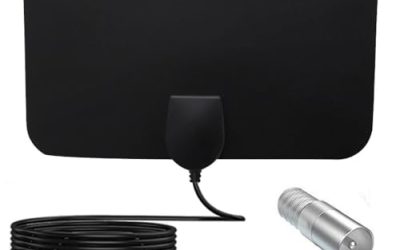
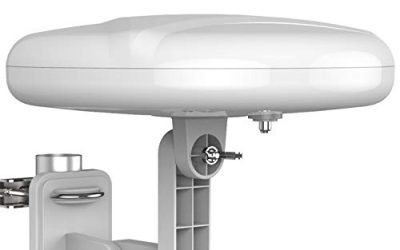
Our Top Picks
Swapping an antenna is the cheapest way to change how a wireless network behaves, and also the easiest way to be disappointed. A bigger number in dBi does not add power; it reshapes the signal the radio already sends, squeezing it into a flatter, longer beam. That is wonderful if you are pointing a barn camera at a house two hundred yards away and useless if you expect a rooftop-sized boost from a stick on your desk. Buying a long range WiFi antenna starts with deciding where the signal needs to go and whether it needs to travel in one direction or all around you.
This guide is for people stretching a link across a yard, a campground, an RV park, a detached garage, or a property line, and for anyone replacing the stock antennas on a router, access point, or camera that has gone quiet at the edges. It covers six antennas whose titles claim long range, mixing directional panel and Yagi designs with omnidirectional models. It also explains the choices a spec sheet rarely spells out, since an antenna with the wrong connector or the wrong band simply ends up in a drawer, even in 2026 when WiFi 6E gear has become common.
Quick Picks
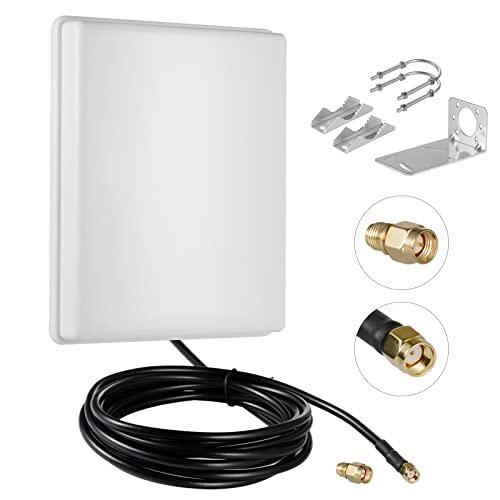
Outdoor 15dBi Dual Band WiFi 2.4GHz 5GHz 5.8GHz Long-Range Directional Panel Antenna with 10Ft Cable for WiFi Router Wireless Network Card Security IP Camera Video Surveillance Monitor, Eifagur
One of the consumer electronics options compared in this guide.
View on Amazon
12dBi WiFi 6E BT Antenna RP-SMA Male 6GHz/5GHz/2.4GHz 39.5cm 2-Pack for PC | Omni Directional Antenna Long Range for Wireless Wi-Fi Router Network Devices PC Camera Wifi 6 Adapter Desktop USB Adapter
One of the consumer electronics options compared in this guide.
View on Amazon
Yagi WiFi Antenna 2.4GHz 25dBi RP-SMA Connector High Gain Yagi Directional Antenna Booster with 1.5M Cable Long Range for Network Router/USB Adapter/Reapter/Extension Network PCl Card/Security Camera
One of the consumer electronics options compared in this guide.
View on Amazon
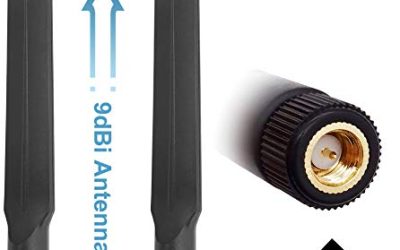
9dBi Long Range Dual Band 2.4GHz 5GHz/5.8GHz Outdoor WiFi Antenna for WiFi Router Access Points Wireless Security IP Camera RV Camera, Eifagur
One of the consumer electronics options compared in this guide.
View on Amazon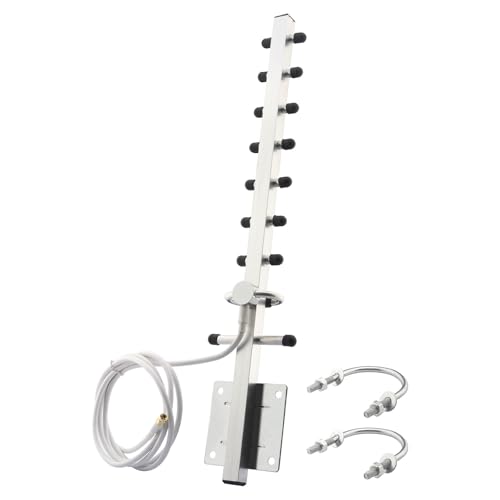
Kaunosta Dual Band 9dBi Yagi WiFi Antenna – Outdoor Directional High Gain Antenna for Long-Range Barn, Farm & Garage Extension – 5ft RG58 Cable & RP-SMA for Wireless Security Cameras & Routers
One of the consumer electronics options compared in this guide.
View on Amazon| Product | Best for | Key spec from the title |
|---|---|---|
| 15dBi Outdoor Panel Antenna | Point-to-point links and cameras | 15dBi, dual band, 10Ft cable, directional |
| 12dBi WiFi 6E Omni Antenna 2-Pack | Desktop PCs needing 6GHz | 12dBi, 6GHz/5GHz/2.4GHz, RP-SMA, 39.5cm |
| 25dBi Yagi Antenna | Longest 2.4GHz reach | 2.4GHz, 25dBi, 1.5M cable, RP-SMA |
| Eifagur 9dBi Outdoor Antenna | Routers, access points, RV cameras | 9dBi, dual band 2.4/5GHz |
| Kaunosta 9dBi Yagi Antenna | Barn, farm, and garage extensions | 9dBi Yagi, 5ft RG58 cable, RP-SMA |
| 7dBi Outdoor Booster Antenna | Milder boosts for hotspots and cameras | 7dBi, dual band, WiFi 6 mention |
How to Choose
Understand gain and direction before you read anything else
Gain, measured in dBi, describes how tightly an antenna focuses energy. A 3 to 5 dBi stick covers a house in all directions. A 7 to 9 dBi omnidirectional or modest directional antenna stretches the horizontal reach but flattens the vertical coverage, so upstairs rooms may suffer. A 15 dBi panel or a 25 dBi Yagi concentrates the beam into a narrow cone, and aiming within a few degrees becomes essential. For a link between two fixed points, higher gain on a directional antenna is the right tool. For general coverage around the property, high gain is often the wrong tool.
Match band and standard to your radios
An antenna only helps on frequencies it was built for. Titles that read 2.4GHz and 5GHz cover classic dual-band gear, while those listing 6GHz are meant for WiFi 6E radios. A 2.4GHz-only Yagi like the 25 dBi model travels farther and passes through foliage better than 5GHz but runs at lower top speeds and shares a crowded band. If your router or adapter only transmits on 2.4GHz and 5GHz, paying extra for a 6GHz-capable antenna gains you nothing. Ignore “WiFi 6” or “WiFi 7” on the box, since an antenna is a passive part and does not make a link faster by itself.
Confirm the connector and cable run
Most antennas here use RP-SMA connectors, but RP-SMA is not interchangeable with SMA, and a mismatch means an adapter and extra signal loss. Check the jack on your router or card before ordering. Cable matters just as much: every extra foot of thin coax bleeds signal, especially at 5GHz and above. A 10Ft cable, a 1.5M cable, and a 5ft RG58 cable each trade placement freedom for loss. Keep runs as short as the mounting spot allows, and if you need a long run, choose thicker, lower-loss cable.
Plan for mounting and weather
Outdoor panels and Yagis should be mounted high, clear of metal roofs and dense branches, and pointed at the far end of the link. Look for outdoor-rated housings, sealed connectors, and mounting hardware with adjustable angles. Legal limits for total transmitted power exist in many regions, and a high-gain antenna on a powerful radio can exceed them, so read your region’s rules. Budget products often cut corners on connector sealing and mast brackets, which is where outdoor installs usually fail.
The 6 Best Options
15dBi Outdoor Panel Antenna
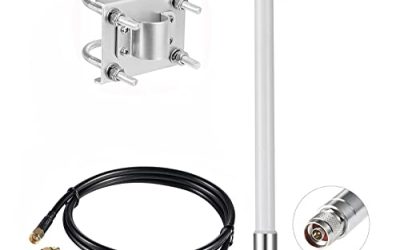
This directional panel lists 15dBi gain across 2.4GHz, 5GHz, and 5.8GHz, a 10Ft cable, and uses such as routers, wireless network cards, and security IP cameras. A panel is wide enough to be forgiving on aim and is often the practical way to feed a distant camera or building across a yard.
- Strength: dual-band coverage at 15dBi suits both classic 2.4GHz and 5GHz clients.
- Strength: the 10Ft cable lets you mount high and keep the radio indoors.
- Trade-off: it is directional, so it only serves the area in front of it, and the title states no explicit connector type.
Skip it if you need coverage in all directions or if your equipment needs 6GHz support. Buyers building a single link across open ground will get far more from this style than from a stick antenna. Expect to spend a little time on mounting and aiming, and plan to run the cable along a protected route.
12dBi WiFi 6E Omni Antenna 2-Pack
This pair offers 12dBi omnidirectional antennas spanning 6GHz, 5GHz, and 2.4GHz with RP-SMA male connectors, a 39.5cm length, and Bluetooth coverage for PC use. It is the one choice here that speaks to WiFi 6E cards in desktop towers, not outdoor links.
- Strength: it covers three WiFi bands, including 6GHz, which most others in this group do not.
- Strength: it ships as a pair for cards and routers with two antenna ports.
- Trade-off: omnidirectional antennas stay short of the reach a Yagi or panel delivers over a single line of sight.
Skip it if your goal is a point-to-point link across a property, since an omni design spreads signal instead of throwing it. Treat it as a replacement for stock antennas on a tower or a router, where a taller, higher-gain stick can improve coverage in a room or two without any complicated aiming.
25dBi Yagi Antenna
The Yagi lists 2.4GHz only, 25dBi gain, an RP-SMA connector, and a 1.5M cable, aimed at routers, USB adapters, and similar gear. Its narrow beam and high gain make it the pick for the longest straight shot when you only need the 2.4GHz band.
- Strength: 25dBi is the highest gain stated in the group, built for distance.
- Strength: 2.4GHz passes through trees and light obstructions better than higher bands.
- Trade-off: it covers a single band, so it will not help a 5GHz or 6GHz link.
Skip it if your network is 5GHz-only or if you cannot aim it accurately; the narrow beam punishes sloppy alignment. Plan to mount it on a pole or bracket with a fixed, steady aim, since a swaying mount or a shifting tree branch can drop the link, and expect to fine-tune the direction while watching a signal meter.
Eifagur 9dBi Outdoor Antenna
The Eifagur lists 9dBi on both 2.4GHz and 5GHz/5.8GHz, outdoor use, and applications such as WiFi routers, access points, and RV or security IP cameras. It sits in the middle ground, with more reach than a stock antenna but not the narrow beam of a Yagi.
- Strength: 9dBi dual-band is a flexible gain level for yards and campsites.
- Strength: the RV camera mention points to mobile and temporary use.
- Trade-off: the title does not state cable length or connector type, so confirm both before buying.
Skip it if you want a documented long cable run or the extreme reach of a high-gain Yagi. It is a practical middle option for a campsite, a deck, or a shed within a couple of hundred feet, where convenience of setup counts for more than squeezing out every last decibel of gain.
Kaunosta 9dBi Yagi Antenna
The Kaunosta is a dual-band 9dBi Yagi, billed as outdoor, directional, and high gain, with a 5ft RG58 cable and an RP-SMA connector. The title speaks to rural extensions such as barns, farms, and garages, where a building sits far from the router.
- Strength: RG58 is a named cable type, which gives some assurance about loss over the run.
- Strength: a dual-band Yagi gives directional reach on both 2.4GHz and 5GHz.
- Trade-off: 9dBi is modest for a Yagi, so very long links may need a higher-gain option.
Skip it if you need omnidirectional coverage around a yard rather than a straight line. A Yagi needs a clear sight line to the router or access point at the other end, so it works best when the barn or garage has a window or an exterior wall facing the house. Verify the connector fits your device before mounting anything on a mast.
7dBi Outdoor Booster Antenna
This 7dBi dual-band antenna covers 2.4GHz and 5GHz/5.8GHz and lists uses for routers, hotspots, network devices, PCs, and security IP cameras, with a WiFi 6 mention. The gain is the lowest of the long-range group, which makes it the gentlest upgrade for people who just want a bit more reach.
- Strength: lower gain keeps coverage broad, so aim matters less.
- Strength: usable with many device types, from hotspots to cameras.
- Trade-off: it will not bridge long distances the way a panel or Yagi can.
Skip it if you need to cross a large property or reach a far building. Think of it as a tune-up for weak corners of a yard or a camera slightly out of range, not a tool for building a long-distance bridge. Pair it with a short cable run so the modest gain is not eaten by loss along the way.
Which One Fits Your Situation
You need to reach a detached garage or barn
Choose the Kaunosta 9dBi Yagi for its stated RG58 cable and barn-and-garage focus, or step up to the 25dBi Yagi if you only need 2.4GHz and the distance is large.
You run a security camera far from the router
The 15dBi Outdoor Panel Antenna fits well. It is dual-band, directional, and comes with a 10Ft cable, which gives mounting flexibility near the camera.
You own a WiFi 6E desktop card
The 12dBi WiFi 6E Omni Antenna 2-Pack is the match, since it is the only option here that spans 6GHz and arrives as a pair.
You camp or live in an RV
The Eifagur 9dBi Outdoor Antenna suits mobile life. It is dual-band, mentions RV cameras, and offers wider coverage than a tight directional design when you cannot aim precisely.
Common Mistakes
- Assuming a higher dBi number adds transmit power instead of focusing the existing signal.
- Ordering an RP-SMA antenna for an SMA port, or the reverse, and then adding lossy adapters.
- Mounting a directional antenna without aiming it at the far end of the link.
- Using a long run of thin cable and losing the gain you paid for.
- Buying a 2.4GHz-only antenna for a network that operates on 5GHz.
Related guides
- External Hard Drive For Xbox Series X
- How To Check Gpu Temperature While Gaming
- 7.1 Surround Sound Gaming Headsets
Frequently Asked Questions
Will a higher dBi antenna always give me better range?
No. Higher gain narrows the beam, which extends reach in one direction while reducing coverage elsewhere. For wide coverage, a moderate omnidirectional antenna can serve better.
Do I need a 6GHz antenna?
Only if your router or adapter supports WiFi 6E and you want to use that band. Otherwise a 2.4GHz and 5GHz antenna covers all you need.
Can a better antenna fix a weak router?
It can improve how existing signal is directed, but it cannot add transmit power. If the router radio is weak, a better access point may be the real fix.
Which antenna type reaches farthest?
Yagi and panel designs reach farthest in a straight line, with the 25 dBi Yagi offering the highest stated gain here. Reach also depends on clear line of sight and cable quality.