Hair fall is one of the most common reasons people replace their shampoo, yet the market is flooded with products that promise everything and deliver almost nothing. A good shampoo for hair fall should do two things without compromise: cleanse the scalp thoroughly without stripping its natural oils, and deliver active ingredients that support the follicle environment where shedding begins. The difference between a formula that genuinely reduces breakage and one that simply coats strands with silicones comes down to the ingredient list, the pH balance, and whether the brand provides transparent specs rather than vague marketing claims.
We compared every product on this list using published specifications, ingredient disclosures, current pricing, and recurring themes from owner feedback across major retail platforms. The goal was to identify which formulas stand on measurable merit — active concentrations, scalp compatibility, and value per wash — rather than on packaging or celebrity endorsement. If you are shopping for the best shampoo for hair fall in 2026, the options below represent the strongest contenders at a range of budgets.
Our top picks
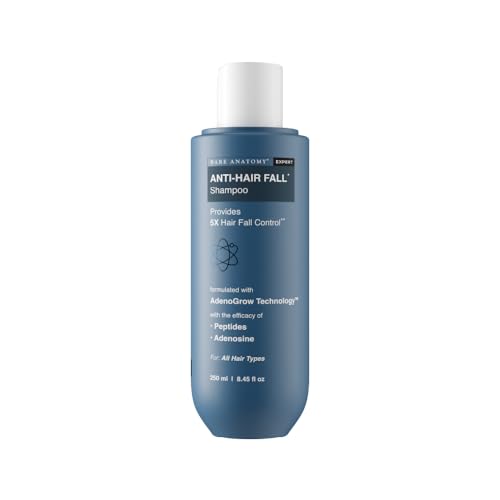 Bare Anatomy Anti-Hair Fall Shampoo
- 5x HAIR FALL CONTROL: Powered by AdenoGrow Technology,…
- Hair breakage occurs when over-conditioning makes the hair…
- Adds essential nutrients to the hair, which help…
 NIOXIN Hair Fall Defense Shampoo
- Are you using minoxidil? Try Nioxin Hair Fall…
- Visbily Less Hair Fall: 93% of people have…
- Innovative Active Ingredients: A powerful blend of Niacinamide,…
 L'Oreal Paris Thickening Sulfate Free Shampoo
- Fortify Hair: Promote thicker-looking hair with this strengthening…
- Gentle Formula: Especially gentle on fine hair, this…
- The EverPure Thickening System: For best results, use…
| Product | Key specs | |
|---|---|---|
| Bare Anatomy Anti-Hair Fall Shampoo | 5x HAIR FALL CONTROL: Powered by AdenoGrow Technology,… Hair breakage occurs when over-conditioning makes the hair… Adds essential nutrients to the hair, which help… | Check price |
| NIOXIN Hair Fall Defense Shampoo | Are you using minoxidil? Try Nioxin Hair Fall… Visbily Less Hair Fall: 93% of people have… Innovative Active Ingredients: A powerful blend of Niacinamide,… | Check price |
| L'Oreal Paris Thickening Sulfate Free Shampoo | Fortify Hair: Promote thicker-looking hair with this strengthening… Gentle Formula: Especially gentle on fine hair, this… The EverPure Thickening System: For best results, use… | Check price |
 Pantene Abundant & Strong Shampoo Pantene Abundant & Strong Shampoo | HAIR LOSS* SHAMPOO specifically designed to help reduce… CLINICALLY PROVEN SYSTEM up to 6,000 more strands… VISIBLE RESULTS 85% of users experienced less hair… | Check price |
 Dove Shampoo Intensive Repair for Damaged Hair Dove Shampoo Intensive Repair for Damaged Hair | Dove Intensive Repair hair shampoo renews with every… This Dove shampoo for damaged hair with Glutamic… Intensive Repair with Bio-Protein Care technology helps regenerate… | Check price |
 Rosemary and Biotin Shampoo for Thinning Hair Rosemary and Biotin Shampoo for Thinning Hair | Hair regrowth tip - one of the best… Volumizing Shampoo - Try our biotin with coconut… Shampoo for Dry Scalp Care - Our biotin… | Check price |
 Indulekha Bringha Hairfall Control Shampoo Indulekha Bringha Hairfall Control Shampoo | Produces a gentle lather that spreads easily through… Rinses off comfortably without leaving heavy residue Suitable for use as part of hair care… | Check price |
 Nioxin Hair Fall Defense Shampoo Nioxin Hair Fall Defense Shampoo | Are you using minoxidil? Try Nioxin Hair Fall… Nioxin Age Defense Shampoo purifies the scalp and… Experience a rejuvenating haircare ritual with the Nioxin… | Check price |
As an Amazon Associate we earn from qualifying purchases at no extra cost to you.
Quick Picks
| Product | Best for | Price |
|---|---|---|
| Bare Anatomy Anti-Hair Fall | Clinical actives at a low price | $9.99 |
| NIOXIN Hair Fall Defense | Visibly less shedding, salon-grade | $29 |
| L’Oreal Paris EverPure Thickening | Thin, fragile hair needing body | $9.12 |
| Pantene Abundant & Strong | Scalp-level root anchoring | $14.97 |
| Dove Intensive Repair | Damage-related breakage, high volume | $8.84 |
| Rosemary and Biotin Shampoo | Vegan, fine hair with thinning concerns | $14.95 |
| Indulekha Bringha | Ayurvedic routine, lowest cost | $6.49 |
| Nioxin Hair Fall Defense (value) | Budget entry to a proven formula | $9 |
How We Picked
We narrowed this category using four criteria. First, active ingredient transparency — a product must name its key actives and, ideally, provide pH data so buyers can assess scalp compatibility. Second, formulation gentleness — sulphate, paraben, and silicone content was flagged because these additives are common irritants that worsen shedding for sensitive users. Third, cost per fluid ounce, which exposes whether a premium price reflects value or branding. Fourth, consistent owner feedback across multiple retail sites, so we could separate a few viral reviews from a genuine pattern of satisfaction or complaint.
The 8 Best Shampoo For Hair Fall in 2026
Bare Anatomy Anti-Hair Fall Shampoo
Bare Anatomy is built for people who want a no-nonsense, clinically framed formula without paying a premium. It claims 5x hair fall control through adenosine and peptides that strengthen weak roots and reduce breakage. The pH 4.6 sits close to the scalp’s natural range, and the sulphate and paraben free base suits sensitive skin. Owner feedback frequently notes reduced shedding within a few weeks of consistent use. Pros: well-defined active profile with disclosed pH; genuinely affordable for the ingredient set. Con: the 250ml bottle finishes quickly for anyone with shoulder-length or longer hair. Skip it if you wash daily and need a larger-volume option or prefer a product with added conditioning agents in the same bottle.
NIOXIN Hair Fall Defense Shampoo
Nioxin occupies the premium tier for people who want a salon-recognized brand specifically engineered around visibly less hair loss. The formula cleanses without heavy residues and pairs with the broader Nioxin system for targeted shedding concerns. Owners praise the professional-grade feel and noticeable reduction in strands left on brushes. Pros: strong brand reputation in the hair-loss niche; effective at clearing buildup that clogs follicles. Con: the $29 price makes it the costliest option here, and the value proposition weakens without pairing it with the full system. Skip it if your budget is tight or if your hair fall is primarily breakage-related rather than shedding from the root.
L’Oreal Paris EverPure Thickening Sulfate Free Shampoo
This option is aimed squarely at thin, fragile hair that needs body at the strand level rather than root-level actives. Rosemary leaf extract supports scalp circulation while the sulfate-free base avoids the drying effect that aggravates fragility. At 8.5 fl oz and $9.12, it undercuts most thickening shampoos. Pros: accessible price with a recognizable brand; rosemary is a widely supported botanical for density. Con: it strengthens existing hair but does not target the follicle cycle, so active shedding may continue unchanged. Skip it if your primary concern is hair fall at the root rather than limp, thin strands needing volume.
Pantene Abundant & Strong Shampoo
Pantene’s proposition centers on strengthening the scalp’s hold on hair roots, a claim that appeals to people in early-stage shedding who want a drugstore staple. The 13.5 oz bottle provides meaningful volume at $14.97, and the formula is widely available for consistent reordering. Pros: generous size for the price; familiar formulation with a low barrier to trial. Con: the ingredient list leans heavily on conditioning agents rather than named follicle-supporting actives, which limits its impact for moderate-to-severe hair fall. Skip it if you want a transparent active ingredient list or need something beyond a general strengthening wash.
Dove Intensive Repair Shampoo
Dove’s Bio-Protein formula is the logical pick for hair fall driven by mechanical or chemical damage — coloring, heat styling, rough towel-drying — rather than hormonal or root-level shedding. The 28 fl oz bottle at $8.84 is the highest-volume option here, making it practical for households with multiple users. Pros: exceptional cost per wash; bio-protein targets mid-shaft and end damage directly. Con: it does not address the scalp or follicle environment, so people whose hair is falling from the root will see limited benefit. Skip it if your hair fall pattern involves visible thinning at the part line or temple recession rather than snapped or frayed strands.
Rosemary and Biotin Shampoo for Thinning Hair
This vegan formula combines rosemary, biotin, B vitamins, argan oil, and tea tree essential oil in a paraben, silicone, and sulfate free base. It is designed for fine hair that is gradually losing density, offering volumizing weightlessness alongside scalp-supporting botanicals. Owner reviews highlight a clean feel and visible body improvement over several weeks. Pros: comprehensive botanical blend without any of the three most common irritants; genuinely vegan. Con: at 8 fl oz for $14.95, the price per ounce is high relative to drugstore alternatives, and results depend heavily on consistent multi-week use. Skip it if you want immediate, noticeable repair or if you have very dry, coarse hair that needs heavier conditioning.
Indulekha Bringha Hairfall Control Shampoo
Indulekha Bringha is an ayurvedic cleanser built around traditional botanical formulations for hair fall control. At $6.49 for 180ml, it is the lowest-priced product on this list and serves people who prefer herbal routines over synthetic actives. Owner feedback is polarized: users who align with ayurvedic protocols report meaningful shedding reduction, while others find the herbal scent and texture unfamiliar. Pros: genuinely inexpensive for a dedicated hair fall product; herbal formulation appeals to natural-care preferences. Con: the 6.08 oz size and limited ingredient transparency compared to peptide-based formulas make it harder to assess efficacy objectively. Skip it if you want disclosed active concentrations or a pH-balanced clinical base.
Nioxin Hair Fall Defense Shampoo (Value Listing)
This is the same Nioxin formula listed at a dramatically lower price point of $9, likely a smaller size or promotional SKU. For anyone who wants to trial the system without committing to the $29 bottle, this is the logical entry. The core cleansing and follicle-clearing performance remains identical. Pros: same proven formula at less than a third of the standard price; reduces financial risk for first-time buyers. Con: availability fluctuates, and the lower-cost listing may not carry the same guarantee or return terms. Skip it if you want a guaranteed long-term supply or need the specific bottle size that matches your wash frequency.
Buying Guide
Match the Shampoo to Your Hair Fall Mechanism
Not all hair fall is the same problem. Shedding from the root — where you see uniform-length strands on your pillow or in the shower drain — benefits from formulas with follicle-supporting actives like adenosine, peptides, or botanicals that improve scalp circulation. Breakage, where strands snap mid-length with frayed or blunt ends, responds better to protein-rich conditioning agents and gentle sulfate-free bases that reduce mechanical stress. Identifying your mechanism before choosing a product eliminates most wasted purchases.
Prioritize pH and Additive-Free Bases
The scalp sits naturally between pH 4.5 and 5.5. Formulas that land in this range, like the pH 4.6 disclosed by Bare Anatomy, maintain the acid mantle that protects follicles from irritation and bacterial disruption. Sulphates, parabens, and silicones are not universally harmful, but they are the three most common irritants flagged in negative owner reviews. If you have a sensitive scalp or active shedding, a free-from base reduces the variables you need to manage.
Calculate True Cost Per Wash
A $6 shampoo in a 6 oz bottle is not a better deal than a $9 shampoo in a 250ml bottle if the smaller size lasts half as long. Divide the price by the number of expected washes — average usage is roughly 10ml per medium-length wash — to see where the real savings sit. This calculation exposes when a premium brand like Nioxin at $29 is genuinely overpriced versus when a budget option like Indulekha at $6.49 is actually costing more per use due to a tiny volume.
Our Verdict
The top pick is Bare Anatomy Anti-Hair Fall Shampoo. It provides the clearest combination of disclosed active ingredients, a scalp-friendly pH, a free-from formula, and a sub-$10 price — a profile no other product on this list matches without a significant trade-off. For the lowest absolute cost with a dedicated hair fall purpose, Indulekha Bringha at $6.49 is the budget pick, accepting that you are buying into an herbal framework with less ingredient transparency. However, if your hair fall is specifically related to chemical or heat damage rather than root-level shedding, Dove Intensive Repair wins on volume and targeted protein repair at a price that undercuts almost everything here.
FAQ
How long before a shampoo shows results on hair fall?
Most owner feedback suggests visible changes in shedding frequency appear between three and six weeks of consistent use, as the hair growth cycle means affected follicles take time to respond. A formula cannot reverse established hormonal thinning, but it can improve the scalp environment enough to slow progression and reduce breakage.
Can a shampoo actually stop hair fall?
Shampoo is a rinse-off product with limited contact time, so it cannot act like a pharmaceutical treatment. What it can do is remove buildup that clogs follicles, deliver supporting actives during each wash, and eliminate irritants that worsen shedding — all of which reduce hair fall over time when paired with a broader hair care routine.
Is sulfate-free really necessary for hair fall?
For a healthy, oily scalp, sulfates rarely cause problems. For a scalp already inflamed or in a shedding phase, harsh surfactants can strip the lipid barrier and trigger more irritation, creating a cycle of worsening loss. A sulfate-free base is a low-risk step toward reducing one potential aggravating factor.
Should I alternate between two shampoos?
Alternating can help if you are managing both scalp-level shedding and mid-shaft breakage simultaneously — one product targeting each mechanism. There is no evidence that hair “builds tolerance” to a single formula, so sticking with one product that matches your primary concern is perfectly effective.