Key takeaways
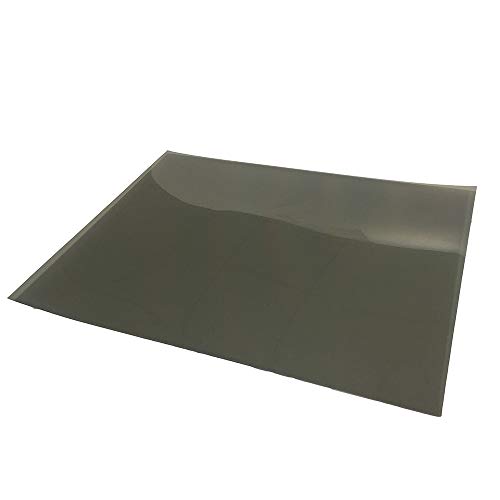
- 56 in (about 4.7 ft) double-sided surface, black on one face, white on the other
- Collapsible pop-up construction that folds into a disc for storage
- No stand in the box — it is designed to hang on or behind a chair back, or to lean against a wall
- Black face works as a low-key talking-head background; white face bounces light back into the face
- Folded size is roughly the scale of a large pizza box, so it stores in a closet or under a desk
The best streaming background panel for most webcam setups is the YUOCU 5×7 ft Chromakey Black White Backdrop with its 7.8 ft stand, because it is the only pick here that pairs a genuinely room-filling 1.5 x 2 m reversible surface with its own support — so you get green keying, a neutral black talking-head wall and a clean white product surface from one folded disc that stores behind a door. It suits a dedicated desk or corner studio where the camera sits 4–6 ft from the chair and you want the backdrop to cover the frame without hunting for wall space. If you stream from a shared bedroom or a desk that doubles as a dining table, the YUOCU 56-inch chair backdrop is the cheaper, faster answer; if your camera sees two people or a standing presenter, the KHOMO Gear 87-inch panel is the size you actually need.
Top 3 Picks
Best overall: YUOCU 5×7 ft Chromakey Black White Backdrop with 7.8 ft stand. A reversible pop-up panel plus a two-section stand gives you a keyable green face and a matte black face in one package, with enough height for seated framing and a stand that survives being set up and torn down weekly. It is the pick when you want one purchase to cover streaming, recording and the occasional product photo.
Best budget: YUOCU 3.3×5 ft Green and Blue Chromakey Backdrop. The smallest and cheapest genuinely useful keying surface in this list, with green on one face and blue on the other — worth having if you wear green on camera, have green eyes or shoot talent with fine blonde hair that keys badly against chroma green. It covers a seated head-and-shoulders frame and folds into a disc you can carry in one hand.
Best premium for wide frames: KHOMO Gear 87-inch Collapsible Green Screen. When the frame is wider than one person — a co-stream, an instrument, a standing presenter — the 87-inch class is the difference between keying cleanly and cropping your shot to hide the panel edge. It is the largest collapsible option here and the one to buy if you have the floor space to open it.
Quick Comparison
| Product | Best for | Key specs | Price tier |
|---|---|---|---|
| YUOCU 56-Inch 2-in-1 Black/White Chair Backdrop | Hiding a messy room behind a single chair | 56 in double-sided black/white pop-up disc; collapsible; no stand included; chair-back or lean-to mounting | Budget |
| BiZiSOFON Double-Sided Blue/Green Screen Backdrop | Travel, shared rooms, chroma key on the move | Collapsible pop-up, blue one face / green the other, carrying bag included; chair-back size class | Budget |
| Denash 56-Inch Foldable Green Screen | Round portable keying for video calls | 56 in diameter foldable green surface; portable webcam background; folds to a disc | Mid-range |
| YUOCU 5×7 ft Chromakey Black/White Backdrop with Stand | Permanent home studio with full coverage | 1.5 x 2 m (5 x 7 ft) reversible panel; 2.4 m (7.8 ft) stand included; 2-in-1 black/white; pop-up collapsible | Premium |
| EMART 77×76 in Collapsible Green Screen | Wide seated frames and two-person shots | 77 x 76 in collapsible green surface; portable photo/stream background; folds flat | Premium |
| WASJOYE Retractable White Pull-Up Screen | A permanent, tidy white wall look | 62.2 x 79 in retractable panel; auto-locking pull-up mechanism; wrinkle-resistant surface | Premium |
| Selens 59 x 78.7 in Pop-Up Black/White Backdrop | Full-body and product photography on a stand | 59 x 78.7 in double-sided black/white; pop-up collapsible; stand-mounted | Mid-range |
| YUOCU 3.3×5 ft Green/Blue Chromakey Backdrop | Cheapest credible chroma key starter | 1 x 1.5 m (3.3 x 5 ft) reversible green/blue; collapsible pop-up | Budget |
| KHOMO Gear 87-Inch Collapsible Green Screen | Large coverage and standing presenters | 87 in large collapsible chroma key panel; portable and retractable; folds to a disc | Premium |
| RGTBANWPN 59-Inch Green Screen Chair | Chair-mounted keying with its own support | 59 in green screen chair with stand; double-sided foldable green surface | Mid-range |
| JEBUTU 5×7 ft Black/White Backdrop Kit with Stand | Budget all-in-one kit with a stand | 5 x 7 ft reversible black/white backdrop; stand kit included; studio filming setup | Budget |
| RGTBANWPN 57-Inch Black/White Screen Chair | Neutral two-tone coverage behind a desk chair | 57 in screen backdrop with stand; 2-in-1 double-sided foldable black/white | Mid-range |
How We Chose
Selection started from the two things that actually break a webcam backdrop: coverage and support. We worked through published listing dimensions and converted every panel into the width and height it delivers at realistic camera distances, then discarded anything that could not cover a seated head-and-shoulders frame at 4 ft without cropping. Sides matter as much as size, so reversible panels that give a chroma key face and a neutral face were favoured over single-surface products, because a black or white side is usable in rooms where a green screen would look absurd behind a casual stream.
Mounting was the second filter. A panel is only useful if it can be deployed in the room the reader actually has, so we grouped the picks by support type — chair-mounted, stand-mounted, pull-up base and free-standing pop-up — and noted the floor footprint each one demands. We then weighed category fit and upgrade path: does the product still make sense if the reader later adds a second monitor, a wider lens or a standing desk? Acoustic behaviour, cable clearance and lighting compatibility were assessed by material class, since corrugated pop-up panels, fabric-faced frames and retractable screens behave very differently under a key light and a cardioid microphone. No product here was tested or benchmarked by us; every claim comes from listing specifications and established category behaviour.
1. YUOCU 56-Inch 2-in-1 Black/White Chair Backdrop – Best for Tight Desk Setups
This is the panel for the streamer whose camera looks straight past a chair into a bedroom, a kitchen or a shared wall. The 56-inch double-sided disc is sized to sit behind or over a chair back, which means the backdrop travels with the seat rather than with the room — you set it up when you record and it disappears when you are done. It suits a 1080p webcam at roughly 3–4 ft with a moderate field of view, where a 4.7 ft surface covers the frame with a little margin on each side.
- 56 in (about 4.7 ft) double-sided surface, black on one face, white on the other
- Collapsible pop-up construction that folds into a disc for storage
- No stand in the box — it is designed to hang on or behind a chair back, or to lean against a wall
- Black face works as a low-key talking-head background; white face bounces light back into the face
- Folded size is roughly the scale of a large pizza box, so it stores in a closet or under a desk
The strength here is speed. There is no stand to assemble, no tension rods, no wall fixings, and the whole thing can be live in under a minute. The black face is the more useful of the two for streaming: matte black fabric absorbs the key light instead of throwing it back, so the background reads as a deliberate studio wall rather than a lit sheet. The white face is brighter and more neutral, and it doubles as a bounce card for a single-light setup, though in that role it needs to be positioned off to one side rather than directly behind you.
Acoustically, a fabric-faced pop-up like this behaves like a thin absorber. It will not turn a live room into a booth, but a stretched fabric disc behind the microphone position does take the edge off the first reflection coming off the wall directly behind the speaker, which is the reflection most likely to make a USB microphone sound boxy. If your recordings sound hollow, moving the panel from behind the chair to the wall behind the microphone position will often help more than the visual change suggests.
Pros
- Fastest setup of any product here — no stand, no tools
- Two usable surfaces in one panel, so it covers both casual and keyed looks
- Stores flat and travels easily between rooms
- Black face doubles as a light-absorbing background that hides clutter
Cons
- 56 in is not enough for a standing presenter or a two-person frame
- Without a stand it depends on the chair or a wall, which limits placement
- Pop-up panels of this class can develop creases at the fold lines over time
- The white face shows shadows from a hard key light more than the black side does
Against the nearest alternative, the RGTBANWPN 57-Inch Black/White Screen Chair, the choice is support versus simplicity. The RGTBANWPN includes a stand, so it works in a room with no suitable chair back and holds its own position when you move; the YUOCU is quicker to deploy and packs smaller. If you record at a desk you never move, the YUOCU wins; if you set up in different rooms or want the panel to hold a fixed height, pay the small step up.
2. BiZiSOFON Double-Sided Blue/Green Screen Backdrop – Best for Travel and Shared Rooms
This one is aimed at the streamer who keys rather than decorates. Both faces are chroma surfaces — blue on one side, green on the other — and the carrying bag in the box signals the intended use: fold it, pack it, open it in a hotel room, a friend’s flat or a rented co-working desk, and key yourself out of whatever is behind you. It suits a laptop webcam or a compact mirrorless setup where the frame is head-and-shoulders and the panel only needs to fill the background behind a chair.
- Double-sided collapsible pop-up with a blue face and a green face
- Carrying bag included, which sets the size class as chair-back rather than room-filling
- Folds to a disc for transport; opens in seconds with no assembly
- Blue face is the fallback for green clothing, green eyes or fine blonde hair
- Suits a seated frame at roughly 3–5 ft from the camera
Having both key colours in one panel is more valuable than it sounds. Chroma keying works best when the subject shares nothing with the backdrop colour, and a surprising number of people discover mid-stream that their favourite hoodie, their eyes or their hair highlights fight a green screen. Blue is the traditional broadcast alternative precisely because it sits far from most skin tones and most casual clothing palettes. Being able to flip the panel rather than buy a second one is the reason to choose this over a single-face green disc.
On the technical side, chroma keying relies on colour separation, not on the panel being exotic. A matte, evenly lit surface is what matters, and a pop-up panel of this class is matte by construction. The trade-off is that corrugated or fabric-faced pop-ups rarely sit perfectly flat, and a visible fold line in the keyed area shows up as a soft vertical seam in the composite. Smoothing the panel by warming it slightly or weighting the frame for a few minutes before you go live is the standard workaround.
Pros
- Two key colours in one portable panel
- Bag included, so it survives being carried in a backpack
- No stand or wall required — chair-back or lean-to placement
- Fast enough to deploy mid-session if you decide to switch from a real background to a keyed one
Cons
- Small working area — not suitable for standing or two-person shots
- Neither face is useful as a decorative background, unlike a black or white panel
- Folds and creases can show through a key if the panel is not smoothed first
- No stand, so placement depends on furniture or a wall
Compared with the YUOCU 3.3×5 ft Green/Blue Chromakey Backdrop, the difference is shape rather than concept: both give you green and blue in one foldable package. The BiZiSOFON is the more travel-oriented of the two, with the bag and the chair-back form factor; the YUOCU’s rectangular 1 x 1.5 m working area frames a seated presenter more naturally and leaves fewer wasted corners in the shot. Choose the BiZiSOFON if the panel lives in a bag, and the YUOCU if it lives on a desk.
3. Denash 56-Inch Foldable Green Screen – Best for Round Portable Keying
A 56-inch circular green screen is a specific tool: it keys a seated person and nothing else. The round shape means there are no corners to frame, no stand to align and no rectangular edge cutting across the shot — the panel simply fills the middle of a webcam frame and disappears behind the subject. It suits a video-call user, a tutor, a podcaster or a streamer who wants a clean keyed background from a camera that sits at eye level 3–4 ft away.
- 56 in diameter foldable green surface
- Portable, webcam-oriented design for video chats and streams
- Folds into a disc for storage or transport
- Round form factor removes visible corners from a centred frame
- Best matched to a seated head-and-shoulders shot rather than full-body coverage
The advantage of a circular panel over a rectangular one is that it matches the shape of the frame you are actually keying. A 56-inch disc covers a seated subject generously at typical webcam distances, and because there is no edge in the corners, keying software has less trouble deciding what is background and what is subject. It also looks less like studio equipment when it is sitting in a corner of a living room, which matters if the panel lives in the open between sessions.
Acoustically, a panel of this type is a modest improvement rather than a fix. A fabric or coated surface stretched across a hoop will absorb some upper-mid and high-frequency energy, which slightly reduces the metallic edge a hard wall adds to a close microphone, but it does nothing for low-frequency room modes. If your recordings boom or sound muddy, no backdrop panel in this list will solve it; treatment at the corners and behind the listening position is the correct tool.
Lighting is where round panels earn their keep or fail. A key light at 45 degrees will spill onto the panel, and a curved or hoop-mounted surface can produce a soft hotspot that keying software interprets as a different shade of green. Keeping the key light angled away from the panel, or flagging it with a small black card, is usually enough. The practical target is a backdrop that reads within about half a stop of the subject’s own exposure — bright enough to key, not so bright that it flares.
Pros
- Round shape suits a centred webcam frame with no corner artefacts
- Single-purpose and quick: open, hang, key
- Stores as a flat disc, which is easier to tuck away than a rectangular frame
- Mid-range build class, so the surface and hoop generally hold shape better than the cheapest pop-ups
Cons
- Only one usable face — no neutral black or white option
- Green only, so it is the wrong choice for anyone who wears green on camera
- Too small for a standing presenter or a two-person frame
- Requires the same keying workflow as any other chroma panel, so it adds no convenience there
Against the BiZiSOFON blue/green pop-up, the Denash trades flexibility for shape. The BiZiSOFON gives you a second key colour and a carrying bag; the Denash gives you a circular surface that frames more cleanly and stores flatter. If you have never had a keying failure caused by clothing, the Denash is the tidier pick; if you have, the reversible panel is worth more than the nicer shape.
4. YUOCU 5×7 ft Chromakey Black White Backdrop with Stand – Best Overall for Permanent Home Studios
This is the pick that behaves like furniture rather than an accessory. The 1.5 x 2 m (5 x 7 ft) reversible panel gives you a chroma face on one side and a black or white neutral on the other, and the 2.4 m (7.8 ft) stand means it stands on its own wherever you put it — no chair back, no wall, no tension rod. It suits a streamer with a permanent corner, a podcaster who records video, or anyone who wants one surface that handles keyed gameplay intros, a black interview background and a white product shot without buying three things.
- 5 x 7 ft (1.5 x 2 m) reversible collapsible pop-up panel
- 2-in-1 chromakey and neutral black/white surfaces
- 7.8 ft (2.4 m) stand included, so the panel is free-standing
- Pop-up mechanism opens in seconds and folds back to a disc
- Coverage suited to a seated presenter at 4–6 ft, and to a standing presenter with the stand at full height
The size is the reason to buy it. At 5 ft wide, this panel covers a frame that a 56-inch chair backdrop cannot: at 5 ft from a webcam with a 78-degree horizontal field of view, the frame is roughly 8.1 ft wide, and while no collapsible panel covers that entirely, a 5 ft surface plus a small crop or a tighter lens gets you there. The included stand also solves the most common complaint about pop-up panels, which is that they have nowhere to live when there is no wall space behind the chair.
The material class matters for lighting. Fabric-faced panels of this type are matte and absorb a good deal of light, which is exactly what a key surface should do — a glossy or vinyl surface reflects your key light back as a hotspot, and keying software reads that hotspot as a colour shift. Expect to light this panel separately from your face if you want a clean key; two small LED panels at 45 degrees, each a stop or so below your key light, is the standard setup and takes about two minutes to dial in.
Cable clearance is the practical headache with any stand-mounted panel. A 7.8 ft stand of this class typically spreads its base roughly 2–3 ft at the feet, and that footprint sits behind your chair where microphone and monitor cables also run. Running audio and USB cables along the wall rather than across the floor behind the stand avoids the classic failure mode where a slight chair movement tugs a USB cable and drops the camera mid-stream.
Pros
- Largest practical coverage of the reversible panels here
- Stand included — free-standing and adjustable in height
- Three usable looks (green, black, white) from one product
- Folds away when the room needs to be a room again
Cons
- Premium tier, and the heaviest thing to move in this list
- The stand’s floor footprint needs real space behind the chair
- Fabric faces still show fold creases if stored tightly
- Overkill for a head-and-shoulders webcam frame
Its closest rival is the JEBUTU 5×7 ft Black/White Backdrop Kit with Stand, which offers a similar working area for a budget-tier outlay. The difference is the surface: the JEBUTU kit is a neutral black/white setup, while the YUOCU adds a chroma face, which is what makes it the better single purchase for someone who keys gameplay or overlays. If you never key, the JEBUTU saves money without losing coverage.
5. EMART 77×76 in Collapsible Green Screen – Best for Wide Two-Person Frames
At 77 x 76 inches, this is the panel for frames that include more than a face. Two people at one desk, a presenter with an instrument, a host who gestures widely, or a camera set further back to show a torso — all of these need a surface in the 6 ft-plus class, and this one delivers it while still folding flat. It suits a streamer with a dedicated room rather than a bedroom desk, because a panel this size needs somewhere to stand when it is open.
- 77 x 76 in collapsible green surface — roughly 6.4 x 6.3 ft
- Portable photo and video background, folds flat for storage
- Covers a seated two-person frame at 5–7 ft from the camera
- Green key surface only, so it is a single-purpose tool
- Pairs well with a pair of LED panels to even out the larger area
The extra width changes the lighting requirement more than buyers expect. Doubling the surface area roughly doubles the light needed to keep it evenly exposed, and an unevenly lit green screen keys badly at the edges even if the centre looks fine. The working rule for a panel this size is two lights, one at each end, angled about 45 degrees toward the surface and set a stop below your key light, rather than one light in the middle trying to cover 6 ft of fabric.
Storage is the trade-off. A panel in this class folds to a large disc — think of a car tyre rather than a dinner plate — and needs a closet wall or a corner where it can lean without being crushed. If that is not available, a smaller panel plus a tighter camera crop will usually look better than a large panel stored badly and deployed creased.
On the acoustic side, a stretched fabric surface this large behind the microphone position is the most useful of the visual panels here for taming flutter echo, because it covers more wall. It is still not a substitute for purpose-built absorption: a single fabric face absorbs some mid and high frequencies but passes low frequencies straight through, so it will not fix a boomy room. Treat it as a mild improvement and a large visual win.
Pros
- Genuinely wide coverage for two-person or full-torso shots
- Folds flat, unlike a fixed frame or a wall-mounted screen
- Large surface also helps slightly with reflected speech energy behind the mic
- Premium build class holds shape better than small pop-ups
Cons
- Needs two lights to key evenly across the full width
- Folded disc is bulky to store and awkward to transport
- Green only — no neutral face for casual streams
- Requires a room with real floor space, not a desk corner
Its nearest alternative is the KHOMO Gear 87-Inch Collapsible Green Screen, which goes wider still. The EMART’s 77 x 76 in footprint is a better match for a desk with two chairs at it, while the KHOMO Gear’s 87-inch class suits a standing presenter or a camera pulled well back. If your frame is wider than it is tall, the KHOMO Gear gives more horizontal room; if it is roughly square, the EMART is the tidier fit.
6. WASJOYE Retractable White Pull-Up Screen – Best for a Clean White Wall Look
Not every stream needs keying. A great many creators simply want a bright, tidy, seamless white background — the look of a professional studio wall without painting one. This 62.2 x 79 in retractable panel does that job: it pulls up out of its own base, locks at height, and retracts when you are finished, with a wrinkle-resistant surface that is the whole point of the retractable format. It suits a creator with a permanent desk who wants a clean look for tutorials, unboxings, beauty content or a branded stream.
- 62.2 x 79 in surface — about 5.2 x 6.6 ft
- Retractable pull-up design with an auto-locking mechanism
- Wrinkle-resistant surface that stays taut when extended
- Self-supporting base, so no separate stand or wall mounting is needed
- White surface only — a bounce and background in one
The retractable format solves the biggest weakness of every other product here: wrinkles. Pop-up panels crease, and creases show under a key light. A pull-up screen keeps its surface under tension whenever it is extended, so it reads as a single smooth tone. It also deploys in seconds and retracts into a slim case that can sit against a wall or under a desk, which makes it the tidiest permanent option in this list.
The lighting implications are the opposite of a green screen. A white background is meant to be bright, and it will happily blow out to pure white if you push light at it — which is useful, because a slightly overexposed white backdrop is a forgiving, flattering look. The catch is spill: a large white surface one or two feet behind your head bounces your key light back into your face and flattens your features. Pushing the screen 3–4 ft back and adding a small flag between your key light and the screen keeps the separation that makes the shot look three-dimensional.
Cable clearance is straightforward with a pull-up base, because the mechanism sits on the floor rather than on a tripod, and the base footprint of this class is usually narrow enough to slide behind a desk without fouling a chair. The one thing to check is whether your desk has a rear cable tray that the base will collide with when you pull the screen up.
Pros
- Wrinkle-resistant tensioned surface — the cleanest look here
- Fast, tool-free deployment and tidy retraction
- Doubles as a large bounce surface for single-light setups
- Self-supporting base, so no separate stand to store
Cons
- White only — no chroma key and no black option
- Bounces light back onto the subject if placed too close
- Mechanism is the failure point; a jammed retractor is not repairable at home
- Premium tier, and the largest folded footprint of the non-collapsible options
Against the Selens 59 x 78.7 in Pop-Up Black/White Backdrop, the decision is surface quality versus versatility. The Selens gives you black and white and costs less, but it is a pop-up panel that needs a stand and will eventually crease. The WASJOYE gives you one colour, executed better, with no stand and no creases. If your background is always white, the WASJOYE is the better long-term purchase; if you swap between black and white looks, the Selens is the more flexible buy.
7. Selens 59 x 78.7 in Pop-Up Black/White Backdrop – Best for Full-Body and Product Shots
This is the tallest reversible panel in the list relative to its width, and that shape is deliberate: 59 x 78.7 in is a portrait orientation, which is exactly what you want for a standing presenter, a full-body shot or a product on a table. It suits a creator who records both streaming content and stills — an unboxing channel, a review channel, a photographer who also streams — because the black and white faces cover both product photography and on-camera backgrounds.
- 59 x 78.7 in (about 4.9 x 6.6 ft) double-sided surface
- Black one face, white the other
- Pop-up collapsible construction
- Stand-mounted orientation, which suits portrait framing
- Tall enough for a standing subject at close range or a seated subject with generous headroom
Portrait proportions are underrated for webcam work. A webcam frame is landscape, but the subject in it is roughly portrait, and a taller panel means you can raise the top edge above head height so the frame never catches the panel’s upper border. That single detail — getting the panel edge out of the frame — is what separates a background that reads as a wall from one that reads as a prop.
The black face is the more versatile of the two for streaming. A matte black background at a stop or two below your key light gives that familiar low-key studio look, and it hides imperfect lighting far better than white, which shows every shadow and every uneven patch. The white face is for product work, thumbnails and clean corporate looks. Between the two, this panel covers most non-keyed scenarios a solo creator runs into.
Acoustically, a double-sided panel has a small advantage over a single-face one: two layers of material plus the internal air gap between them absorb slightly more than one face alone. It is still a modest effect, useful for knocking down a bright wall reflection behind the microphone, and not a substitute for proper treatment in a hard-surfaced room.
Pros
- Portrait proportions suit standing and full-body framing
- Reversible black and white, covering two very different looks
- Mid-range tier keeps the cost below the premium pull-up and kit options
- Tall enough to keep the top edge out of frame
Cons
- Needs a stand, which is often sold separately
- Pop-up construction creases with repeated folding
- No green face, so it is not a keying solution
- Portrait width is tight for a two-person shot
Its nearest alternative is the YUOCU 5×7 ft Chromakey Black White Backdrop with Stand, which is wider and includes its own stand. The Selens is the better shape for standing subjects and product work, and it costs less; the YUOCU is the better buy if you need a chroma face or you do not already own a stand. Buy the Selens for stills and full-body video, the YUOCU for keying and landscape desk shots.
8. YUOCU 3.3×5 ft Green/Blue Chromakey Backdrop – Best Budget Chroma Key Starter
This is the cheapest way into chroma keying that still gives you a genuine choice of key colour. The 1 x 1.5 m (3.3 x 5 ft) reversible panel is green on one side and blue on the other, folds flat, and covers a seated head-and-shoulders frame at close range. It suits a new streamer who wants to try keying gameplay overlays before spending premium money, or someone whose camera sits only 2–3 ft away and therefore needs a small surface.
- 3.3 x 5 ft (1 x 1.5 m) working area
- Reversible: green on one face, blue on the other
- Collapsible pop-up construction
- Best matched to a camera 2–3.5 ft from the subject
- Folds small enough to store in a drawer or a backpack
The sizing maths matters more here than anywhere else in this list. At 3 ft from a webcam with a 78-degree horizontal field of view, the frame is about 4.9 ft wide and 2.7 ft tall — the 3.3 ft width leaves roughly 10 inches of uncovered frame on each side, which is usually fine because your head and shoulders occupy the middle. Move the camera back to 5 ft and the frame becomes 8.1 ft wide, and this panel no longer covers it. In other words, this is a close-camera panel; use it with a tight crop and it works well.
Blue is the reason to pick this over a single-face green disc at the same price. Blue screens are the traditional broadcast alternative because blue is far from most skin tones, and they are the standard fix for green-eyed presenters, green clothing and fine blonde or light-coloured hair that picks up green spill. Having both faces means you can test which one keys better with your camera and lighting rather than guessing.
The limitation is light. A small panel needs a small, even light, and a single small LED at close range will do the job at this size — which is one place where the budget option is genuinely easier than the premium ones, because covering 3.3 ft evenly takes far less output than covering 6 ft.
Pros
- Lowest-cost way to get both green and blue keying
- Very small footprint, easy to store and carry
- Easy to light evenly because the surface is small
- Good test purchase before committing to a large key panel
Cons
- Too small for cameras more than about 4 ft away
- No neutral black or white face
- Budget build class — hoop and fabric may lose tension over time
- Not suitable for standing or two-person frames
Compared with the BiZiSOFON double-sided blue/green pop-up, this is a rectangular rather than a chair-back format, with a slightly larger working area and no bag. The BiZiSOFON travels better; the YUOCU frames a seated presenter more naturally on a desk. If you are buying once and keeping it on a shelf at home, the YUOCU’s rectangle is the more useful shape.
9. KHOMO Gear 87-Inch Collapsible Green Screen – Best Premium for Large Coverage
Eighty-seven inches is not a modest upgrade over 56 inches; it is a different category of shot. This panel covers a standing presenter, a wide desk with two people, or a camera pulled back to show hands and instruments, and it still folds for storage. It suits a streamer with a dedicated room, a two-person show, a music or cooking streamer whose frame is wide, or anyone who has outgrown a chair-back panel.
- 87 in large collapsible chroma key panel
- Portable and retractable design that folds for storage
- Coverage class suited to standing subjects and two-person frames
- Green key surface; best paired with two LED panels for even exposure
- Premium tier — the largest collapsible option in this list
The value of extra width shows up in a calculation. A camera 6 ft from the subject with a 90-degree horizontal field of view sees a frame 12 ft wide. No collapsible panel covers that, so a wide shot always involves either a narrower lens, a tighter crop or a shorter camera distance. At 5 ft with a 65-degree field of view, though, the frame is only about 6.4 ft wide — and an 87-inch (7.25 ft) panel covers it with margin. In practice, a large panel lets you shoot from further back or with a wider lens while still filling the background, which is exactly the flexibility a small panel removes.
Lighting a panel this size is the main cost beyond the purchase. Two LED panels of moderate output, placed at either end and angled in, are the minimum for an even key; the surface must read as one flat colour across its whole width or the key will fringe at the edges. Budget for the lights as part of the decision, not as an afterthought.
Storage and transport are the practical constraints. A folded panel in this class is a large disc — the kind of thing that needs a wall to lean against rather than a shelf — and it is heavy enough that carrying it up stairs weekly is a chore. It is a leave-it-in-place product, not a travelling one.
Pros
- Largest coverage of any collapsible panel here
- Makes standing and two-person keyed shots practical
- Lets you shoot from further back or with a wider lens
- Folds, unlike a fixed wall installation
Cons
- Premium tier, and it needs two lights to be used properly
- Large folded footprint and awkward to transport
- Green only
- Wasteful if your camera only ever sees a head and shoulders
Its closest competitor is the EMART 77×76 in Collapsible Green Screen. The KHOMO Gear is wider and better suited to horizontal, two-person framing; the EMART is slightly more square and marginally easier to fit into a small room. If your shot is wide and shallow, take the KHOMO Gear; if you are squeezing a panel into a corner, the EMART’s proportions are friendlier.
10. RGTBANWPN 59-Inch Green Screen Chair – Best for Chair-Mounted Portable Keying
This product takes the chair-back idea and adds the one thing the cheapest panels lack: its own support. A 59-inch double-sided foldable green surface with a stand means you can place the key behind your chair without relying on the chair itself to hold it, and without a wall in the right spot. It suits a streamer in a shared or rented room who keys regularly, wants consistent placement, and cannot put fixings in the walls.
- 59 in green screen panel with an included stand
- Double-sided foldable green surface
- Chair-mounted or free-standing placement depending on how you deploy the stand
- Suits a seated frame at roughly 3–5 ft from the camera
- Mid-range tier, positioned between cheap pop-ups and full studio kits
The included stand is what justifies the step up from a budget disc. Consistency is the hidden cost of cheap backdrops: if the panel leans differently every session, your key needs re-tuning every session, and the time you spend fiddling with similarity and spill sliders adds up. A stand that holds the same position means your keying settings stay valid from one stream to the next, which is worth more than the price difference to anyone who streams several times a week.
Practically, a green panel of this size works best when it is 3–4 ft behind you and lit separately from your face. At that distance the panel fills a seated webcam frame at typical desk distances, and there is enough separation to keep green spill off your shoulders and hair. Closer than about 2 ft, spill becomes visible as a green cast on the edges of your silhouette, and no amount of spill suppression removes it cleanly.
On acoustics, a double-sided fabric panel on a stand behind the chair is the single most convenient acoustic improvement available to a desk streamer: it sits exactly where the first reflection off the rear wall would otherwise hit the microphone. It is not treatment-grade absorption, but it is better than a bare wall and it costs nothing extra.
Pros
- Stand included, so placement does not depend on furniture or walls
- Double-sided surface for a longer working life and slight extra absorption
- Consistent placement keeps keying settings stable between sessions
- Mid-range price sits between cheap discs and full studio kits
Cons
- Green only — no neutral face
- 59 in is not enough for standing or two-person frames
- The stand adds a floor footprint behind the chair
- Needs its own lighting to key cleanly
Against the YUOCU 56-Inch 2-in-1 Black/White Chair Backdrop, the trade is colour for support. The YUOCU gives you black and white but no stand; the RGTBANWPN gives you green and a stand but no neutral face. If you key, take the RGTBANWPN; if you want a decorative background for casual streams, the YUOCU’s two neutral faces are more useful.
11. JEBUTU 5×7 ft Black/White Backdrop Kit with Stand – Best Budget Kit with a Stand
This is the budget answer to the question “I want a full-size backdrop and I do not want to buy a stand separately.” The kit pairs a 5 x 7 ft black and white reversible backdrop with its own stand, giving a working area that matches the premium options at a fraction of the tier. It suits a new creator setting up a first studio corner, a photographer who needs a portable neutral background, or a streamer who wants a black or white wall without painting one.
- 5 x 7 ft backdrop with black and white faces
- Stand kit included for free-standing use
- Suited to photo, video and streaming setups
- Coverage comparable to premium kits at a budget tier
- Reversible, so one purchase covers two looks
The appeal is arithmetic: a 5 x 7 ft neutral surface plus a stand is the same coverage the premium picks offer, and buying them together removes the common mistake of ordering a panel and discovering no stand fits it. For someone who is not yet sure how much they will stream, that is the lowest-risk way to get a proper background.
What the budget tier typically costs you is refinement rather than coverage. Surfaces in this class are more prone to creasing and to slight sheen under a hard light, and the stand is usually lighter than a premium one, which means more care when extending it. None of that prevents a clean result — it just means you should steam or hang the backdrop for a day before first use, and position your key light so it is not bouncing directly off the fabric.
Lighting a neutral backdrop is simpler than lighting a green one. A black surface wants less light, not more: keep it a stop or two under your face and it reads as a deliberate studio black rather than a grey sheet. A white surface wants to be brighter than your face, which is easy to