Key takeaways
- Three equipped weapon types. You carry multiple weapons, each with its own strengths, and weapons are adapted closely from mainline Monster Hunter, so series fans will recognise their feel.
- The Kinship gauge. It fills when you and your allies hit the same monster part with matching attack types. A full gauge lets you mount your monstie and unleash powerful Kinship skills.
- Double Kinship attacks. Combined finishers between you and an AI-controlled ally that deal heavy damage.
- Part breaking and targeting. Choosing which body part to hit matters for both damage and rewards.
Monster Hunter Stories 3: Twisted Reflection is the biggest and most grown-up entry in Capcom’s turn-based Monster Hunter spin-off series, and for most RPG fans it is an easy recommendation. This Monster Hunter Stories 3 review pulls together the game’s verified details, what the critical consensus praises and criticises, and who should buy it on which platform. Short version: if you enjoy monster collecting, layered turn-based combat and a story that is willing to get serious, this is one of the strongest RPGs of 2026. If you dislike slow openings and filler side quests, go in with eyes open.
Quick Verdict
Buy it if you want a long, good-looking JRPG with a clever combat system, deep monster customisation and a war-and-ecology story that treats its cast with more care than earlier Stories games.
Think twice if you have little patience for long tutorials, grinding before tougher fights, or fetch-style side quests. Reviewers agree the first few hours drag and that some optional content is padding.
Across major outlets, the reception has been broadly favourable on every platform, with most critics recommending it and several calling it the best Stories game so far. The more lukewarm reviews still describe a good game; they simply did not find it a must-play.
Monster Hunter Stories 3 at a Glance
| Detail | Information |
|---|---|
| Full title | Monster Hunter Stories 3: Twisted Reflection |
| Developer / publisher | Capcom |
| Release date | March 13, 2026 |
| Platforms | Nintendo Switch 2, PlayStation 5, Xbox Series X|S, PC (Steam) |
| Genre | Turn-based JRPG with monster raising |
| Typical length | Roughly 50 to 70 hours with a fair amount of side content; completionists can go well beyond that |
| Editions | Standard (physical and digital), Deluxe and Premium Deluxe (digital only) |
| Post-launch content | Paid “Additional Side Story: Rudy” DLC plus the free “Royal Monsters” update (June 2026) |
| Price tier | Full-price new release; frequently discounted on console storefronts |
Story and Setting: A Darker Stories Game
Twisted Reflection is set around two rival kingdoms, Azuria and Vermeil, which are being consumed by a spreading disaster known as the Crystal Encroachment. You play as Azuria’s heir, a Rider who teams up with Eleanor, the princess of Vermeil, to stop the crystal spread and repair the relationship between the two nations. Eleanor has her own reasons for getting involved, including doubts about what her sister, the Queen, is really planning.
The central hook involves a Rathalos, the series’ flagship flying wyvern, which in this world was believed to be extinct. That single idea ties together the game’s themes of extinction, restoration and the cost of war.
This is the main reason critics describe Stories 3 as the most mature entry. The story deals with war, environmental collapse and political distrust rather than the lighter coming-of-age tone of the first two games. Your protagonist is also fully voiced, which several reviews singled out as making the plot feel more immersive. The supporting Rangers and Eleanor each get personal backstories and companion quests, and the consensus is that this is the best the trilogy has been at developing party members.
The one recurring caveat is tone. Some reviewers felt the game does not always balance its heavier plot beats with the cute, comedic moments the series is known for, so the mood can swing abruptly.
Combat: The Rock-Paper-Scissors Core, Expanded
Battles keep the series’ turn-based structure built on three attack types: Power beats Technical, Technical beats Speed, and Speed beats Power. Monsters favour particular types, so reading their behaviour and countering correctly is the heart of every fight.
On top of that you have:
- Three equipped weapon types. You carry multiple weapons, each with its own strengths, and weapons are adapted closely from mainline Monster Hunter, so series fans will recognise their feel.
- The Kinship gauge. It fills when you and your allies hit the same monster part with matching attack types. A full gauge lets you mount your monstie and unleash powerful Kinship skills.
- Double Kinship attacks. Combined finishers between you and an AI-controlled ally that deal heavy damage.
- Part breaking and targeting. Choosing which body part to hit matters for both damage and rewards.
Most critics consider this the best version of Stories combat yet, noticeably deeper than the original 3DS game. The criticisms are consistent too: longer fights can turn into battles of attrition, AI allies sometimes make poor tactical choices, and early on you have limited information about enemy patterns, which leads to some guesswork. One major outlet found the combat occasionally tedious, so if you do not already enjoy turn-based systems, this will not convert you.
Monsties, Genes and the Rite of Channeling
Collecting and raising monsters is the series’ signature, and Stories 3 leans further into it. You find monster dens, take eggs, hatch them and build a roster. You can bring up to six monsties into your party, and each has its own behaviour and elemental profile, so variety matters when facing different foes.
The Rite of Channeling lets you transfer genetic abilities between monsters. Done well, it produces significant stat boosts and unusual skill combinations, and it is where min-maxers will spend dozens of hours. It is also the system that splits opinion most. Some reviewers loved the depth, while one critic said the egg-hatching, gene-splicing and habitat-restoring loop left them cold more often than not.
Habitat Restoration and Exploration
New to this entry is an ecology layer. Some monster populations are endangered, and you restore them by defeating invasive species and establishing campgrounds in affected areas. Restocking habitats can trigger mutations that produce powerful subspecies, which feeds straight back into your monstie roster. It is a smart way to connect exploration with the environmental story.
The world itself is a large, open, cel-shaded space that reviewers consistently describe as gorgeous and vibrant. Riding monsties to traverse it is a highlight. The weak spots are inconsistent platforming in places and a pool of side quests that muddies pacing. Character-focused companion stories are worth doing; generic fetch quests mostly exist for resources and levels.
Performance and Platform Differences
All four versions launched together. Reports from critics suggest the PS5 version runs cleanly, while the Switch 2 version had some performance hiccups. The general critical view is that the art direction looks best on the more powerful hardware, though the Switch 2 version is still fully playable and appeals to anyone who wants to play handheld.
One practical note for Switch 2 buyers: the physical Switch 2 release is a Game-Key Card, so there is no game data on the cartridge. It works as a key to download the game, and you need at least 30GB of free storage.
On secondary searches for Monster Hunter Stories 3 mods: only the PC (Steam) version is realistically moddable, and any mods are unofficial community projects. Capcom does not support them, and updates can break them, so back up your saves first.
| Platform | Best for | Watch for |
|---|---|---|
| PlayStation 5 | Smooth, stable play on a TV | No handheld option |
| Xbox Series X|S | Xbox-first players | Physical copies can be harder to find |
| Nintendo Switch 2 | Handheld and portable play | Game-Key Card needs a 30GB download; some reported hiccups |
| PC (Steam) | Highest settings, unofficial mods | Digital only |
Strengths
- Flexible, layered turn-based combat that rewards reading monsters and coordinating with allies
- Beautiful cel-shaded world that gives the series a real visual upgrade
- The most mature and engaging story in the Stories trilogy, with a voiced protagonist
- Strong companion arcs and character development
- Deep monstie customisation through the Rite of Channeling and habitat mutations
- Substantial length and meaningful post-game content via the free Royal Monsters update
Weaknesses
- Slow opening with heavy exposition and lengthy tutorials
- Filler side quests and some grinding before difficulty spikes
- Long fights can feel like wars of attrition; AI allies make odd decisions
- Inconsistent platforming in the open world
- Some monsters look quite similar, limiting variety
- Switch 2 version is the least polished technically
Editions, DLC and Which Version to Buy
The Standard Edition is the only one sold physically. The Deluxe Edition adds the Deluxe Kit (extra Ranger outfits, outfits for Rudy, Monster Hair styles and Rudy’s side story), and the Premium Deluxe Edition adds a further DLC pack of cosmetic outfits and hairstyles. Both upgraded editions are digital only.
In June 2026, Capcom released the paid “Additional Side Story: Rudy” DLC, which explores the origins of the Royal Felyne companion Rudy and pits him against Nergigante, alongside the free “Royal Monsters” update. If you have a cleared save, the free update adds a harder version of the final battle, and beating it unlocks Royal Monster versions of almost every monster in the game. Deluxe and Premium Deluxe owners already have the Rudy story.
For most players, the Standard Edition is the right buy. The extras are largely cosmetic, and the meaningful post-game addition is free.
Monster Hunter Stories 3: Twisted Reflection (Nintendo Switch 2)
Best for portable play. Game-Key Card format, so plan for the download.
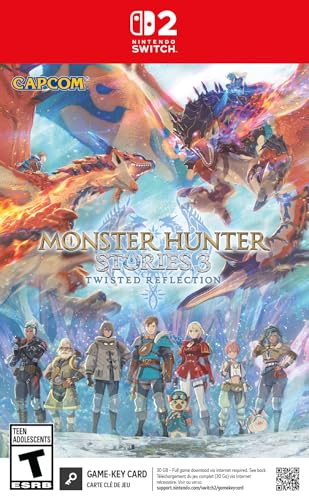
Monster Hunter Stories 3: Twisted Reflection - Nintendo Switch 2
Included for 'Monster Hunter Stories 3 Review: Twisted Reflection' as a representative home product in this roundup; selection reflects the product set returned for this topic.
View on AmazonMonster Hunter Stories 3: Twisted Reflection (PlayStation 5)
Best for the smoothest console experience according to critics’ reports.
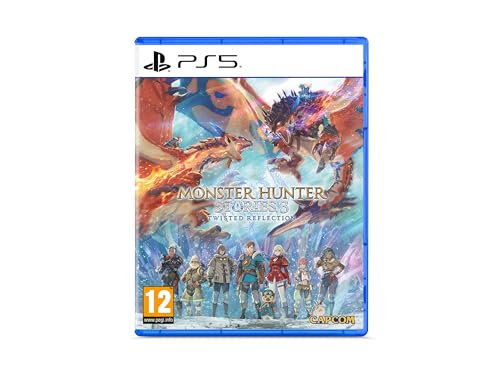
Monster Hunter Stories 3: Twisted Reflection (PlayStation 5)
Included for 'Monster Hunter Stories 3 Review: Twisted Reflection' as a representative home product in this roundup; selection reflects the product set returned for this topic.
View on AmazonWho Should Buy It, and Who Should Skip It
Buy it if you are:
- A JRPG fan who likes turn-based combat with real decision-making
- A monster-collecting fan who enjoys breeding, stat-tuning and build experiments
- A Monster Hunter fan who wants the series’ monsters and weapons in a story-heavy format
- Someone looking for a long game that will last weeks rather than a weekend
Skip it, or wait for a sale, if you are:
- Looking for real-time action like mainline Monster Hunter; this is strictly turn-based
- Easily put off by slow openings and tutorial-heavy early hours
- Not interested in side content; the main path alone can feel grindy
- Planning to play only on Switch 2 and very sensitive to performance dips
Alternatives to Consider
Monster Hunter Stories 2: Wings of Ruin is the obvious entry point if you want to see where the series came from. It is lighter in tone, shorter, and cheaper, and it established much of the combat system Stories 3 builds on.

Monster Hunter Stories 2: Wings of Ruin - Nintendo Switch
Included for 'Monster Hunter Stories 3 Review: Twisted Reflection' as a representative home product in this roundup; selection reflects the product set returned for this topic.
View on AmazonClair Obscur: Expedition 33 suits players who want turn-based combat with timing-based parries and a heavier, more cinematic story. Pokémon-style monster collectors will find Stories 3 more combat-focused and story-driven than a typical creature-catcher.
How We Put This Review Together
This review is research-based. We compiled verified release details, platforms, editions and post-launch content from the publisher’s official listings and established coverage, then summarised the consensus across a broad set of independent critic reviews, including both the most positive and the most mixed takes. Where critics disagreed, such as on the monstie loop or combat pacing, we present both sides rather than picking one.
Monster Hunter Stories 3 FAQ
Is Monster Hunter Stories 3 worth it?
Yes, for most RPG fans. Critics broadly recommend it for its combat, visuals and more mature story. It is less suited to players who dislike slow starts, grinding or turn-based battles, and its side quests are uneven.
What does “Twisted Reflection” refer to?
It is the game’s subtitle. The full name is Monster Hunter Stories 3: Twisted Reflection, and it fits a story built around two mirrored rival kingdoms, Azuria and Vermeil, and the two royal heirs at its centre.
How long is Monster Hunter Stories 3?
Expect roughly 50 to 70 hours to finish the story with a reasonable amount of side content. Players who chase every habitat, gene combination and the Royal Monsters post-game can go considerably longer.
Do I need to play the first two games?
No. Stories 3 has its own setting and cast, so newcomers can start here. Returning fans will appreciate some nods, especially in the Rudy DLC, which features Navirou from the first game.
Which platform is best for Monster Hunter Stories 3?
PS5 and PC give the most stable experience based on critic reports. Switch 2 is best if you want to play handheld, but its physical version is a Game-Key Card that requires a 30GB download.
Is there any DLC for Monster Hunter Stories 3?
Yes. The paid Additional Side Story: Rudy launched in June 2026 alongside the free Royal Monsters update, which adds a harder final battle and Royal Monster variants. Several cosmetic outfit and hairstyle packs are also sold separately.
Can you mod Monster Hunter Stories 3?
Only the PC version on Steam is realistically moddable, and any mods are unofficial. They are not supported by Capcom, may break after updates, and should be used with save backups.
Final Verdict
Monster Hunter Stories 3: Twisted Reflection delivers the series’ best combat, its most ambitious world and its most affecting story, wrapped in a striking art style. Its flaws are real but familiar to the genre: a slow first act, some padding and the occasional drawn-out fight. If those do not scare you off, pick it up on PS5 or PC for the cleanest experience, or on Switch 2 if handheld play matters more than polish.