Key takeaways
- 1080p: Both have more than enough memory.
- 1440p: 12 GB is fine for most games today, though a few recent titles with maximum textures already use most of it. The 6900 XT’s 16 GB adds a buffer for future releases.
- 4K: 16 GB is the practical minimum for high textures, so the 6900 XT is the only realistic option of the two.
The newer RX 6750 XT is slower than the older RX 6900 XT, so for 1440p high-refresh or 4K gaming the RX 6900 XT is the stronger buy, running roughly 25-45% faster with 16 GB of VRAM; the RX 6750 XT only makes sense if you game at 1080p or budget 1440p, need a 2-slot card, or want a lower power draw. Despite arriving about 16 months later, the 6750 XT is a mid-range refresh, not a successor to AMD’s 2020 flagship.
Why the Newer Card Is Not the Faster One
The RX 6900 XT launched on 28 October 2020 at $999 as the top RDNA 2 card, built on the full Navi 21 chip with 5,120 stream processors, a 256-bit bus and 128 MB of Infinity Cache. The RX 6750 XT launched on 3 March 2022 at $549 as a refreshed RX 6700 XT, using the smaller Navi 22 chip with 2,560 stream processors, a 192-bit bus and 96 MB of Infinity Cache. Its higher boost clock (2,600 MHz versus 2,250 MHz) and faster memory narrow the gap a little, but the 6900 XT simply has twice the shader hardware.
Both share the same RDNA 2 feature set, so neither card offers capabilities the other lacks. The decision comes down to performance, power, physical size and today’s used prices.
Specifications at a Glance
| Spec | RX 6900 XT | RX 6750 XT |
|---|---|---|
| Architecture | RDNA 2.0 | RDNA 2.0 |
| Release date | 28 October 2020 | 3 March 2022 |
| Launch MSRP | $999 | $549 |
| Stream processors | 5,120 | 2,560 |
| Boost clock | 2,250 MHz | 2,600 MHz |
| Process | 7 nm | 7 nm |
| TDP | 300 W | 250 W |
| Memory | 16 GB GDDR6 | 12 GB GDDR6 |
| Bus / bandwidth | 256-bit / 512.0 GB/s | 192-bit / 432.0 GB/s |
| L2 / Infinity Cache | 4 MB / 128 MB | 3 MB / 96 MB |
| Interface | PCIe 4.0 x16 | PCIe 4.0 x16 |
| Power connectors | 2x 8-pin | 1x 6-pin + 1x 8-pin |
| Length / width | 267 mm / 3-slot | 267 mm / 2-slot |
| Outputs | 1x HDMI 2.1, 2x DP 1.4a, 1x USB-C | 1x HDMI 2.1, 3x DP 1.4a |
Raster Performance in Real Games
Launch coverage from Tom’s Hardware and KitGuru put the RX 6950 XT roughly 7-12% ahead of the RX 6900 XT at 1440p, and placed the RX 6750 XT slightly above the older RX 6700 XT. Working from those positions, GPU-bound review data puts the RX 6900 XT roughly 25-45% ahead of the RX 6750 XT at 1440p, with the lead growing at 4K where the wider bus and larger cache help most. Comparison sites that lean on lighter, CPU-heavy games show a gap closer to 13%, a reminder that the difference you see depends on which games you play and how strong your processor is.
As an approximate guide that varies with settings, CPU and patches: in demanding current games at 1440p high settings, the 6750 XT generally sits around 55-80 fps and the 6900 XT around 75-105 fps. At 1080p both cards are often CPU-limited in esports titles, where they deliver similar results.
Ray Tracing, FSR and Frame Generation
Ray tracing is a weakness for both. RDNA 2’s first-generation ray accelerators handle modest RT effects, but heavy ray tracing at 1440p drops both cards to frame rates that need aggressive upscaling. The 6900 XT, with twice the ray accelerators, is the only one of the two that handles light RT at 1440p comfortably.
Both support FSR 3.1 upscaling and frame generation in supported games, AMD Fluid Motion Frames at the driver level, and Intel XeSS through its cross-vendor path. Neither supports FSR 4, which is limited to RDNA 4 hardware. That means upscaling quality on both cards trails the newer AI-based solutions, which is worth weighing if you plan to rely on upscaling for years.
VRAM: 16 GB Versus 12 GB
- 1080p: Both have more than enough memory.
- 1440p: 12 GB is fine for most games today, though a few recent titles with maximum textures already use most of it. The 6900 XT’s 16 GB adds a buffer for future releases.
- 4K: 16 GB is the practical minimum for high textures, so the 6900 XT is the only realistic option of the two.
Power Draw, PSU Sizing and Fit
The RX 6900 XT is rated at 300 W versus 250 W for the RX 6750 XT. A quick PSU sizing calculation using a typical 125 W gaming CPU and about 150 W of headroom:
- RX 6900 XT: 300 + 125 + 150 = 575 W, so a quality 650-750 W unit; choose 750 W with a high-end CPU.
- RX 6750 XT: 250 + 125 + 150 = 525 W, so a quality 600-650 W unit.
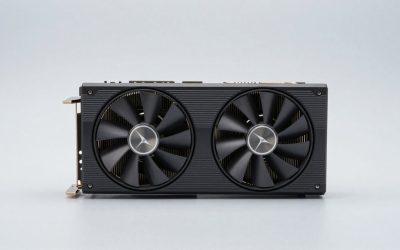
The 6900 XT needs two 8-pin connectors on the reference design, and some partner boards use three. The 6750 XT uses a 6-pin plus an 8-pin. Both reference cards measure 267 mm, but the 6900 XT is a 3-slot card while the 6750 XT is 2-slot, which matters in compact cases or boards with tightly spaced slots.
Value Math Today
At launch, using the 6750 XT as 100 points and the 6900 XT as roughly 135 points at 1440p:
- RX 6900 XT: $999 / 135 = about $7.40 per point.
- RX 6750 XT: $549 / 100 = about $5.50 per point.
Neither is sold new in meaningful volume now, so used pricing is what counts. A used RX 6900 XT is usually around $280-$370, while a used RX 6750 XT usually sits around $200-$260. At those ranges the 6900 XT often delivers more frames per dollar, provided the power supply and case can handle it.
Decision Guide by Resolution and Budget
| Scenario | Better pick | Why |
|---|---|---|
| 1080p gaming | RX 6750 XT | Plenty of performance with lower power and a smaller cooler |
| 1440p at 60-100 Hz | RX 6750 XT | Cheaper and adequate at high settings |
| 1440p at 144 Hz+ | RX 6900 XT | The extra performance is noticeable at high refresh |
| 4K | RX 6900 XT | 16 GB and the wider bus are needed |
| 600 W PSU or compact case | RX 6750 XT | Lower TDP and 2-slot width |
| Interested in ray tracing | Neither; consider RDNA 4 or RTX 50 | Both are weak at RT and lack FSR 4 |
Used-Market Tips
The 6900 XT is now around six years old, and some units saw heavy mining use in 2021. Check fan noise, temperatures under load and the condition of the PCIe connector. Repasting is often worth doing on high-mileage cards. Reference RX 6900 XT models include a USB-C output, which can be useful for certain monitors or VR headsets, while the 6750 XT offers three DisplayPort outputs instead of two.
Pairing Each Card With the Right CPU and Monitor
Getting full value from either card depends on the rest of the system. The RX 6900 XT is fast enough that older processors, such as quad-core chips or early six-core parts from 2017-2018, will often hold it back at 1080p and even at 1440p in CPU-heavy games like large-scale strategy titles or busy multiplayer shooters. A modern six- or eight-core CPU is the sensible partner, and pairing it with a 1080p 60 Hz monitor wastes most of its headroom.
The RX 6750 XT is more forgiving. It pairs well with mid-range processors and suits 1080p 144-165 Hz or 1440p 60-100 Hz displays. Both cards support AMD Smart Access Memory (Resizable BAR) on compatible platforms, which can add a few percent in some games, so enabling it in the BIOS is worthwhile.
Monitor connectivity is similar on both: HDMI 2.1 for high-refresh 4K TVs and DisplayPort 1.4a for PC monitors. Neither card supports DisplayPort 2.x, so very high refresh rates at 4K rely on Display Stream Compression.
Frequently Asked Questions
Is the RX 6750 XT an upgrade over the RX 6900 XT?
No. The RX 6750 XT is a mid-range refresh and is roughly 25-45% slower than the RX 6900 XT in GPU-bound games at 1440p. It only wins on power draw, size and typically price.
Which card is better for 1440p?
For 1440p at high refresh rates, the RX 6900 XT is better thanks to its larger chip and 16 GB of memory. For 1440p at 60-100 Hz, the RX 6750 XT is usually enough and costs less.
What PSU does the RX 6900 XT need?
A quality 650-750 W unit is suitable, with 750 W recommended for systems with high-end CPUs. The reference card uses two 8-pin connectors.
Can either card use FSR 4?
No. FSR 4 requires RDNA 4 hardware. Both cards support FSR 3.1 upscaling and frame generation as well as AMD Fluid Motion Frames.
Is 12 GB of VRAM enough in 2026?
For 1080p and most 1440p gaming, 12 GB remains adequate. Buyers who plan to play new releases at 4K or with maximum textures will be better served by 16 GB.