Key takeaways
- For gaming first: The 9800X3D delivers the higher frame rates thanks to its 3D V-Cache.
- For rendering and editing: The 285K’s 24 cores dominate multithreaded creative work.
- For streaming plus gaming: The 285K’s thread count handles simultaneous encoding with ease.
- For cool, quiet builds: The efficient 9800X3D is far simpler to keep cold and silent.
- For a future upgrade path: AMD’s AM5 socket offers more room to upgrade down the line.
What's inside
Few processor matchups spark as much debate as Intel’s Core Ultra 9 285K against AMD’s Ryzen 7 9800X3D. These are two flagship-class chips built with opposite goals in mind. Intel throws 24 cores at the problem to crush multithreaded workloads, while AMD stacks extra cache onto eight cores to win the gaming crown. Picking the right one depends almost entirely on what you do with your PC.
This comparison cuts through the specs to show how each chip performs where it counts: gaming frame rates, creative workloads, power efficiency, and long-term platform value. By the end you will know whether the multithreaded muscle of the 285K or the gaming focus of the 9800X3D is the better fit for your build.
As an Amazon Associate we earn from qualifying purchases at no extra cost to you.


🎮 Get More From Your Setup — Free
Prime Gaming gives you free PC games every month, in-game loot, and a free Twitch channel sub — plus fast free shipping on all the gear above. New members get a 30-day free trial.
Watch: Intel Core Ultra 9 285k Vs Ryzen 7 9800x3d: Full Comparison — Video Review
Quick Verdict
Gamers should choose the Ryzen 7 9800X3D. Its 3D V-Cache produces the highest frame rates in most titles while running efficiently and cool. Creators, streamers, and heavy multitaskers should choose the Core Ultra 9 285K, whose 24 cores make short work of rendering and exporting. It really is that simple: frames favor AMD, threads favor Intel.
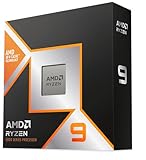
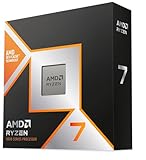
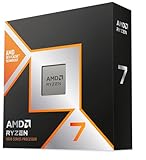
AMD Ryzen 7 9800X3D
The 9800X3D is the definitive gaming CPU of its generation. By stacking a large 3D V-Cache directly onto its eight Zen 5 cores, it keeps games fed with fast, low-latency data, which shows up as higher and steadier frame rates, particularly at 1080p and 1440p where the processor matters most.
It is also a model of efficiency. The chip draws modest power and stays cool, so it fits neatly into compact or quiet builds and does not demand exotic cooling. You can buy it on its own or grab a combo that bundles it with a matched X870E or B850 board for a painless build.
Its limitation is core count. Eight cores are plenty for gaming and light creative work, but they trail Intel’s flagship in the heaviest production tasks that scale across many threads.
Intel Core Ultra 9 285K
The Core Ultra 9 285K is a productivity powerhouse. With 24 cores, split between 8 performance and 16 efficiency cores, and boost clocks reaching 5.7 GHz, it tears through video rendering, 3D work, code compilation, and dense multitasking that would bog down a smaller chip.
Its gaming performance is strong too, easily powering high-refresh displays, though it falls short of the 9800X3D in cache-sensitive titles. Where it shines is versatility: a machine that must edit video by day and game by night is right in the 285K’s wheelhouse.
Expect higher heat and power draw under full load. A robust cooler and a quality motherboard help the 285K stretch its legs and stay stable during marathon workloads.
Head-to-Head: Which Should You Buy?
- For gaming first: The 9800X3D delivers the higher frame rates thanks to its 3D V-Cache.
- For rendering and editing: The 285K’s 24 cores dominate multithreaded creative work.
- For streaming plus gaming: The 285K’s thread count handles simultaneous encoding with ease.
- For cool, quiet builds: The efficient 9800X3D is far simpler to keep cold and silent.
- For a future upgrade path: AMD’s AM5 socket offers more room to upgrade down the line.
Frequently Asked Questions
Which wins in gaming?
The Ryzen 7 9800X3D generally takes the gaming crown, especially in CPU-bound titles where its 3D V-Cache provides a clear frame-rate advantage.
Which is better for creative work?
The Core Ultra 9 285K, with three times the core count, is significantly stronger for rendering, video export, and other multithreaded production tasks.
Does the 285K run hot?
Under heavy multithreaded loads it draws more power and produces more heat than the 9800X3D, so a strong cooling solution is recommended.
Are the platforms different?
Yes. The 9800X3D uses AMD’s AM5 socket while the 285K uses Intel’s current platform, so your motherboard choice is tied to the CPU you pick.
Final Verdict
Match the chip to your workload and you cannot go wrong. The Ryzen 7 9800X3D is the gamer’s choice, serving up top frame rates with excellent efficiency, while the Intel Core Ultra 9 285K is the creator’s tool, powering through the heaviest multithreaded jobs. Decide whether frames or threads matter more to you, and the winner becomes obvious.