Our Top Picks
 DARKROCK Black F120 3in1 120mm Infinite Mirror Design120mm-Forward4.7 x 1 x 4.7 inchesCheck on Amazon
RGB case fans are the cheapest way to change how a PC looks, and also one of the easiest places to waste effort. The keyword hides several separate decisions: how many fans you need, whether they connect through a hub or chain to each other, whether the lighting is addressable, and whether the blades will stay quiet once you slow them down. A bundle that looks generous in a product photo can turn out to be awkward to wire, while a single clever fan can leave you short of the quantity a full case needs.
This guide is written for builders filling a case with 120mm fans, either replacing a set of plain ones or filling an empty chassis. It compares six listings, from a seven-fan bulk pack to a name-brand triple, and it judges them only on the words in each title: sizes, pack counts, bearings, speed ceilings, connectors, and lighting type. Anything the title does not say is flagged as something to confirm before you order in 2026.
Quick Picks

Thermalright 5 Pack TL-C12C-S CPU Fan 120mm ARGB Case Cooler Fan, 4pin PWM Silent Computer Fan with S-FDB Bearing Included, up to 1550RPM Cooling Fan(5 Quantities)
One of the consumer electronics options compared in this guide.
View on Amazon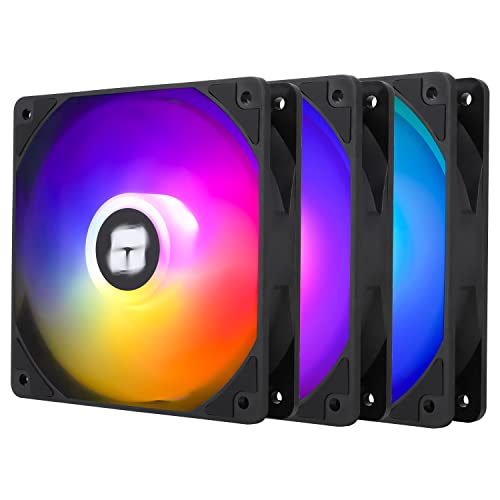
Thermalright TL-C12C-S X3 CPU Fan 120mm ARGB Case Cooler Fan, 4pin PWM Silent Computer Fan wth S-FDB Bearing Included, up to 1550RPM Cooling Fan(3 Quantities)
One of the consumer electronics options compared in this guide.
View on Amazon
UTLGAMENG 7 Pack 120mm ARGB PC Fans, 4 Forward+3 Reverse, PWM, 28 LED Black | 4 Forward & 3 Reverse Fans for PC Case, 4Pin PWM, 1550 RPM, 28 ARGB LED, Infinity Mirror Lighting, Ideal for Gaming & Cooling
One of the consumer electronics options compared in this guide.
View on Amazon
Cooler Master MF120 Lite ARGB 120mm PWM Cooling Fan, High Airflow 3-Pack | 120mm PC Cooling Fan 3-Pack, ARGB Lighting, PWM up to 1,750 RPM, ARGB Splitter, High Air Balance Blades, Hybrid PBT Frame
One of the consumer electronics options compared in this guide.
View on Amazon
Thermalright TL-C12C-S X5 CPU Fan 120mm ARGB Case Cooler Fan, 4pin PWM Silent Computer Fan with S-FDB Bearing, up to 1550RPM (5 Pack)
One of the consumer electronics options compared in this guide.
View on AmazonDARKROCK Black F120 3in1 120mm Infinite Mirror Design Case Fans | 24 LED Lights PWM Control & ARGB effect, Hydraulic HDB Bearing for Low-Noise Operation - Suitable for Most PC Cooling Systems
One of the consumer electronics options compared in this guide.
View on Amazon| Product | Best for | Key spec from the title |
|---|---|---|
| Thermalright TL-C12C-S 5-Pack | Filling a whole case with quiet fans | 120mm ARGB, 4-pin PWM, S-FDB bearing, up to 1550RPM |
| UTLGAMENG 7-Pack | Big builds that need a lot of fans | 120mm ARGB, 4 forward and 3 reverse, PWM, 28 LED |
| Cooler Master MF120 Lite ARGB 3-Pack | A tidy front intake with a known brand | 120mm PWM, up to 1,750 RPM, ARGB splitter |
| DARKROCK F120 3-in-1 | Showpiece builds that want mirror-style lighting | 120mm, 24 LED, PWM, ARGB, hydraulic HDB bearing |
| Corsair RS120 ARGB 3-Pack | Cable-light builds using daisy-chaining | 120mm PWM, daisy-chain, magnetic dome bearing |
| 5-Pack ARGB Fans with Hub (unbranded title) | Single-purchase full kit with speed control | 120mm, 5 pack, hub, ARGB, PWM |
The 6 Best Options
Thermalright TL-C12C-S 5-Pack
This listing is the volume play with a bearing story. The title describes a five-pack of 120mm ARGB case fans, 4-pin PWM control, an S-FDB bearing, and a speed ceiling of 1550RPM, and it describes the fan as silent. That combination suits someone building an airflow-focused case who wants every slot filled with the same fan so that noise and color stay consistent. A five-count pack covers a typical front, top, and rear arrangement on a mid-tower with a spare for a radiator or a second exhaust.
- Five matching fans in one purchase, which keeps color and sound consistent across the case.
- 4-pin PWM lets the motherboard vary speed with temperature instead of running flat out.
- An S-FDB bearing is named in the title, a design associated with long, quiet service.
- The title does not describe the lighting connector layout, so confirm the header type your board has.
- A 1550RPM ceiling is moderate; heavy radiator use may call for something faster.
Skip it if you only need one or two fans, or if your motherboard has no ARGB header and you plan to rely on a controller. Thermalright also lists three-pack, five-pack, and white versions of the same fan, so those are treated here as pack-size and color variants of this entry. Compared with the next pick, it trades sheer count for a named bearing and a clear low-noise pitch. Buyers who care more about long-term quietness than about having the biggest number of fans in the box will usually find this the more sensible of the two bulk options, especially in a mid-tower with room for five.
UTLGAMENG 7-Pack 120mm ARGB Fans
If the plan is to fill every mounting point in a large chassis, this is the largest pack on the list. The title shows seven 120mm ARGB PWM fans, with a split of four forward and three reverse configurations, 1550RPM, and 28 ARGB LEDs. Reverse-blade fans are meant to put the lit side facing the viewer when mounted on the intake side, which is the sort of detail that matters in a glass-panel build where the front of the case is on display from the room.
- Seven fans cover a large case in a single order, which reduces the odds of mismatched colors.
- The four-forward, three-reverse mix is aimed at keeping lit sides visible on intake fans.
- 28 ARGB LEDs per the title suggest a dense light ring.
- The brand is unfamiliar, and the title gives no bearing type, so long-term noise is unknown.
- Seven fans means seven lighting connections and a lot of cable routing to plan for.
Skip it if you want a recognized brand or if your case only holds three or four fans, because the extra units would sit in a drawer. Against the Cooler Master set that follows, this pack offers more fans and a unique reverse mix, but less certainty about build quality and software support. If you do buy a pack this large, mount one fan first, check how it behaves on the lighting header, and only then install the rest, so a problem shows up before the whole case is wired.
Cooler Master MF120 Lite ARGB 3-Pack
The MF120 Lite is the recognizable brand on the list and a natural match for a standard front intake. The title shows a three-pack of 120mm fans described as high airflow, with ARGB lighting, PWM control up to 1,750 RPM, and an ARGB splitter. That speed ceiling is the highest among the plain-fan listings here, which helps when the fans sit behind a dense front panel or a radiator and need some push. Three fans is the usual count for a front intake in a mid-tower.
- A 1,750 RPM ceiling gives more headroom for restrictive front panels than the 1550RPM kits.
- An included ARGB splitter, as the title suggests, simplifies connecting three fans to one header.
- A well-known maker makes support and replacement easier than a no-name pack.
- Only three fans, so a full build needs a second pack and may leave you with mismatched colors.
- The title does not name a bearing type, so noise longevity is not stated.
Skip it if you need five or more fans in one go or want a particularly premium feel. It sits between the bulk packs above and the single-focus models below: more brand confidence than the seven-pack, but less bearing detail than the Thermalright or Corsair listings. It is a sound choice for a first custom build where simplicity matters, and a second pack can be added later if the case has room for more fans than the first three.
DARKROCK Black F120 3-in-1 Infinite Mirror
This one is for builders who care about how the lighting looks first. The title describes a 120mm case fan with an infinite mirror design, 24 LEDs, PWM control, ARGB effects, and a hydraulic HDB bearing meant for low noise. The mirror effect creates a tunnel-like glow rather than a simple ring, which makes the fan an appealing choice for a front panel or a vertically mounted display where the effect will be seen head-on.
- The infinite mirror design delivers a depth effect that plain ring fans do not.
- PWM and ARGB are both named, so speed and color can be controlled separately.
- A hydraulic HDB bearing is stated, aimed at quiet operation.
- Mirror-style fans can look dim or odd from side angles and when the case is in a bright room.
- The title is truncated in places and does not give a speed ceiling, so airflow cannot be judged.
Skip it if raw cooling is the point, since the design is about looks. Compared with the Corsair triple that follows, DARKROCK prioritizes visual depth, while Corsair prioritizes a cleaner cable layout and brand support. Pair it with a case whose intake is already well supplied by other fans, so the lit unit is a feature of the build and not the only thing moving air. Looking at the listing, buyers should also confirm how many fans arrive in the box, since the title reads like a single-fan product page.
Corsair RS120 ARGB 3-Pack
The RS120 triple is the cable-management pick. The title lists a three-pack of 120mm PWM ARGB fans with a daisy-chain connection, low-noise operation, and a magnetic dome bearing, in black. The daisy-chain approach means one fan links to the next, so a trio can reach the motherboard through a single run instead of three separate leads. For anyone who dislikes a tangle behind the motherboard tray, that alone can justify the choice.
- Daisy-chain wiring reduces cable clutter behind the tray and in the front of the case.
- A magnetic dome bearing is named, aimed at low noise and long life.
- The kit comes from a big peripheral brand, which usually means documented software and warranty support.
- The title does not state an RPM ceiling, so airflow comparisons are not possible.
- A single-pack version of the same fan exists, so extra units must be bought separately if you need more than three.
Skip it if you need seven fans or want the lowest cost per fan, since a bulk pack beats it on count. Compared with the generic five-pack that follows, it brings tidier wiring and a clearer brand story but fewer fans and less speed control through a hub. Its single-fan sibling in the same family is a useful way to add a matching rear exhaust later, which is the main reason to prefer this line when you expect to grow the build in stages.
5-Pack ARGB Fans with Hub
This listing leads with its accessory. The title describes a five-pack of 120mm ARGB PWM fans in black, with a fan hub, speed control, and PWM control for a computer case. The title does not name the brand in the part available, so treat it as an unbranded kit. The hub is the appeal: it lets one motherboard header manage the whole group, which helps on boards with few fan headers and makes it easy to add speed control to fans that otherwise run at full blast.
- A hub is included, which solves the shortage of motherboard headers.
- Five fans in one pack suits a full-case refresh.
- Speed control and PWM are both called out in the title.
- No bearing type, speed ceiling, or brand name appears in the portion of the title, so quality is harder to judge.
- Hub wiring adds one more component to route and mount in the case.
Skip it if you want proven long-term noise performance or the support that a recognized maker offers. Against the Thermalright five-pack at the top, it offers the hub in return for less certainty about bearings and noise behavior, so the choice depends on whether header count or build confidence worries you more. If you pick it, read the connector description on the product page before ordering, because hubs vary in how they take power, and a weak match can leave you with a tidy bundle that still needs an adapter.
Why Buy RGB Case Fans
To replace weak stock fans and improve the look together
Many cases ship with plain fans that are loud at high speed or dull at low speed. Replacing them with a PWM set lets the motherboard fine-tune the speed, and the lighting turns a utility upgrade into a visible one. A single purchase can address both noise and appearance, which is why RGB sets are popular even for builders who care mostly about temperature. It also helps older cases: a fresh set of fans with a better bearing can make a five-year-old machine feel newer without touching the processor or graphics card.
To unify a build that grew over time
Builds often end up with a mix of old and new parts and a few random fans. A matched pack gives the interior one color language and one noise profile, making a mixed-up case look deliberate. Sets with a hub or daisy-chain wiring also reduce the number of cables left hanging in view through a glass side panel. For someone showing a build to friends or filming it, that tidy, unified look is often the whole point of buying lit fans.
To tune airflow instead of just adding lights
PWM fans respond to temperature curves in the BIOS or software. Pairing a front intake set with a rear exhaust fan lets you shape airflow and noise together. The lighting then becomes a side benefit rather than the whole purchase, and the better listings here pair lighting with named bearings so the fans do not become a source of annoyance. Tuning a curve takes a few minutes in the BIOS: set the fans to idle slowly below a modest temperature, ramp them up gradually, and leave the lighting on a calm effect. The result is a case that is quiet during browsing and still moves plenty of air when a game pushes the graphics card.
How to Choose
Decide the fan size and count first
The listings here are 120mm, the most common size in mid-tower cases. Check your case manual for the number and size of mounting positions, including top and rear. Count radiator needs too, because a radiator uses the same fan slots. Order a number that fills the planned positions with a spare, not a pack that leaves you with an uneven count and mismatched colors. Fan thickness matters as well: most are the standard 25mm, but a few cases and radiators have limited depth, so read the clearance notes. Remember that a 120mm fan fits in a 140mm position only with an adapter frame, and the reverse does not work at all.
Require PWM, not just three-pin control
A 4-pin PWM fan varies speed in small steps and can idle quietly. Every listing here names PWM, which is a real advantage over older voltage-controlled fans. Make sure your motherboard fan headers are 4-pin or that your hub supports PWM, and avoid fans that are advertised only by maximum speed. A fan that can slow to a whisper at idle is worth more in daily use than one that can spin a few hundred revolutions faster at full load. Look for a stated minimum speed on the maker’s page if quiet idling is the goal, and set a gentle curve in the BIOS so the fans ramp up gradually instead of surging.
Check the ARGB header and the connector type
Addressable RGB uses a three-pin, five-volt connector on most boards, and it is not the same as the older four-pin 12-volt RGB header. Plugging the wrong one in can damage lights. Confirm your board has an ARGB header, or plan on a controller or hub that bridges the gap. Look at how many headers you have versus how many fans you plan to connect. Many boards provide only one or two ARGB headers, so a hub, a splitter, or a daisy-chain kit is often the practical way to light a full set. Check the maximum number of LEDs a header can drive, because very dense rings can exceed the limit on a basic header and cause flicker.
Look at the bearing and speed range
Bearings affect noise and lifespan. The titles here name S-FDB, hydraulic HDB, and magnetic dome designs, which are all aimed at quiet, long service. A fan with a high speed ceiling, such as 1,750 RPM, offers more airflow but only if you allow it to spin that fast. A moderate ceiling around 1550 is usually enough for a case that is not packed with dense filters. Static pressure matters more than raw airflow when the fan pushes through a mesh panel, a dust filter, or a radiator, and a listing that never mentions it leaves you guessing. If the title is silent, look at the maker’s page before relying on the fan for a radiator.
Plan the wiring before you buy
Daisy-chain designs like the Corsair RS120 reduce cable count, while hubs and splitters centralize connections. Seven separate fans mean seven power leads and seven lighting leads unless a hub is involved. Sketch the routing from the fan locations to the headers, and note where cables can be hidden behind the tray. A neat plan makes a cheaper fan look better than a messy build with an expensive one. Leave a little slack at each fan so the cable can be moved when you clean the filters, and use the tie points the case provides instead of tying leads to the frame in view. Short extensions are cheap and often easier than forcing a short lead across the case.
Know where budget fans cut corners
Low-cost sets often leave out the bearing type, use dimmer LEDs, or give no speed ceiling. They may also bundle limited cables, so you end up buying extensions. A longer warranty and a named bearing are the usual signs of a better build. If a listing hides these details, treat the fan as a gamble and keep your expectations for noise modest. The warranty period on a bulk pack is also worth reading, since a fan that develops a rattle after a year is a small annoyance only if the seller will replace it without a long argument.
Single Fans vs Bundled Packs and Hubs
| Factor | Bundled packs here | Single or small sets |
|---|---|---|
| Count per purchase | Three, five, or seven | One to three |
| Wiring | Hub, splitter, or daisy-chain | Individual leads |
| Color match | Same batch | Risk of mismatch |
| Flexibility | Fixed quantity | Add or replace one |
| Header demand | Often one header | One header per fan |
Choose a bundle when filling a case from scratch
A matched set keeps color, sound, and look consistent, and the included hub or splitter solves the header shortage. Listings such as the five-pack with a hub and the Thermalright five-pack make sense for a clean build, since you can mount all fans with the same orientation and wire them in a few runs. The pack-size listings also make the cost per fan easier to compare, which is hard to do when you add singles one at a time and the shipping adds up.
Choose singles or small sets when topping up
If you already have a set you like, a small pack or a single replacement keeps the cost down and avoids leftovers. This is also the right route when one fan fails or when you want a single lit exhaust to match an existing front intake. Check that the lighting protocol and the connector type match the existing fans. A mismatch in speed ceilings is less of a problem than a mismatch in color, since the motherboard curve can be tuned, but lights that do not sync will be visible every time the system is on.
Some builders mix both approaches: a bundled set for the front and a single branded fan at the rear. That works well when the rear fan is not visible from the glass side and only needs to move air quietly, so it can be a plain model with the right bearing and PWM control rather than a lit one.
Setup, Compatibility and Upgrade Tips
What to check before buying
Confirm the case supports the fan size at each position and that the front panel has enough clearance for fans of standard thickness. Count the ARGB and PWM headers on the motherboard, and check whether the case has a built-in controller. If it does, you may be able to run the fans from that controller and skip a hub entirely. It also pays to check whether the case already includes fans in good condition, since keeping one or two of them as a rear exhaust can reduce the number of lit fans you need to buy.
What to upgrade first
For cooling, begin with the front intake and the rear exhaust, since those two positions shape most of the airflow. Add top exhaust fans afterward if the case runs warm. Leave lighting for last, because adding colors is easy while undoing a messy wiring job is not, and a good airflow layout will be useful no matter which fans you end up with. Clean the dust filters when you swap fans, since a blocked intake wastes the benefit of any new blade design, and keep the old fans until the new set has run for a few days without a rattle.
Common compatibility traps
The most common trap is connecting an addressable fan to a non-addressable header, which can damage the lights. Another is orientation: the lit side and the airflow direction are separate, so check the arrows on the frame before mounting. Reverse-blade fans change which side the light ring shows, so plan the layout before screwing anything in place. Also watch the screw length: long screws can crack a fan frame or bite into a radiator fin, and thin rubber mounts are not always interchangeable with metal screws.
Which One Fits Your Situation
You are filling a mid-tower and want quiet fans
The Thermalright TL-C12C-S five-pack covers front, top, and rear with a named S-FDB bearing and PWM control. It keeps color and noise consistent without a big spend.
You own a large case with many mounting points
The UTLGAMENG seven-pack gives you the count in a single order, with a forward and reverse mix aimed at keeping lit sides facing out. Plan the cable routing carefully before you begin, and use the hub or splitter approach where possible so the seven lighting leads do not all land on one motherboard header. This choice fits a tower case with a large mesh front and room for fans on the top and the side.
You prefer a known brand and a simple front intake
The Cooler Master MF120 Lite three-pack matches a standard three-fan front intake, with a 1,750 RPM ceiling and an included ARGB splitter named in the title.
You want a clean, low-cable interior
The Corsair RS120 triple chains the fans so that one lead runs back to the board. It is the tidiest option for a glass-panel build where wiring is on display. If you later want a matching rear exhaust, the single-pack version of the same fan is the simplest way to extend the set.
If the glow itself is the feature, the DARKROCK mirror fan is the alternative worth a look; pair it with a good airflow plan elsewhere in the case so the lighting does not have to carry the cooling.
Common Mistakes
- Buying a pack without counting how many fan positions the case actually has.
- Plugging an addressable fan into a 12-volt RGB header, which can damage the lights.
- Ignoring airflow direction and mounting fans the wrong way around.
- Filling every slot with intake fans and leaving no exhaust.
- Choosing fans on lighting alone and overlooking bearing type or the speed ceiling.
- Skipping a hub or splitter and then running out of motherboard headers.
Related guides
- Budget Graphics Cards For 4K Video Editing
- External Hard Drive For Xbox Series X
- How To Check Gpu Temperature While Gaming
Frequently Asked Questions
Are RGB fans worse for cooling than plain fans?
No. Lighting is separate from the blade design and bearing. A good RGB fan can move as much air as a plain one with the same shape and speed. Judge cooling by the speed ceiling and blade design, not the LEDs.
How many case fans does a typical PC need?
Most mid-towers do well with two or three intake fans in front and one exhaust at the rear. Adding a top exhaust helps if the system runs warm. More is not always better, since a crowded case can raise noise without lowering temperatures.
What does PWM mean on a fan listing?
PWM means the fan accepts a four-pin control signal so the motherboard can adjust speed precisely. It is the preferred control type for quiet systems, and every listing in this guide names it.
Can I mix fans from different brands?
Yes, but the lighting effects and color timing may not match, and software control can differ. If appearance matters, stay with one maker or one pack so the effects sync across all fans.
Do I need a hub or controller?
Only if you have more fans than motherboard headers or want unified control. A daisy-chain design or a bundled hub can remove that need, as in the Corsair triple and the five-pack with a hub.
Why are the Thermalright white and three-pack versions not listed separately?
They are color and pack-size variants of the fan already covered above. Listing them again would repeat the same product, so this guide covers one representative Thermalright entry instead.
Final Words
The best RGB case fan set is the one that matches your case count, your motherboard headers, and your tolerance for cable work. The Thermalright five-pack suits quiet, full-case builds, the UTLGAMENG seven-pack fits very large chassis, the Cooler Master and Corsair triples cover a standard front intake with brand support, and the DARKROCK is for builders who care most about the visual effect. Plan the wiring first, then choose the lights. Count the fan positions, check the headers, and decide whether you value a clean cable layout more than the lowest cost per fan. Once those three answers are clear, the right listing in this guide is usually obvious, and the build comes out quieter, cooler, and better looking.