The ASUS ROG Phone 8 Pro is a premium Android gaming phone built around the Snapdragon 8 Gen 3 processor, a 165Hz AMOLED display, gaming-focused controls, and a 5,500mAh battery. It launched in the US at $1,199.99 for the 16GB RAM and 512GB storage configuration, positioning it firmly in flagship-phone territory.
Our verdict: The ROG Phone 8 Pro remains worth considering for players who want strong gaming hardware, customizable controls, and a phone that also works as an everyday flagship. Its biggest drawbacks are the premium original price, a 1080p-class display rather than a higher-resolution panel, and the age of its Snapdragon 8 Gen 3 platform.
This is a specification- and published-review-based assessment, not a firsthand test by Real Gaming News. Because the phone launched in January 2024, its value in 2026 depends heavily on the actual selling price, remaining software support, battery condition, and whether a newer gaming phone offers better value.
ROG Phone 8 Pro specifications at a glance
Official specifications for the ROG Phone 8 Pro, primarily the US-market 16GB/512GB model. The Pro Edition has a different memory and storage configuration.
| Specification | ROG Phone 8 Pro |
| Processor | Qualcomm Snapdragon 8 Gen 3 |
| Graphics | Adreno 750 GPU |
| RAM | 16GB LPDDR5X |
| Storage | 512GB UFS 4.0 |
| Display | 6.78-inch LTPO AMOLED |
| Resolution | 2,400 × 1,080 |
| Refresh rate | Up to 165Hz |
| Rear cameras | 50MP main, 13MP ultrawide, 32MP telephoto |
| Front camera | 32MP |
| Battery | 5,500mAh |
| Wired charging | Up to 65W |
| Wireless charging | Up to 15W Qi |
| Connectivity | 5G, Wi-Fi 7 support where available, Bluetooth 5.4 |
| Protection | IP68-rated dust and water resistance |
| Dimensions | 163.8 × 76.8 × 8.9mm |
| Weight | 225g |
| Launch software | Android 14 with ROG UI |
| US launch price | $1,199.99 for 16GB/512GB |
Source: ASUS’s official specifications and US launch announcement. Actual charging speed, wireless features, and network compatibility can vary by adapter, region, and carrier.
Price and availability: What should you pay in 2026?
ASUS announced the ROG Phone 8 Pro at a US MSRP of $1,199.99 for the 16GB/512GB version. The higher-end 24GB/1TB ROG Phone 8 Pro Edition launched at $1,499.99, with the AeroActive Cooler X included in its original bundle. These are historical launch prices, not verified current retail offers.
As of October 27, 2026, I could not establish a reliable, current US street price for a specific new, refurbished, or used configuration from the available sources. Rather than quote an unverified discount, prospective buyers should compare listings by condition, exact storage configuration, seller warranty, and return policy.
Which version makes sense?
- 16GB/512GB ROG Phone 8 Pro: The more practical configuration for most players. It has substantial memory and storage without paying for the 1TB model.
- 24GB/1TB ROG Phone 8 Pro Edition: Better suited to buyers who genuinely need extra local storage and want the original cooler bundle, provided the price and condition justify it.
- Used or refurbished models: Potentially more attractive than buying old inventory at its original premium price. Check battery health, USB-C ports, display condition, repair history, and software-update status before paying.
Buying rule: Do not use the original MSRP as evidence that a current listing is a good deal. Compare the asking price with newer gaming phones and mainstream flagships available in your market.
Design and build quality
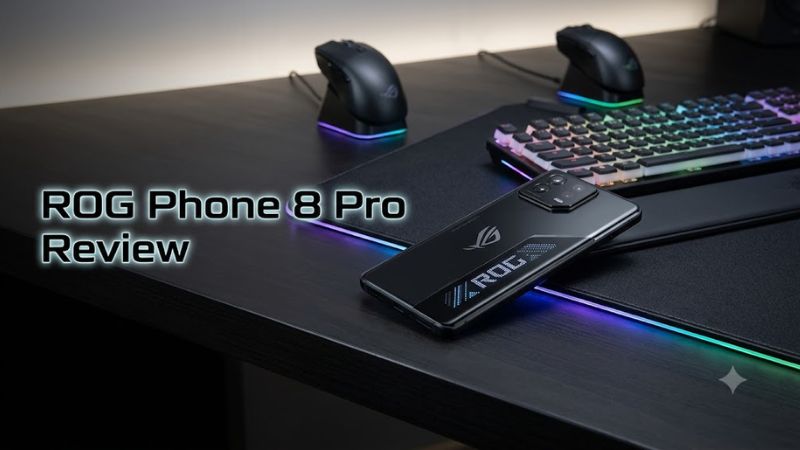
The ROG Phone 8 Pro moves away from the bulkier, more overtly gaming-oriented appearance of some earlier ROG models. At 8.9mm thick and 225g, it is relatively streamlined for a gaming-focused handset, while retaining an IP68 rating. Its Phantom Black finish and rear AniMe Vision lighting give it a recognizable gaming identity without relying on an aggressively colored chassis.
The IP68 rating is useful for everyday peace of mind, but it should not be treated as permission to expose a used phone to water. Resistance can diminish with wear, impact damage, or repairs.
Gaming controls and cooling
ASUS includes its AirTrigger controls, which let players map shoulder-style inputs to supported on-screen actions. These can be useful in shooters, racing games, and other titles where additional input points improve control.
The phone also supports the AeroActive Cooler X accessory. The external cooler is particularly relevant for extended gaming sessions, when sustained heat can affect performance and comfort. Buyers should confirm whether the accessory is included with the exact listing; a used phone may not come with its original bundle.
One design trade-off deserves attention: the slimmer bezels make the phone look more like a conventional flagship, but they provide less space for the hands than the broader bezels found on some dedicated gaming phones. The stereo speakers also no longer use the older front-facing arrangement, according to independent reviews.
Display: Fast refresh, but not the sharpest panel
The 6.78-inch AMOLED display is one of the phone’s central strengths. It combines a 2,400 × 1,080 resolution with an adaptive refresh rate that can reach 165Hz. ASUS also lists HDR10 support, Gorilla Glass Victus 2 protection, and a peak brightness specification of 2,500 nits.
What does 165Hz mean for gaming?
A higher refresh rate can make supported games and interface animations look smoother. At 165Hz, the screen can refresh up to 165 times per second, but the game must render frames quickly enough to take advantage of it.
That distinction matters. A 165Hz display does not guarantee 165 frames per second in every game. Performance depends on the game, its frame-rate cap, graphics workload, thermal conditions, and software settings.
The adaptive LTPO panel can also reduce its refresh rate when high-speed updates are unnecessary, helping balance smoothness and power use.
The trade-off: Full HD+ rather than QHD+
The screen’s 1080p-class resolution is adequate for a phone-sized display, but it is less pixel-dense than a similarly sized QHD+ panel. Players prioritizing a high refresh rate may find that compromise reasonable. Buyers who primarily watch high-resolution video or prefer maximum display sharpness may prefer a different flagship.
Overall, the display is well suited to fast-paced mobile games, provided the title supports high frame rates. The headline refresh-rate figure should not be mistaken for a universal performance result.
Gaming performance: Still powerful, with a cooling caveat
The Snapdragon 8 Gen 3 and Adreno 750 GPU provide the hardware foundation for demanding Android games. The phone also includes ASUS performance profiles and the Armoury Crate gaming hub, allowing users to configure supported game-specific settings and AirTrigger controls.
What independent benchmarks show
TechRadar’s January 2024 review provides useful evidence of the phone’s graphics performance and thermal behavior. These are the publication’s results, not tests conducted by Real Gaming News.
| Test | ROG Phone 8 Pro result | Conditions and context |
| Geekbench 6 multi-core | Approximately 7,200 | TechRadar’s reported CPU benchmark result |
| 3DMark Solar Bay Stress Test | 92.2% | Reported stability score without the external cooler |
| 3DMark Solar Bay Stress Test | 98.3% | Reported stability score with AeroActive Cooler X attached |
Source: TechRadar’s published review. The Geekbench figure is rounded from the review’s reported result; the 3DMark stability figures refer to a separate test. These results should not be interpreted as FPS measurements from a specific game.
The stress-test results illustrate the importance of cooling. The phone can deliver strong graphics performance, but attaching the external cooler improved its reported stability in the cited test.
What this means in actual games
For games such as Genshin Impact, Call of Duty: Mobile, and PUBG Mobile, the hardware is well suited to demanding workloads. However, achievable frame rates depend on each game’s version, graphics settings, device-specific optimization, and frame-rate limits.
Keep three points in mind:
- Short sessions: The Snapdragon 8 Gen 3 offers substantial processing and graphics capability for modern Android games.
- Long sessions: Heat management becomes more important as the phone continues rendering demanding graphics.
- Competitive play: AirTrigger controls and a high-refresh-rate screen can be useful, but game support and control configuration still matter.
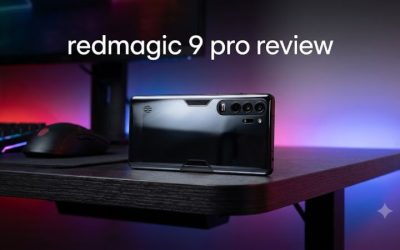
The key limitation is sustained performance without an external cooler. TechRadar’s testing found that the RedMagic 9 Pro maintained a higher stress-test stability score than the ROG Phone 8 Pro without its cooler. With the AeroActive Cooler X attached, the ROG improved substantially. That does not establish a universal gaming winner, but it does make cooling accessories relevant to the purchasing decision.
Battery life and charging
ASUS equips the ROG Phone 8 Pro with a 5,500mAh battery, 65W wired charging, and 15W Qi wireless charging. The battery is smaller than the 6,000mAh unit in the ROG Phone 7, reflecting the redesigned body.
How long does the battery last?
Published results differ depending on the testing method. Tom’s Guide reported 18 hours and 48 minutes in its custom battery test with automatic refresh-rate settings, while TechRadar described getting through a moderate-use day with roughly four hours of screen-on time and some battery remaining. These measurements come from different test methods and should not be directly compared.
Neither result predicts how long the phone will last during continuous gaming. Demanding 3D games, maximum brightness, mobile data, high refresh rates, and performance modes can consume power more quickly.
For a secondhand phone in 2026, battery condition is particularly important. A three-year-old handset may have significantly less usable capacity than it had when new.
Charging options
- 65W wired charging: Offers faster charging than many older gaming phones, subject to the correct adapter, cable, and charging conditions.
- 15W wireless charging: Convenient for everyday top-ups, although slower than wired charging.
- AeroActive Cooler X: An optional cooling accessory on relevant configurations, not a replacement for charging or battery management.
The phone’s battery features make it practical as an everyday handset, but players who prioritize marathon gaming should also compare battery capacity and cooling design against competing models.
Cameras: A meaningful improvement for a gaming phone
The ROG Phone 8 Pro has a more versatile rear-camera system than many gaming-first handsets of its generation. ASUS specifies a 50MP main camera with gimbal stabilization, a 13MP ultrawide camera, and a 32MP telephoto camera with 3x optical zoom. The front camera is listed at 32MP.
Main camera
The stabilized main camera is useful for everyday photos and video, especially when reducing camera movement matters. TechRadar’s review found improvements in image quality over earlier ROG Phone models, including better stabilization and more useful low-light photography.
Telephoto and ultrawide cameras
The dedicated telephoto lens provides optical zoom without relying entirely on digital cropping. The ultrawide camera adds flexibility for landscapes and group shots, although TechRadar identified it as weaker than the main and telephoto cameras in detail and dynamic range.
Are the cameras flagship quality?
They are capable enough for everyday photography, but buyers who prioritize photography above gaming should compare current camera-focused phones before committing to the ROG Phone 8 Pro at a premium price.
Its camera system is a useful bonus rather than the primary reason to buy it.
Software and updates: An important 2026 consideration
The ROG Phone 8 Pro launched with Android 14 and ROG UI. ASUS’s gaming software provides access to performance profiles and control customization, while the interface can also serve ordinary smartphone needs.
The bigger issue is long-term support.
ASUS’s published phone support policy lists two major Android OS upgrades and security updates through 2029 for the ROG Phone 8 series. The handset launched in January 2024, so it is already well into its support lifecycle by October 2026.
That does not mean the phone stops working in 2026. It does mean buyers should consider how much useful support time remains and check the installed software version and latest available security patch before purchasing.
For a phone expected to last several more years, update longevity deserves nearly as much attention as processor performance.
Pros and cons
Pros
- Snapdragon 8 Gen 3 processor and Adreno 750 graphics.
- Large 6.78-inch AMOLED display with a refresh rate of up to 165Hz.
- AirTrigger controls and extensive game configuration options.
- 512GB storage in the standard US Pro configuration.
- Main camera with gimbal stabilization and a dedicated 3x telephoto lens.
- IP68 rating and wireless charging.
- External cooling support for demanding gaming sessions.
Cons
- Premium original US price of $1,199.99.
- 1080p-class display rather than QHD+ resolution.
- Sustained gaming performance benefits from the external cooler.
- Smaller battery than the preceding ROG Phone 7.
- Camera performance does not lead the flagship-phone category.
- Limited major OS upgrade commitment compared with longer-supported alternatives.
- Current US pricing and availability are not established by the sources reviewed.
ROG Phone 8 Pro alternatives
The best alternative depends on whether you prioritize sustained gaming, everyday smartphone features, or price.
Nubia RedMagic 9 Pro
Consider this model if sustained gaming and battery capacity matter more than camera versatility or a conventional everyday-phone design. Its 6,500mAh battery and built-in cooling fan were notable advantages in contemporary comparisons.
ASUS ROG Phone 9 Pro
Consider a newer ROG model if you want to stay within ASUS’s gaming-phone ecosystem. Compare its current price, exact configuration, software-support commitment, and included cooling accessories before deciding whether the upgrade justifies its cost.
Samsung Galaxy S25 Ultra
A mainstream flagship is worth comparing if you care more about camera versatility, display resolution, and long-term software support than gaming-specific shoulder controls. It is not a direct substitute for the ROG’s dedicated gaming features.
These alternatives are comparison candidates, not a verified October 2026 price ranking. Check their current configurations and local availability before making a final decision.
Is the ROG Phone 8 Pro worth buying?
The ROG Phone 8 Pro remains a capable gaming phone, but its value in 2026 depends on the deal rather than its original flagship status.
Buy it if:
- You want a powerful Android phone with customizable gaming controls.
- A 165Hz AMOLED screen is more important to you than QHD+ resolution.
- You want a phone that combines gaming features with IP68 protection, wireless charging, and a telephoto camera.
- You can find a competitively priced unit with a healthy battery and verifiable software status.
Skip it if:
- You would need to pay close to its original $1,199.99 US launch price.
- Your priority is maximum sustained gaming performance without an external cooler.
- You want the longest possible software-support window from a new phone.
- Camera quality or battery capacity is more important than gaming controls.
Frequently asked questions
1. How much does the ROG Phone 8 Pro cost?
The US launch price was $1,199.99 for the 16GB/512GB model and $1,499.99 for the 24GB/1TB Pro Edition. These are historical MSRP figures, not verified current October 2026 selling prices.
2. Is the ROG Phone 8 Pro good for gaming?
Yes, its Snapdragon 8 Gen 3 processor, Adreno 750 GPU, 165Hz display, and AirTrigger controls make it well suited to demanding mobile games. Sustained performance can depend on heat and whether the external cooler is used.
3. Does the ROG Phone 8 Pro support 5G and wireless charging?
Yes, it supports 5G and up to 15W Qi wireless charging. Network-band compatibility varies by regional version and carrier, so verify the exact model before importing or buying a used handset.
4. Is the ROG Phone 8 Pro still worth buying in 2026?
It can be worth buying at a competitive price if gaming controls and performance are your priorities. Its age, battery condition, remaining software support, and the price of newer alternatives make the specific deal more important than the original review verdict.
Final verdict
The ASUS ROG Phone 8 Pro combines strong Snapdragon 8 Gen 3 performance, a fast AMOLED display, useful gaming controls, and more everyday features than many gaming phones from its generation. Its main compromises are sustained heat under heavy workloads, a high original price, and a shorter software-support commitment than some mainstream flagships.
For buyers in 2026, a clean used or refurbished unit at a sensible price may be worth considering. However, verify battery health, network compatibility, included accessories, return rights, and current security updates first. If the price approaches that of a newer gaming phone, compare the newer device before committing.