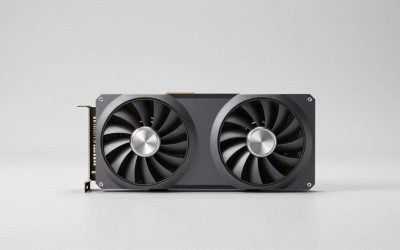
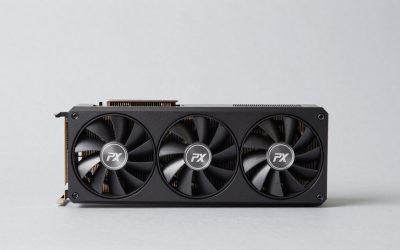
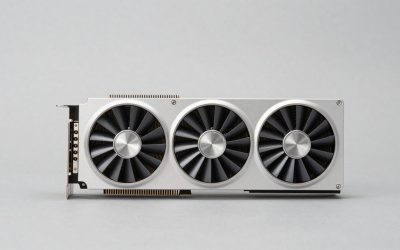
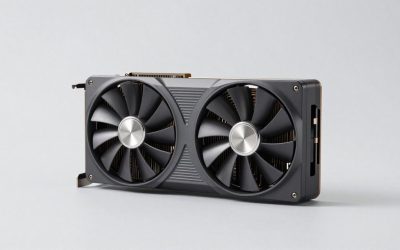
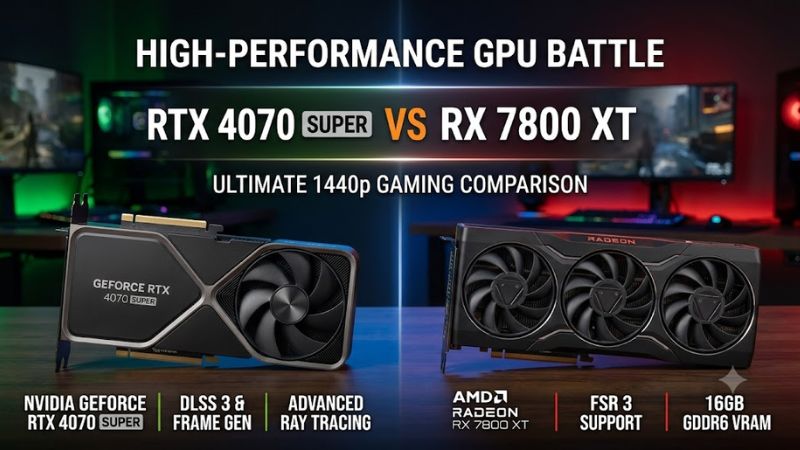
The RTX 4070 Super vs RX 7800 XT comparison comes down to more than average FPS. Both graphics cards target high-quality 1440p gaming and can handle many 4K games with appropriate settings, but they approach performance differently. NVIDIA offers stronger ray tracing, DLSS support, and better power efficiency, while AMD provides 16GB of VRAM and competitive traditional rendering performance.
For most gamers who prioritize ray tracing, streaming features, and AI-assisted rendering, the RTX 4070 Super is the more versatile choice. However, the RX 7800 XT can offer better value for players who mainly use conventional rasterized graphics and want additional video memory for demanding games.
This comparison examines gaming benchmarks, memory capacity, features, power consumption, compatibility, and long-term value to help you choose the right graphics card.
RTX 4070 Super vs RX 7800 XT: Key Specifications
Both GPUs belong to the same general performance category, but their hardware configurations differ considerably.
| Specification | RTX 4070 Super | RX 7800 XT |
| Architecture | NVIDIA Ada Lovelace | AMD RDNA 3 |
| GPU process | TSMC 4N | TSMC 5nm/6nm |
| Compute configuration | 7,168 CUDA cores | 60 Compute Units |
| Video memory | 12GB GDDR6X | 16GB GDDR6 |
| Memory interface | 192-bit | 256-bit |
| Memory bandwidth | 504 GB/s | 624 GB/s |
| Typical board power | 220W | 263W |
| Upscaling technology | DLSS | FSR |
| Frame generation | DLSS Frame Generation | FSR Frame Generation |
| DisplayPort | 1.4a | 2.1 |
| HDMI | 2.1a | 2.1 |
Specifications describe the reference GPU configurations. Partner-card designs can differ in dimensions, cooling, clock speeds, power limits, and connectors.
The most obvious difference is memory capacity. AMD equips the RX 7800 XT with 16GB, compared with 12GB on the RTX 4070 Super. That additional capacity can be useful in games with high-resolution textures, demanding modifications, and certain creative workloads.
However, VRAM capacity alone does not determine gaming performance. Memory bandwidth, cache architecture, GPU processing capability, and software optimization also influence results.
The RTX 4070 Super compensates with a more efficient architecture and stronger performance in several demanding rendering workloads. Its lower typical board power also makes it easier to accommodate in systems with relatively modest power supplies.
Gaming Performance: Which GPU Is Faster?
Gaming performance is the most important consideration for most buyers. Neither card wins every game, and the difference depends on resolution, graphics settings, rendering technology, and the game engine.
Independent testing from TechSpot provides a useful direct comparison. Its published review tested multiple games at 1080p, 1440p, and 4K, reporting average performance across its selected game suite.
1080p gaming
At 1080p, both graphics cards can deliver high frame rates in many modern games. However, CPU limitations become increasingly important, particularly in competitive titles.
TechSpot’s rasterization results showed the RTX 4070 Super averaging approximately 10% faster than the RX 7800 XT in its 1080p game selection.
That advantage does not mean every game will run faster on NVIDIA hardware. Some titles favor AMD architecture, while others respond more strongly to NVIDIA’s GPU design and driver optimization.
For players using 1080p monitors with 144Hz or 240Hz refresh rates, either card can be a strong option. However, pairing these GPUs with a capable processor is important when targeting consistently high frame rates.
1440p gaming
Best overall resolution for both GPUs
1440p is where the comparison becomes particularly interesting.
TechSpot’s rasterized gaming results placed the RTX 4070 Super approximately 13% ahead of the RX 7800 XT across its tested games. This gives NVIDIA a measurable advantage, although the Radeon card remains competitive in several titles.
The difference becomes more noticeable in games that favor NVIDIA architecture. Other titles produce much smaller gaps or favor AMD.
For example, TechSpot’s testing found the RTX 4070 Super approximately 2% faster in Cyberpunk 2077 without ray tracing. In contrast, its advantage reached around 23% in Dying Light 2.
These results illustrate why individual game benchmarks matter more than relying on a single average.
For players using 1440p high-refresh-rate monitors, the RTX 4070 Super is generally the faster option in the tested selection. However, the RX 7800 XT remains attractive when its purchase price is meaningfully lower.
4K gaming
At 4K, the additional memory bandwidth and larger VRAM capacity of the RX 7800 XT become more relevant.
TechSpot’s rasterization results showed the RTX 4070 Super averaging approximately 9% faster than the RX 7800 XT in its selected games. The difference was smaller than its 1440p result.
Both GPUs can run many 4K games, but demanding releases may require adjustments to texture quality, shadows, ray tracing, or upscaling.
The RX 7800 XT’s 16GB memory capacity gives it more room for memory-intensive workloads. Nevertheless, 16GB does not automatically make it faster at 4K, and the RTX 4070 Super can still deliver higher frame rates in many games.
For a 4K gaming system, buyers should consider whether they prioritize maximum rendering performance, texture-memory capacity, or visual features such as DLSS.
Ray Tracing: NVIDIA Has a Clear Advantage
Ray tracing is one of the biggest reasons to choose the RTX 4070 Super over the RX 7800 XT.
The technology simulates how light interacts with surfaces, reflections, and shadows. It can improve visual quality, but enabling it also increases GPU workload.
NVIDIA’s Ada Lovelace architecture includes dedicated third-generation RT cores. AMD’s RDNA 3 architecture also supports hardware-accelerated ray tracing, but the two GPUs do not deliver identical performance in demanding implementations.
TechSpot’s six-game ray-tracing comparison found the RTX 4070 Super approximately:
- 17% faster at 1080p.
- 20% faster at 1440p.
- 18% faster at 4K.
These are averages from that particular test selection, not guaranteed differences across every game.
For players who regularly enable ray tracing in Cyberpunk 2077, Dying Light 2, or other demanding titles, NVIDIA provides a more comfortable performance advantage.
The RX 7800 XT can still deliver playable ray-traced experiences, particularly when settings are adjusted. However, players may need to reduce ray-tracing quality or use upscaling more aggressively.
DLSS vs FSR
Both manufacturers offer upscaling technologies designed to improve performance without rendering every frame at the monitor’s native resolution.
NVIDIA DLSS uses AI-assisted reconstruction and is supported by compatible GeForce RTX graphics cards. RTX 4070 Super owners can access DLSS Super Resolution, Ray Reconstruction in supported games, and Frame Generation.
AMD FSR supports a broader range of hardware, including compatible Radeon and GeForce GPUs. Its availability and features depend on the specific FSR generation and game implementation.
The practical differences include:
| Feature | RTX 4070 Super | RX 7800 XT |
| Upscaling | DLSS Super Resolution | FSR |
| AI-assisted DLSS reconstruction | Yes | No |
| Ray Reconstruction | Supported | No equivalent NVIDIA feature |
| Frame generation | DLSS Frame Generation | FSR Frame Generation |
| Hardware compatibility | GeForce RTX ecosystem | Broader GPU compatibility |
Image quality depends on the game, implementation, resolution, and selected quality mode. DLSS often has an advantage in image reconstruction, although FSR continues to provide a useful alternative.
Frame generation also requires some explanation. It inserts generated frames between traditionally rendered frames to increase displayed frame rates. It does not provide the same responsiveness as an equivalent increase in native rendering performance.
For competitive gaming, native frame rates and input latency should remain important considerations.
Winner: RTX 4070 Super. It is the stronger choice for gamers who prioritize ray tracing, DLSS, and NVIDIA’s rendering technologies.
VRAM and Memory Bandwidth: Is 16GB Better Than 12GB?
The RX 7800 XT has a meaningful hardware advantage in memory capacity.
Its 16GB GDDR6 configuration provides 4GB more VRAM than the RTX 4070 Super’s 12GB GDDR6X memory.
This difference matters because modern games increasingly use detailed textures, complex environments, and larger asset collections.
At 1440p, 12GB is still sufficient for many current games. However, particularly demanding titles can consume more memory when players enable ultra-quality textures, ray tracing, or high-resolution modifications.
At 4K, the additional capacity of the RX 7800 XT becomes more attractive.
Understanding memory bandwidth
VRAM capacity and memory bandwidth are separate specifications.
The RX 7800 XT uses a 256-bit memory interface and offers up to 624GB/s of memory bandwidth. The RTX 4070 Super uses a narrower 192-bit interface with approximately 504GB/s of bandwidth.
NVIDIA also uses a large L2 cache to reduce some memory traffic, so comparing bandwidth figures alone does not establish which GPU is faster.
The RX 7800 XT’s larger memory pool can help in memory-intensive workloads, while the RTX 4070 Super’s overall architecture can deliver higher frame rates despite its narrower interface.
| Gaming situation | More relevant advantage |
| 1080p gaming | Both GPUs have sufficient memory |
| 1440p high-quality textures | RX 7800 XT capacity |
| 4K texture-heavy games | RX 7800 XT capacity |
| Ray-traced gaming | RTX 4070 Super performance |
| DLSS-supported games | RTX 4070 Super features |
| Memory-intensive modifications | RX 7800 XT capacity |
There is one important limitation: having 16GB does not guarantee that a GPU will remain faster in future games.
A graphics card can run out of processing power before using all its available memory. Conversely, a card with less VRAM can encounter memory limitations even when its processing hardware remains capable.
Winner: RX 7800 XT for VRAM capacity and memory bandwidth. NVIDIA remains competitive because its overall rendering performance is not determined by memory specifications alone.
Power Consumption and Cooling Requirements
Power efficiency is another important difference between these graphics cards.
NVIDIA specifies a 220W total graphics power rating for the RTX 4070 Super. AMD lists 263W typical board power for the RX 7800 XT.
These figures are manufacturer specifications, not measurements of total electricity consumed by an entire computer.
The difference is approximately 43W under the respective reference power specifications.
Independent measurements also support NVIDIA’s efficiency advantage. TechSpot recorded lower total system power consumption with the RTX 4070 Super in its Hitman 3 and Spider-Man testing.
However, actual consumption varies with game workload, graphics-card model, power limit, and system configuration.
Recommended power supply
AMD recommends a minimum 700W power supply for the RX 7800 XT. NVIDIA’s reference recommendation for the RTX 4070 Super is 650W.
These recommendations are not universal requirements. The correct PSU depends on the processor, other components, power-supply quality, and the graphics card’s specific design.
Before purchasing either GPU, check:
- Available PCIe power connectors.
- The manufacturer’s recommended PSU capacity.
- Case airflow and available GPU clearance.
- Graphics-card thickness and length.
- The power supply’s age and overall condition.
Different manufacturers sell RTX 4070 Super and RX 7800 XT models with different cooling systems. Some use larger triple-fan coolers, while others have more compact dual-fan designs.
A larger cooler does not automatically mean better gaming performance, but it can influence temperatures, fan speeds, and noise.
Winner: RTX 4070 Super. Its lower reference power rating makes it the more efficient option.
Gaming Features, Streaming, and Productivity
Gaming performance is not the only factor worth considering when comparing these graphics cards.
NVIDIA and AMD provide different software ecosystems, encoding capabilities, and additional features.
Streaming and video encoding
The RTX 4070 Super includes NVIDIA’s eighth-generation NVENC encoding hardware, with AV1 encoding support.
AV1 can provide efficient video compression for compatible recording and streaming workflows. NVIDIA’s Broadcast software also provides supported microphone and camera effects.
The RX 7800 XT supports AV1 encoding and decoding as well. AMD’s Adrenalin software provides recording, streaming, and graphics-management features.
Both cards are suitable for gaming and streaming, although application compatibility and individual encoding workflows can influence the decision.
Productivity and creative applications
The RTX 4070 Super is generally more attractive for applications that depend on CUDA or have strong NVIDIA optimization.
This can matter for:
- GPU-accelerated video editing.
- 3D rendering.
- AI-assisted creative applications.
- Certain machine-learning workloads.
- Software built around NVIDIA CUDA.
The RX 7800 XT supports AMD’s software and compute ecosystem, including applications that use compatible DirectX, Vulkan, and other supported APIs.
Buyers should check the exact software requirements rather than assuming every productivity application performs identically on both cards.
For gaming-focused buyers, these differences may not matter. For people who also edit videos, render 3D scenes, or use GPU-accelerated applications, NVIDIA has a broader advantage in several established workflows.
Winner: RTX 4070 Super for CUDA-dependent applications and NVIDIA-oriented creative workflows. Both GPUs support modern video encoding.
Price and Value: Which GPU Offers Better Bang for Your Buck?
Price is where the RX 7800 XT can become particularly attractive.
At launch, NVIDIA positioned the RTX 4070 Super at a $599 MSRP, while AMD introduced the RX 7800 XT at $499.
That created a $100 difference before retailer discounts and individual board-partner pricing.
However, these are historical launch prices, not verified November 2026 retail prices.
Because both graphics cards are older-generation products, current US pricing can vary considerably depending on remaining inventory, used-market availability, retailer promotions, and the specific manufacturer model.
For a sensible purchase decision, compare actual prices for cards in similar condition and with comparable warranties.
Consider these buying scenarios:
| Price difference | More sensible choice |
| RTX 4070 Super costs the same | RTX 4070 Super |
| RTX 4070 Super costs slightly more | Depends on ray tracing and DLSS usage |
| RX 7800 XT is substantially cheaper | RX 7800 XT for rasterized gaming |
| RTX 4070 Super is cheaper | RTX 4070 Super |
| Used cards have similar prices | Compare condition, warranty, and cooling |
A useful way to evaluate value is to calculate cost per frame using benchmarks from the same test suite.
For example, if one GPU costs 15% more but delivers only 8% more average FPS, the less expensive card may provide better conventional gaming value.
However, this calculation does not account for ray tracing, power consumption, VRAM capacity, streaming features, or productivity performance.
Buyers should also avoid comparing a discounted used RX 7800 XT with a brand-new RTX 4070 Super without accounting for warranty coverage and potential hardware wear.
Compatibility and Upgrade Considerations
Both graphics cards use the PCIe x16 interface and can operate in compatible modern desktop motherboards.
You do not need an exclusively NVIDIA or AMD motherboard to install either GPU.
Nevertheless, several hardware considerations deserve attention.
Processor: A modern midrange or higher-performance CPU is preferable for these graphics cards. Older processors can restrict performance, particularly at 1080p and in CPU-intensive games.
Motherboard: Check PCIe compatibility, physical slot availability, and BIOS support for the complete system configuration.
Power supply: Follow the selected graphics card manufacturer’s PSU recommendation and check the actual connectors required by that particular model.
Case clearance: Compare the card’s exact length, height, and thickness against the available case space. Partner models can differ significantly from reference dimensions.
Monitor: Both GPUs support modern gaming displays. The RX 7800 XT offers DisplayPort 2.1, while the RTX 4070 Super uses DisplayPort 1.4a. DisplayPort 2.1 can be useful for certain high-bandwidth display configurations, although actual supported resolutions and refresh rates depend on the card and monitor.
Operating system: Both cards support modern Windows gaming systems, with their respective manufacturer drivers and software.
For someone upgrading from an older graphics card, it is also worth checking whether the existing power supply can comfortably support the new hardware.
RTX 4070 Super vs RX 7800 XT: Final Verdict
The RTX 4070 Super is the stronger all-around graphics card in this comparison, particularly for gamers who prioritize ray tracing, DLSS, power efficiency, and GPU-accelerated creative applications.
Its average rasterization advantage in TechSpot’s testing also makes it a compelling 1440p gaming option.
However, the RX 7800 XT is far from an inferior alternative. Its 16GB VRAM, wider memory interface, and competitive traditional rendering performance make it attractive for gamers who prioritize memory capacity and purchase price.
The right choice depends on your priorities:
- Choose the RTX 4070 Super for ray tracing, DLSS, better power efficiency, CUDA applications, and a stronger overall feature set.
- Choose the RX 7800 XT for 16GB VRAM, competitive rasterized gaming, and potentially better value when discounted.
- For 1440p gaming: Both are excellent candidates, with NVIDIA generally faster in the tested benchmark selection.
- For 4K gaming: Both require sensible graphics settings in demanding titles, but AMD offers additional VRAM capacity.
- For streaming and content creation: NVIDIA is particularly attractive for CUDA-dependent applications, while both support AV1 encoding.
Ultimately, the RTX 4070 Super is the more versatile GPU, but the RX 7800 XT can be the smarter purchase when its actual selling price is sufficiently lower.
Frequently Asked Questions
1. Is the RTX 4070 Super faster than the RX 7800 XT?
Yes, the RTX 4070 Super is generally faster across the tested gaming selection. TechSpot measured an approximately 13% advantage at 1440p in rasterized gaming, although individual games produce different results.
2. Is 12GB VRAM enough for 1440p gaming?
Yes, 12GB is sufficient for many 1440p games. However, demanding titles with ultra-quality textures, ray tracing, or extensive modifications can benefit from additional memory.
3. Is the RX 7800 XT better for 4K gaming?
The RX 7800 XT offers more VRAM and memory bandwidth, which can help with memory-intensive 4K workloads. However, the RTX 4070 Super was still approximately 9% faster on average in TechSpot’s tested rasterization suite at 4K.
4. Which GPU is better for ray tracing?
The RTX 4070 Super is the better ray-tracing GPU. Its tested ray-tracing performance was approximately 20% higher at 1440p in TechSpot’s six-game comparison, although results vary by game and settings.
Final Thoughts
Choosing between the RTX 4070 Super and RX 7800 XT ultimately depends on how you play games and what you expect from your next graphics card. Both GPUs deliver strong 1440p performance, but they offer different advantages.
The RTX 4070 Super is the better choice for gamers who want stronger ray tracing, DLSS support, lower power consumption, and access to NVIDIA’s CUDA ecosystem. Its 12GB of VRAM is still suitable for most 1440p gaming scenarios, although it provides less memory headroom for demanding future titles.
The RX 7800 XT makes more sense for budget-conscious gamers who prioritize traditional rasterization, want 16GB of VRAM, and prefer a wider memory interface. If you find it at a significantly lower price, the Radeon card can deliver excellent gaming value without sacrificing much performance in many titles.
Before making your purchase, compare current prices, check your power supply, and make sure the selected graphics card fits your PC case. A lower-priced GPU with sufficient performance may be a better investment than paying extra for features you rarely use.
Our recommendation: Choose the RTX 4070 Super for the more complete feature set and better ray-tracing experience. Pick the RX 7800 XT if VRAM capacity and price are your main priorities. Either card remains a capable option for a well-balanced 1440p gaming PC.