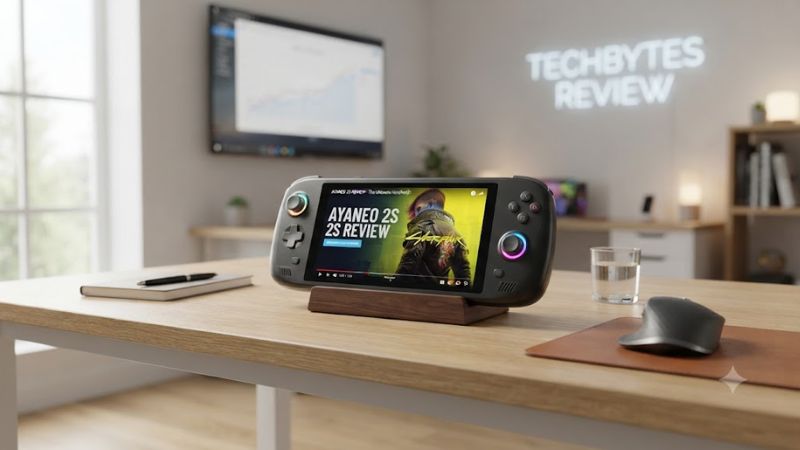
The AYANEO 2S is a premium Windows gaming handheld featuring an AMD Ryzen 7 7840U processor, Radeon 780M integrated graphics, and a 7-inch 1920 × 1200 touchscreen. It remains an interesting option for players who want a portable PC for Windows games, emulation, and desktop applications. However, its original high price, 60Hz LCD, and limited battery life under demanding workloads make it harder to recommend over newer alternatives.
This AYANEO 2S review examines its design, specifications, gaming performance, display, battery life, software experience, and overall value. The assessment relies on published specifications and independent reviews rather than claiming firsthand testing by Real Gaming News.
Verdict: The AYANEO 2S is best suited to enthusiasts who value Windows compatibility, a high-resolution display, and capable integrated graphics. Buyers who prioritize OLED image quality, longer gaming sessions away from a charger, or a simpler handheld interface should compare it with the Steam Deck OLED and ASUS ROG Ally family before purchasing.
AYANEO 2S review Specifications
The original AYANEO 2S launched in 2023 with AMD’s Ryzen 7 7840U processor. Its combination of Zen 4 CPU cores and RDNA 3 integrated graphics delivers capable performance for a handheld PC, although actual results depend on power settings, cooling, and the game being played.
| Specification | AYANEO 2S |
| Processor | AMD Ryzen 7 7840U in the original configuration |
| CPU architecture | Zen 4 |
| CPU cores and threads | 8 cores, 16 threads |
| Integrated graphics | AMD Radeon 780M |
| GPU architecture | RDNA 3 |
| Memory | 16GB, 32GB, or 64GB, depending on configuration |
| Storage | M.2 NVMe SSD; capacity varies by configuration |
| Display | 7-inch IPS LCD touchscreen |
| Resolution | 1920 × 1200 |
| Refresh rate | 60Hz |
| Battery capacity | 50.25Wh |
| Operating system | Windows 11 |
| Wireless connectivity | Wi-Fi and Bluetooth |
| Weight | Approximately 667g |
| Release period | 2023 |
These specifications describe the original Ryzen 7 7840U model. Buyers should confirm the exact processor, memory, storage, and hardware revision listed by the seller rather than assuming every device marketed as an AYANEO 2S has an identical configuration.
Design and Build Quality
The AYANEO 2S features a compact handheld design with integrated controls on both sides of the display. Its weight of approximately 667g makes it a substantial device to hold for extended sessions, but the compact form combines a full Windows PC experience with built-in gaming controls.
The control layout includes Hall effect joysticks and triggers, programmable controls, motion sensing, and haptic feedback. These features support a range of games, from platformers and racing titles to action games that benefit from analog controls.
Its main limitation is the Windows interface. Unlike a dedicated gaming console, the AYANEO 2S may require users to navigate desktop menus, configure game launchers, adjust power profiles, and troubleshoot controller or compatibility issues.
Build quality is only one part of the experience. Buyers should also consider software support, replacement parts, battery condition, and the availability of repairs for the specific unit they intend to purchase.
Display Quality: Sharp LCD, but No OLED
The 7-inch IPS LCD is one of the AYANEO 2S’s main attractions. Its 1920 × 1200 resolution uses a 16:10 aspect ratio, providing more vertical screen space than a conventional 16:9 display of comparable width.
AYANEO advertised brightness of up to 500 nits and a contrast ratio of 1200:1. Reviewed’s independent review reported approximately 474 nits of brightness and a 1190:1 contrast ratio on its review unit.
The 60Hz refresh rate is a more significant limitation for players who prefer high-frame-rate gaming. Even if a game renders more than 60 frames per second, the built-in display cannot show every rendered frame.
The panel is also an LCD rather than an OLED. OLED handhelds can produce deeper blacks and higher perceived contrast because individual pixels can switch off. The AYANEO 2S’s higher resolution can improve fine detail, but it does not automatically provide better image quality in every game.
Display verdict: The AYANEO 2S offers a sharp, colorful screen, but players who prioritize OLED contrast, a higher refresh rate, or HDR capabilities should investigate alternatives before buying.
Gaming Performance: How Powerful Is the AYANEO 2S?
The original Ryzen 7 7840U combines eight CPU cores and 16 threads with Radeon 780M integrated graphics. This hardware can handle many PC games, but demanding releases may require lower resolutions, reduced graphics settings, or upscaling.
Published benchmark results from Reviewed illustrate the relationship between resolution and performance.
| Game or benchmark | Reported frame rate | Reported settings |
| Cyberpunk 2077 benchmark | 34 FPS | 1920 × 1200, Ultra, FSR Performance, 28W |
| Cyberpunk 2077 benchmark | 51 FPS | 1280 × 800, Ultra, FSR Performance, 28W |
| Cyberpunk 2077 benchmark | 18 FPS | 1920 × 1200, Ultra, without FSR, 28W |
| Cyberpunk 2077 benchmark | 36 FPS | 1280 × 800, Ultra, without FSR, 28W |
| Horizon Zero Dawn in-game benchmark | 37 FPS | 1920 × 1200, reported stock settings |
These figures come from an independent review, not testing conducted by Real Gaming News. They apply to the reviewer’s specific configuration and test conditions, and they should not be treated as universal performance guarantees.
The results demonstrate why resolution and upscaling matter on a handheld with integrated graphics. Reducing Cyberpunk 2077’s resolution from 1920 × 1200 to 1280 × 800 improved the reported frame rate substantially at the same 28W power limit.
Can the AYANEO 2S Run AAA Games?
Yes, the AYANEO 2S can run demanding PC games, but performance varies considerably by title and settings. Its Radeon 780M is an integrated GPU rather than a dedicated graphics card, so some modern AAA games may need reduced detail levels or lower resolutions to deliver a comfortable experience.
Lighter games and many older releases are generally better suited to this class of hardware. Competitive titles can also run well, although the achievable frame rate depends on the game and configuration.
Players should remember that the built-in display is limited to 60Hz. A game rendering above that rate will not display every frame on the internal screen, although a compatible external monitor may support a different refresh rate.
Battery Life, Heat, and Fan Noise
The AYANEO 2S has a 50.25Wh battery, but battery capacity alone does not determine how long it will last during gaming. The processor’s power limit, screen brightness, game workload, and background applications all influence runtime.
Tom’s Guide reported approximately 4 hours and 54 minutes at a 5W power limit, around 2 hours and 20 minutes at 15W, and approximately 58 minutes at 33W in its reported testing. These figures illustrate the trade-off between performance and battery life, rather than guaranteed results for every user.
The cooling system uses active fans and heat pipes to manage heat from the processor. Demanding games can generate noticeable fan noise and warmth, particularly when the system is configured to draw more power.
For practical use, the AYANEO 2S is better suited to shorter portable gaming sessions, travel with access to charging, or playing near a power outlet. It is less appealing for long trips where charging opportunities are limited.
Windows 11, Ports, and Compatibility
The AYANEO 2S runs Windows 11, giving it access to conventional Windows applications and a broad range of PC game launchers. This flexibility is useful for people who want one device for gaming and occasional desktop tasks, but it can involve more configuration than a console-focused interface.
Important compatibility considerations include:
- PC game launchers: Windows supports Steam and other compatible launchers, including services that may require Windows rather than SteamOS.
- Desktop applications: Compatible Windows programs and peripherals can be used for productivity and general computing.
- External displays: Supported USB-C display output allows connection to compatible monitors and televisions.
- External graphics: The original configuration’s USB4 connectivity can support compatible external GPU enclosures, subject to enclosure, GPU, driver, and software compatibility.
- Storage expansion: The original model uses an M.2 NVMe SSD interface and supports microSD storage. Check the exact hardware revision before purchasing an upgrade or opening the device.
Windows compatibility does not guarantee that every game will work without problems. Anti-cheat systems, launcher requirements, controller support, and game-specific settings can affect the experience.
AYANEO 2S Price: Is It Worth Buying in 2026?
The AYANEO 2S launched as a premium handheld. Reviewed reported a starting price of $999 and a price of $1,299 for a configuration with 32GB of RAM and a 2TB SSD in July 2023. Higher-spec configurations were also offered.
These are historical launch-era prices, not verified retail prices for October 2026. A reliable current US price for a specific AYANEO 2S configuration could not be established for this article, so an old price should not be mistaken for today’s market value.
Whether the AYANEO 2S is worth buying now depends on its actual asking price, hardware configuration, condition, and warranty coverage. A used or remaining-stock unit may be attractive at a substantial discount, but paying a premium for older hardware is harder to justify when newer handhelds offer alternative displays, updated components, or different software experiences.
Before purchasing, verify:
- The exact processor and hardware revision.
- Installed RAM and SSD capacity.
- Battery condition and charging behavior.
- Joystick, trigger, touchscreen, USB-C, and microSD functionality.
- Seller return terms and any remaining warranty coverage.
- Availability of replacement parts and repair services.
Additional costs for storage upgrades, repairs, or external GPU equipment can change the overall value. Buyers should evaluate the total cost rather than the handheld’s advertised price alone.
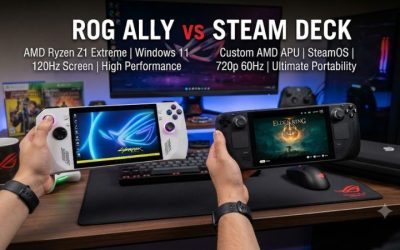
AYANEO 2S vs. Steam Deck OLED vs. ASUS ROG Ally
The most useful comparison considers more than raw processing power. Display technology, software, portability, compatibility, and price all influence which handheld is the better fit.
| Feature | AYANEO 2S | Steam Deck OLED | Original ASUS ROG Ally |
| Processor | Ryzen 7 7840U | Custom AMD Zen 2 APU | Ryzen Z1 or Z1 Extreme, depending on model |
| Graphics | Radeon 780M | Custom RDNA 2 GPU | Integrated RDNA 3 graphics |
| Display | 7-inch LCD | 7.4-inch OLED | 7-inch IPS LCD |
| Resolution | 1920 × 1200 | 1280 × 800 | 1920 × 1080 |
| Refresh rate | 60Hz | Up to 90Hz | Up to 120Hz |
| Operating system | Windows 11 | SteamOS | Windows 11 |
| Main advantage | High-resolution screen and Windows flexibility | OLED display and streamlined SteamOS experience | Higher refresh rate and Windows compatibility |
| Main trade-off | Older hardware generation and limited battery life under load | Some Windows-specific games require workarounds | Battery life and Windows handheld usability |
These specifications do not establish a universal performance winner. Power limits, cooling, memory configurations, and game settings differ, so direct benchmark comparisons require equivalent test conditions.
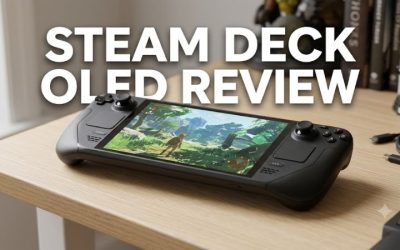
AYANEO 2S vs. Steam Deck OLED
The AYANEO 2S is attractive for players who want Windows and a higher-resolution display. The Steam Deck OLED offers an OLED panel, a 90Hz refresh rate, and SteamOS, which is designed around handheld gaming.
For players who primarily use Steam and want a straightforward portable gaming experience, the Steam Deck OLED is a strong alternative. The AYANEO 2S makes more sense when Windows-specific compatibility, its display resolution, or a favorable used price matters more than OLED image quality.
AYANEO 2S vs. ASUS ROG Ally
The original ASUS ROG Ally offers a 120Hz display and Windows compatibility, while the AYANEO 2S provides a 16:10, 1200p display and a Ryzen 7 7840U configuration. Both use integrated graphics, and their relative performance depends on the game, power settings, and specific model.
The ROG Ally is worth considering if a higher refresh rate and mainstream retail support are priorities. The AYANEO 2S may be a better fit if its control layout, hardware configuration, or used-market price better suits the buyer’s needs.
Pros and Cons
Pros
- Capable Ryzen 7 7840U processor and Radeon 780M graphics in the original model.
- Sharp 1920 × 1200 touchscreen.
- Windows 11 compatibility with a broad range of PC games and desktop applications.
- Hall effect joysticks and triggers.
- USB4 connectivity on the original configuration for compatible peripherals and external GPU enclosures.
Cons
- High original launch pricing.
- 60Hz LCD rather than OLED.
- Battery life can fall below two hours during demanding workloads.
- Windows requires more configuration than a dedicated console interface.
- Current prices, stock, warranty coverage, and used-unit condition vary and are not consistently established.
Who Should Buy the AYANEO 2S?
The AYANEO 2S is best suited to enthusiasts who want a Windows handheld with a high-resolution display and are comfortable managing settings, launchers, and power profiles.
It is worth considering if you find a unit in good condition at a price that compares favorably with newer alternatives. It is less appealing at a premium price, particularly if your main priorities are OLED image quality, longer battery life, or a simple pick-up-and-play experience.
For most buyers in 2026, comparing the actual asking price of the AYANEO 2S with the Steam Deck OLED and the relevant ROG Ally model is more useful than relying on its original launch price or historical benchmarks.
FAQ
1. Is the AYANEO 2S worth buying in 2026?
The AYANEO 2S can be worth buying in 2026 if you find a well-maintained unit at a competitive price and want a Windows handheld with a high-resolution LCD. Its older hardware generation, 60Hz display, and limited battery life under demanding workloads make a premium-priced purchase harder to recommend.
2. How powerful is the AYANEO 2S?
The original AYANEO 2S uses an eight-core, 16-thread AMD Ryzen 7 7840U processor with Radeon 780M integrated graphics. It can run many PC games, but demanding releases may require lower resolutions, adjusted graphics settings, or upscaling.
3. Does the AYANEO 2S have an OLED screen?
No, the original AYANEO 2S has a 7-inch IPS LCD touchscreen with a 1920 × 1200 resolution and a 60Hz refresh rate. Buyers who want OLED contrast should consider the Steam Deck OLED or another handheld with a verified OLED panel.
4. How long does the AYANEO 2S battery last?
The AYANEO 2S battery life depends heavily on the game and power limit, with published results ranging from under an hour at high power to several hours in lighter workloads. Tom’s Guide reported approximately 2 hours and 20 minutes at 15W, although individual results vary.
Final Verdict
The AYANEO 2S remains a capable Windows gaming handheld, combining a sharp LCD, useful controls, and integrated graphics that can handle a broad range of PC games. Its main weaknesses are its high original price, 60Hz LCD, and battery life that falls sharply under demanding workloads.
For enthusiasts who value Windows flexibility and can find a well-maintained unit at a sensible price, it can still make sense. For most buyers in 2026, the Steam Deck OLED or a suitable ROG Ally model deserves a close look before committing to the AYANEO 2S.