Key takeaways
- Sensor quality over DPI numbers: Ignore headline figures like 26,000 DPI — almost nobody plays above 3,200. Look for a modern optical sensor with consistent tracking and no smoothing or angle snapping, which the Hero and Focus-series sensors both deliver at this price.
- Weight and shape for your grip: Palm grippers want a taller, filled-out shell; claw and fingertip players benefit from something lighter and shorter. Under $50 you’ll rarely find sub-60g builds, so prioritize a shape that fits your hand over chasing grams.
- Wired vs. wireless realities: Genuinely good budget wireless exists, but you’ll trade RGB, extra buttons, or battery life to get it. If you never move your PC, a flexible paracord-style cable costs you nothing in performance and saves you money.
- Switch durability and button feel: Cheap mice cut costs here first, and double-clicking is the most common failure mode in this bracket. Check the rated click lifespan and, where possible, buy from brands with straightforward warranty support.
- Software you’ll actually keep installed: Onboard memory means your DPI steps and macros travel with the mouse and survive a driver uninstall. That matters more than the number of customization sliders you’ll adjust once and forget.
What's inside
Shopping for a gaming mouse under $50 is trickier than it looks. The budget tier is crowded with lookalike shells, inflated DPI claims, and sensors that drift the moment a match gets serious — and the marketing rarely tells you which corners were cut to hit the price. Meanwhile, the genuinely good options are often older flagships that quietly dropped into this bracket and now outperform newer, cheaper rivals.
This guide cuts through that. We’ve focused on mice that consistently sell at or near $50, with proven sensors, reliable switches, and software that isn’t a chore to use. Below you’ll find a quick buying checklist, hands-on impressions of the top contenders, and answers to the questions that usually come up right before checkout. One note on the Logitech G PRO X2 SUPERSTRIKE: it’s included as a reference point for what the premium tier offers, but it sits well above $50, so treat it as an upgrade path rather than a budget pick.
As an Amazon Associate we earn from qualifying purchases at no extra cost to you.




⚡ Save on Your Next PC — Amazon Prime
Prime members get fast free shipping on the systems above, plus early access to Prime Day & Black Friday PC deals. New members get a 30-day free trial.
Watch: Best Gaming Mouse Under $50 — Video Review
How to Choose Gaming Mouse Under $50
- Sensor quality over DPI numbers: Ignore headline figures like 26,000 DPI — almost nobody plays above 3,200. Look for a modern optical sensor with consistent tracking and no smoothing or angle snapping, which the Hero and Focus-series sensors both deliver at this price.
- Weight and shape for your grip: Palm grippers want a taller, filled-out shell; claw and fingertip players benefit from something lighter and shorter. Under $50 you’ll rarely find sub-60g builds, so prioritize a shape that fits your hand over chasing grams.
- Wired vs. wireless realities: Genuinely good budget wireless exists, but you’ll trade RGB, extra buttons, or battery life to get it. If you never move your PC, a flexible paracord-style cable costs you nothing in performance and saves you money.
- Switch durability and button feel: Cheap mice cut costs here first, and double-clicking is the most common failure mode in this bracket. Check the rated click lifespan and, where possible, buy from brands with straightforward warranty support.
- Software you’ll actually keep installed: Onboard memory means your DPI steps and macros travel with the mouse and survive a driver uninstall. That matters more than the number of customization sliders you’ll adjust once and forget.
The Best Picks Reviewed
Logitech G305 Lightspeed
The G305 remains the benchmark for budget wireless: Lightspeed latency is genuinely indistinguishable from wired in play, and the Hero sensor tracks flawlessly across the useful DPI range. Battery life measured in months on a single AA is the practical win here, and the lightweight shell suits claw and fingertip grips especially well.
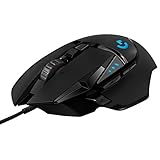
Logitech G502 Hero
A former flagship that landed in the budget tier and never left, the G502 Hero packs eleven programmable buttons, adjustable weights, and a free-spin scroll wheel that’s still unmatched for browsing and inventory-heavy games. It’s heavy by 2026 standards, so it’s best suited to palm grippers and MMO or strategy players rather than twitch shooters.
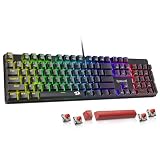
Redragon M612
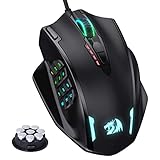
The M612 is the value outlier — 8000 DPI, fully remappable keys, and RGB lighting for a fraction of what the name brands charge. Build quality and switch feel don’t match Logitech or Razer, but for a secondary machine, a first gaming mouse, or a tight budget, nothing else at this price gets close on features.
Razer Basilisk V3
Razer’s ergonomic workhorse offers eleven programmable buttons, a genuinely excellent tilt-and-free-spin scroll wheel, and Chroma lighting that actually looks good rather than gaudy. The sculpted right-handed shape with its thumb rest is the most comfortable option here for long sessions, provided you’re a palm gripper.
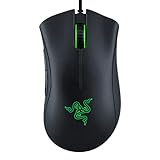
Razer DeathAdder Essential
The DeathAdder shape has sold tens of millions of units for good reason, and the Essential strips it back to the fundamentals: a reliable 6,400 DPI optical sensor, five buttons, and mechanical switches rated for ten million clicks. It’s the safest recommendation on this list for anyone with medium-to-large hands who wants something that simply works.
Frequently Asked Questions
Is a wireless gaming mouse under $50 fast enough for competitive play?
Yes, provided it uses a proper 2.4GHz dongle rather than Bluetooth. The G305’s Lightspeed connection is used by professional players and adds latency you cannot perceive in-game; avoid Bluetooth-only budget mice for anything competitive.
Does higher DPI actually make you a better player?
No. Most competitive shooter players sit between 400 and 1,600 DPI and adjust in-game sensitivity from there. High DPI ceilings are a marketing metric — sensor consistency and a stable polling rate matter far more.
How long should a $50 gaming mouse last?
Three to five years is realistic from a reputable brand, with switch failure being the usual end point. Mice with optical rather than mechanical switches, or with easily replaceable switches, tend to outlast the rest.
Should I buy last generation’s flagship instead of a new budget mouse?
Often, yes. The G502 Hero and DeathAdder Essential both descend from premium models and offer better sensors and build quality than most mice designed from scratch for this price point.
Final Thoughts
For most players, the Logitech G305 Lightspeed is the smartest buy under $50 — it delivers flagship-grade wireless performance and sensor accuracy for a budget price, with no meaningful compromise for competitive play. Palm grippers and anyone who wants maximum buttons should look to the Logitech G502 Hero, while the Razer DeathAdder Essential remains the no-fuss pick for a proven shape and dependable switches at the lowest cost of the three.