Key takeaways
- Pro: Larger screens offer more workspace and viewing comfort.
- Pro: 16-inch models balance productivity and portability well.
- Pro: 16GB Ryzen 5 configurations multitask smoothly.
- Pro: Big 17-18″ displays are great for media and detailed work.
Screen size is one of the most important, and most overlooked, decisions when buying a laptop. The difference between a 14-inch ultraportable and an 18-inch desktop replacement shapes everything from how much you can see at once to how comfortably you can carry the machine. Getting it right means matching the size to how and where you actually work.
We compared laptops across the size spectrum, from compact 16-inch models up to expansive 18-inch screens, to illustrate the real trade-offs each brings. Here’s our review of how laptop sizes stack up and how to choose the dimension that fits your life.
Our top picks




As an Amazon Associate we earn from qualifying purchases at no extra cost to you. Ratings are shown as listed on Amazon.
🎮 Get More From Your Setup — Free
Prime Gaming gives you free PC games every month, in-game loot, and a free Twitch channel sub — plus fast free shipping on all the gear above. New members get a 30-day free trial.
Watch: Laptop Inches Comparison: Review & Buyer’s Guide — Video Review
Design & Build
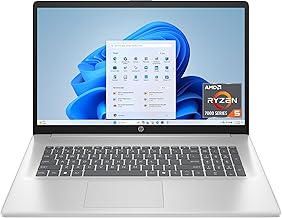
Laptop size directly shapes design and portability. The 16-inch machines, like the HP OmniBook 3 16″ with its 2K touchscreen and a compact 16-inch AMD model, offer a nice middle ground, roomy enough for productivity yet still reasonably portable. The 17.3-inch class, represented by the HP New 17″, HP OmniBook 3 17.3″, and the HP 17.3″ Ryzen 5, prioritizes screen space and comfort for home and desk use, at the cost of added weight. At the extreme, the 18.5-inch laptop is essentially a portable desktop, offering a huge display but sacrificing true portability. Build quality is consistent within the value tier, with larger models trading carry-friendliness for viewing comfort.
Performance
Interestingly, size and performance aren’t directly linked in this group, the spec matters more than the inches. The HP New 17″ and HP 17.3″ with Ryzen 5 chips and 16GB of RAM are the multitasking standouts, handling everyday work and light editing comfortably on their spacious screens. The 16-inch HP OmniBook 3 with a Ryzen 3 and 8GB, and the compact 16-inch model, cover mainstream tasks well. The 18.5-inch machine with 16GB of RAM and a 1TB SSD pairs its enormous display with capable everyday specs. The takeaway: choose your size for viewing comfort and portability, then ensure the configuration, especially RAM and storage, matches your workload.
Pros & Cons
- Pro: Larger screens offer more workspace and viewing comfort.
- Pro: 16-inch models balance productivity and portability well.
- Pro: 16GB Ryzen 5 configurations multitask smoothly.
- Pro: Big 17-18″ displays are great for media and detailed work.
- Con: Larger laptops are heavier and less travel-friendly.
- Con: Size doesn’t guarantee performance, check the specs.
- Con: 18.5″ machines sacrifice true portability.
Alternatives to Consider
If portability matters most, a 14-inch or the more compact 16-inch OmniBook 3 is easier to carry daily. If you want maximum screen space for a stationary setup, the 17.3″ or even 18.5″ models deliver the most viewing comfort. For the best all-round balance, a 16-inch or 17.3″ laptop with a Ryzen 5 and 16GB of RAM offers roomy screens with the performance to match, without going to either extreme.
Frequently Asked Questions
What laptop size is best for everyday use?
A 15.6″ or 16″ laptop offers the best balance of screen space and portability for most people, while 14″ suits frequent travelers and 17″+ favors stationary, comfort-focused use.
Is a bigger laptop screen better?
Bigger screens offer more workspace and viewing comfort, but they add weight and reduce portability. The right size depends on whether you carry your laptop often or use it at a desk.
Does screen size affect performance?
Not directly. Performance comes from the CPU, RAM, and storage, not the screen size. Choose your size for comfort and portability, then match the specs to your workload.
Are 18-inch laptops practical?
They function as portable desktops with huge displays, ideal if you rarely move the machine. For anyone needing genuine portability, though, they’re too large and heavy.
Verdict
The best laptop size depends entirely on how you work. For balanced everyday use, a 16-inch or 17.3″ model with a Ryzen 5 and 16GB of RAM, like the HP New 17″, offers roomy screens and solid performance. Frequent travelers should size down, while desk-bound users can enjoy the expansive 18.5-inch option.