The most powerful computer in the world in 2026 is LineShine, a Chinese supercomputer installed at the National Supercomputing Centre in Shenzhen. According to the June 2026 TOP500 ranking, LineShine achieved 2.1984 exaflops in the High Performance Linpack (HPL) benchmark, surpassing American systems such as El Capitan and Frontier.
These machines operate on a completely different scale from gaming desktops, high-end workstations, and consumer laptops. They combine enormous numbers of processing cores, specialized hardware, high-speed networking, and advanced cooling infrastructure to handle scientific simulations, artificial intelligence research, climate modeling, and industrial computing.
This guide ranks the world’s 10 most powerful publicly ranked supercomputers using published performance figures. It also explains their hardware architectures, practical applications, and differences from computers designed for gaming.
How Are the World’s Most Powerful Computers Ranked?
Before comparing individual systems, it is important to understand what makes one computer more powerful than another.

The most widely recognized ranking for large-scale supercomputers is the TOP500 list. Published twice annually, it ranks participating systems according to their performance in the High Performance Linpack benchmark.
HPL measures how quickly a computer can solve large systems of linear equations using double-precision floating-point calculations. Results are measured in FLOPS, which stands for floating-point operations per second.
Three common performance measurements are:
- Teraflops: One trillion floating-point operations per second.
- Petaflops: One quadrillion floating-point operations per second.
- Exaflops: One quintillion floating-point operations per second.
One exaflop equals 1,000 petaflops. Reaching this performance level requires an enormous collection of processors, accelerators, memory resources, and communication infrastructure.
As of November 2, 2026, the latest officially published TOP500 edition available for this article is the June 2026 ranking, also known as the 67th edition. The next November edition has not yet been officially released.
However, HPL is not a universal measurement of computing capability. A system that performs exceptionally well in numerical calculations might not lead in artificial intelligence training, gaming, memory-intensive workloads, or energy efficiency.
Therefore, the following ranking measures supercomputer performance using the same published HPL benchmark rather than claiming that one machine is the fastest at every possible computing task.
Top 10 Most Powerful Computers in the World in 2026
The following table summarizes the 10 highest-ranked systems in the June 2026 TOP500 list.
| Rank | Supercomputer | Country | HPL Performance |
| 1 | LineShine | China | 2.1984 EFLOPS |
| 2 | El Capitan | United States | 1.809 EFLOPS |
| 3 | Frontier | United States | 1.353 EFLOPS |
| 4 | Aurora | United States | 1.012 EFLOPS |
| 5 | JUPITER Booster | Germany | 1.000 EFLOPS |
| 6 | HPC7 | Italy | 571.5 PFLOPS |
| 7 | Eagle | United States | 561.2 PFLOPS |
| 8 | HPC6 | Italy | 477.9 PFLOPS |
| 9 | Fugaku | Japan | 442.01 PFLOPS |
| 10 | Alps | Switzerland | 434.9 PFLOPS |
EFLOPS means exaflops, while PFLOPS means petaflops. Figures represent measured HPL performance, not theoretical peak performance.
1. LineShine – The World’s Most Powerful Supercomputer
Country: China
Location: National Supercomputing Centre in Shenzhen
HPL performance: 2.1984 exaflops
Theoretical peak performance: 2.73582 exaflops
Total processing cores: 13,789,440
Power consumption: 42,220 kW
LineShine occupies the top position in the June 2026 TOP500 ranking, representing an important development in international supercomputing.
It is particularly interesting because its architecture relies on custom processors rather than the conventional GPU-accelerated configuration used by several competing exascale systems.
The machine uses the LingKun platform, featuring custom LX2 processors with 304 cores operating at 1.55 GHz. Its proprietary LingQi interconnect allows the enormous collection of processors to communicate and coordinate computing workloads.
LineShine achieved 2.1984 exaflops in HPL, making it the first system listed by TOP500 to exceed two exaflops of sustained double-precision performance using a CPU-only configuration.
Its performance extends beyond HPL. The system also achieved 22 petaflops in the High Performance Conjugate Gradients benchmark, known as HPCG.
That distinction matters because HPCG evaluates different aspects of computing performance, including memory access and communication. It provides another perspective on how a supercomputer handles scientific workloads.
LineShine supports applications involving engineering simulations, scientific research, materials science, and artificial intelligence.
2. El Capitan – A Leading American Exascale Computer
Country: United States
Location: Lawrence Livermore National Laboratory, California
HPL performance: 1.809 exaflops
Theoretical peak performance: 2.8211 exaflops
Total processing cores: 11,340,000
Power consumption: 29,685 kW
El Capitan previously held the number-one position before LineShine entered the June 2026 ranking. Although it now occupies second place, it remains one of the most powerful publicly ranked computers.
The system uses the HPE Cray EX255a architecture, combining fourth-generation AMD EPYC processors with AMD Instinct MI300A accelerators.
This combination supports demanding workloads involving large-scale numerical calculations, scientific modeling, and advanced simulations.
One of El Capitan’s most important applications is supporting the US National Nuclear Security Administration’s stockpile stewardship program.
Researchers use high-performance computing to simulate complex physical processes and investigate scenarios that would otherwise require expensive or impractical physical experiments.
El Capitan also demonstrates the importance of energy efficiency. Its reported performance is approximately 60.94 gigaflops per watt, according to TOP500.
3. Frontier – A Pioneer in Exascale Computing
Country: United States
Location: Oak Ridge National Laboratory, Tennessee
HPL performance: 1.353 exaflops
Total processing cores: 9,066,176
Architecture: HPE Cray EX235a
Processors: AMD EPYC third generation
Accelerators: AMD Instinct MI250X
Frontier was the first publicly recognized American exascale supercomputer, establishing an important milestone in high-performance computing.
Its architecture combines AMD EPYC processors with MI250X accelerators to handle workloads requiring extensive parallel processing.
The system supports research in scientific computing, engineering, physics, and advanced simulations.
Its continued presence among the world’s three most powerful publicly ranked supercomputers demonstrates that computing capability depends on more than the latest processor generation.
Software optimization, memory bandwidth, communication infrastructure, and workload compatibility also determine how effectively a system performs.
4. Aurora – Intel’s Exascale Supercomputer
Country: United States
Location: Argonne National Laboratory, Illinois
HPL performance: 1.012 exaflops
Total processing cores: 9,264,128
Processors: Intel Xeon CPU Max
Accelerators: Intel Data Center GPU Max
Aurora demonstrates Intel’s approach to large-scale high-performance computing.
It combines Intel Xeon CPU Max processors and Data Center GPU Max accelerators within an HPE Cray EX infrastructure.
Its hardware is designed to support demanding research involving scientific simulations, materials science, physics, and artificial intelligence.
Aurora’s measured performance exceeds one exaflop, placing it firmly within the exascale category.
Its architecture also highlights the importance of balancing CPU processing, GPU acceleration, and high-speed communication when designing extremely large computing systems.
5. JUPITER Booster – Europe’s Exascale Supercomputer
Country: Germany
Location: Forschungszentrum Jülich
HPL performance: 1.000 exaflops
Total processing cores: 4,801,344
Architecture: BullSequana XH3000
Processors and accelerators: NVIDIA Grace Hopper Superchips
JUPITER Booster is an important milestone for European computing infrastructure.
Its measured performance reached one exaflop in the June 2026 TOP500 ranking, placing it among the five fastest systems worldwide.
The machine uses NVIDIA Grace Hopper technology, combining CPU and GPU resources within a high-performance computing architecture.
Its infrastructure incorporates direct liquid cooling to manage the heat generated by densely packed computing hardware.
JUPITER supports scientific research, artificial intelligence, engineering, and large-scale simulations.
Its importance extends beyond its benchmark position because it provides European researchers with access to substantial computing resources for demanding scientific applications.
6. HPC7 – Italy’s High-Performance Computing System
Country: Italy
Location: Eni computing facility
HPL performance: 571.5 petaflops
Total processing cores: 3,461,472
Architecture: HPE Cray EX255a
Processors and accelerators: AMD EPYC and AMD Instinct MI300A
HPC7 occupies sixth place with 571.5 petaflops of measured HPL performance.
The system uses AMD’s fourth-generation EPYC processors alongside MI300A accelerators.
Its architecture supports computationally demanding industrial workloads, particularly in the energy sector.
Large-scale computing can help researchers analyze complex geological structures, conduct engineering simulations, and investigate energy-related processes.
Although HPC7 does not reach one exaflop, its performance makes it one of the most capable publicly ranked supercomputers in the world.
7. Eagle – Microsoft’s Cloud-Based Supercomputer
Country: United States
Operator: Microsoft Azure
HPL performance: 561.2 petaflops
Processors: Intel Xeon Platinum 8480C
Accelerators: NVIDIA H100
Eagle demonstrates how cloud infrastructure has become an important part of high-performance computing.
Unlike traditional supercomputers installed primarily at national laboratories, Eagle is associated with Microsoft’s Azure cloud platform.
Its architecture combines Intel Xeon Platinum processors with NVIDIA H100 accelerators and high-speed InfiniBand networking.
The system is particularly relevant to large-scale computing workloads and artificial intelligence development.
GPU acceleration is valuable for workloads involving parallel mathematical operations, including many machine learning and neural network applications.
Eagle also illustrates how cloud-based infrastructure can compete with dedicated research systems in published supercomputer benchmarks.
8. HPC6 – Another Major Italian Supercomputer
Country: Italy
Location: Eni computing facility
HPL performance: 477.9 petaflops
Total processing cores: 3,143,520
Architecture: HPE Cray EX235a
Processors and accelerators: AMD EPYC and AMD Instinct MI250X
HPC6 occupies eighth place in the June 2026 ranking.
Its architecture combines third-generation AMD EPYC processors with AMD Instinct MI250X accelerators.
The system supports industrial computing and demanding scientific workloads.
Its position is particularly interesting because Italy has two systems in the top ten, HPC6 and HPC7.
Although both machines belong to Eni, they use different hardware configurations and represent different generations of computing infrastructure.
Their benchmark results should be understood as measurements of HPL performance rather than complete assessments of their capabilities across every application.
9. Fugaku – Japan’s Advanced Supercomputing Platform
Country: Japan
Location: RIKEN Center for Computational Science
HPL performance: 442.01 petaflops
Total processing cores: 7,630,848
Processor: Fujitsu A64FX
Architecture: Arm-based computing
Fugaku remains one of the world’s most important supercomputers despite falling to ninth place.
Unlike several systems using conventional x86 processors and separate GPU accelerators, Fugaku uses Fujitsu’s A64FX processors based on the Arm architecture.
Its Tofu interconnect D network supports communication between the enormous number of processing cores.
Fugaku has supported research involving climate modeling, medical science, computational fluid dynamics, and other demanding scientific applications.
Its continued presence among the world’s ten fastest systems demonstrates that specialized processor architectures can remain relevant even as newer supercomputers enter the rankings.
10. Alps – Switzerland’s Advanced Computing System
Country: Switzerland
Location: Swiss National Supercomputing Centre
HPL performance: 434.9 petaflops
Total processing cores: 2,121,600
Architecture: HPE Cray EX254n
Processors and accelerators: NVIDIA Grace Hopper Superchips
Alps completes the top ten with 434.9 petaflops of measured HPL performance.
Its architecture combines NVIDIA Grace CPUs and Hopper GPUs within an HPE Cray EX254n system.
The machine supports scientific research, artificial intelligence, and data-intensive applications.
Its combination of CPU and GPU resources allows researchers to work with different types of computational workloads.
Alps also demonstrates that a supercomputer does not need to exceed one exaflop to be an important research platform. Its performance remains substantially higher than what conventional workstations and gaming desktops can deliver across large parallel workloads.
What Makes a Supercomputer So Powerful?
Supercomputers are not simply desktop computers with faster processors. Their capabilities come from combining several technologies into a coordinated computing environment.
CPU and GPU Architecture
The CPU handles general computing operations, system coordination, and workloads that depend on sequential instructions.
GPUs specialize in processing large numbers of calculations simultaneously, making them valuable for scientific simulations and artificial intelligence.
Some systems, such as El Capitan and Frontier, use hybrid CPU-GPU architectures. LineShine takes a different approach with its CPU-only configuration.
Neither design is automatically superior for every workload.
Memory Capacity and Bandwidth
Supercomputers require substantial memory resources to process large datasets.
Memory bandwidth is equally important because processors must access information quickly enough to maintain efficient operation.
Scientific simulations, AI training, and complex modeling can become memory-bound when processors cannot receive data quickly enough.
High-Speed Networking
A supercomputer operates as a coordinated collection of computing resources.
Its individual nodes must exchange information efficiently, particularly when thousands of processors work together on the same problem.
High-speed interconnects such as InfiniBand and Slingshot help transfer data between different parts of the system.
Cooling and Power Infrastructure
Supercomputers consume enormous amounts of electricity and generate considerable heat.
Liquid cooling, specialized data center infrastructure, power distribution, and thermal management are essential to maintaining reliable operation.
For example, LineShine has a reported power consumption of 42,220 kW, while El Capitan consumes 29,685 kW according to the June 2026 TOP500 data.
These figures illustrate why operating a supercomputer requires infrastructure far beyond an ordinary computer room.
Is the Most Powerful Computer in the World Good for Gaming?
Not necessarily. The world’s fastest supercomputer is designed for scientific and industrial computing rather than running consumer games.
Modern gaming depends on a different balance of hardware capabilities.
| Component | Supercomputer | Gaming PC |
| CPU | Large collections of server processors | High-performance desktop CPU |
| GPU | Data center accelerators | GeForce RTX or Radeon graphics |
| Memory | Large distributed memory resources | Typically 16GB–64GB system RAM |
| Storage | Enterprise storage systems | NVMe SSD |
| Networking | High-speed interconnects | Ethernet or Wi-Fi |
| Primary workload | Scientific computing and AI | Gaming and content creation |
| Cooling | Data center cooling infrastructure | Air or liquid cooling |
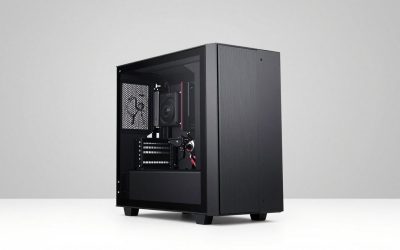
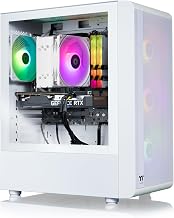
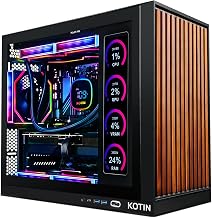
A high-end gaming desktop does not need millions of processing cores.
Most games are optimized for consumer processors and graphics cards. Performance depends on factors such as GPU architecture, CPU performance, memory latency, driver support, and game-engine optimization.
A supercomputer may achieve extraordinary HPL results while being unsuitable for running a conventional Windows gaming environment.
What Is the Most Powerful Gaming Computer?
There is no universally accepted ranking for the most powerful gaming computer because performance depends on the game, resolution, graphics settings, and hardware configuration.
For a gaming desktop, a combination of a flagship consumer GPU, a powerful gaming CPU, fast DDR5 memory, and suitable cooling is generally more relevant than a supercomputer’s total core count.
For gaming laptops, GPU power limits, thermal design, and sustained performance also matter.
Two laptops equipped with the same GPU name can deliver different gaming results because their power configurations and cooling systems differ.
Gamers should therefore prioritize independent gaming benchmarks rather than TOP500 rankings when choosing a computer.
Frequently Asked Questions
1. What is the most powerful computer in the world in 2026?
LineShine is the most powerful publicly ranked supercomputer in the June 2026 TOP500 edition, achieving 2.1984 exaflops on the HPL benchmark.
2. How much does the world’s most powerful supercomputer cost?
There is no verified public purchase price for LineShine in the cited TOP500 information. Its total cost would involve processors, networking, memory, cooling, buildings, electricity infrastructure, and ongoing operations.
3. Is a supercomputer faster than a gaming PC?
A supercomputer can perform vastly more calculations across large parallel workloads, but that does not mean it is faster at every individual task. Gaming PCs are optimized for consumer applications and real-time graphics.
4. How many exaflops does the world’s fastest computer have?
LineShine achieved 2.1984 exaflops on the June 2026 TOP500 HPL benchmark. One exaflop represents one quintillion floating-point operations per second.
Final Thoughts
The most powerful computer in the world in 2026 is LineShine, which leads the published June TOP500 ranking with 2.1984 exaflops of measured HPL performance.
Its achievement represents an important development in supercomputing, particularly because its CPU-based architecture differs from the accelerator-heavy designs used by several competing systems.
El Capitan, Frontier, Aurora, and JUPITER Booster also demonstrate how exascale computing has developed across different countries and hardware architectures.
For gamers, however, these rankings provide technological context rather than a practical shopping guide. A well-configured gaming desktop or laptop remains a more appropriate choice for playing modern games, while supercomputers serve specialized scientific, industrial, and research applications.
The most powerful computer ultimately depends on the workload being measured. LineShine leads the current published TOP500 HPL ranking, but different architectures can lead in other areas of computing.