Our Top Picks
 ASUS Dual NVIDIA GeForce RTX 5060 8GB GDDR7RTX5060|8GB|OC9 x 4.8 x 2 inches1.4 PoundsCheck on Amazon
 ASUS Dual GeForce RTX 5060 Ti 16GB GDDR7RTX5060Ti|OC|16GB9 x 4.7 x 2 inches1.4 poundsCheck on Amazon
Currency Check
Verified as of October 2026: the newest published Steam Hardware and Software Survey covers September 2026, with the next update due in early November. The figures below come from Valve’s tables as reported by outlets such as Wccftech, Tom’s Hardware and PC Guide, and they differ slightly between the all-platform and Windows-only tables. Several categories jumped sharply in one month, which press coverage links partly to survey sampling, so single-month moves are provisional rather than settled trends.
The typical Steam gaming PC in the September 2026 survey runs an NVIDIA card from the RTX 50 or RTX 40 families, with 32GB of RAM now edging past 16GB, a 1080p or 1440p monitor and an 8-core processor. The GeForce RTX 5070 became the single most common GPU for the first time. This article explains what the survey does and does not measure, summarizes the headline numbers and shows how to turn them into a sensible build or upgrade decision for your own PC.

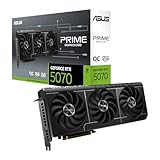
ASUS Prime GeForce RTX 5060 8GB GDDR7 Gaming Graphics Card
Picked as a relevant option in this category.
View on AmazonASUS Dual NVIDIA GeForce RTX 5060 8GB GDDR7 OC Edition (PCIe 5.0, 8GB GDDR7, DLSS 4, HDMI 2.1b, DisplayPort 2.1b, 2.5-Slot Design, Axial-tech Fan Design, 0dB Technology), 3 Year Warranty
Chosen because it specifies 8GB GDDR7 and DLSS 4.
View on AmazonASUS Dual GeForce RTX 5060 Ti 16GB GDDR7 OC Edition Gaming Graphics Card | PCIe 5.0, HDMI 2.1b, DisplayPort 2.1b, 2.5-slot, Axial-tech Fans, 0dB Technology, Dual BIOS
Chosen because it specifies PCIe 5.0 and HDMI 2.1b.
View on AmazonQuick Verdict
| Your situation | Our verdict |
|---|---|
| You want to know what most gamers own | RTX 50 and 40 series cards at the 8GB to 16GB tier, with the RTX 5070 on top of the September table. |
| You are choosing system RAM | 32GB is now the most common amount in the survey and the safe default for a new build. |
| You are choosing a monitor resolution | 1080p is still the largest share, but 1440p is growing fast. 4K remains a small slice. |
| You are choosing VRAM | 8GB and 16GB are almost equal in share. Pick 12GB or 16GB if you plan to keep the card for years. |
| You want to copy the average PC | Treat it as a floor, not a target. The survey shows what people own, not what is best. |
What the September 2026 Survey Shows
GPUs: a new number one
Valve’s table puts the GeForce RTX 5070 at 5.86 percent of systems, a gain of about 2.3 percentage points in a month, making it the most common graphics card in the survey. Its share is 6.15 percent in the PC-only table. Behind it are the RTX 5060 (4.20 percent), the RTX 5060 Ti (3.87), the RTX 4060 (3.72), the RTX 3060 (3.54) and the RTX 4060 Laptop GPU (3.35). Higher up the stack, the RTX 5080 is at 1.89 percent and the RTX 5070 Ti at 1.79. The best-represented Radeon is the RX 9070 XT at 1.35 percent. Press coverage puts NVIDIA’s share of GPUs in the survey at roughly three quarters.
Memory, VRAM and processors
For system RAM, 32GB reached 42.22 percent against 37.82 percent for 16GB. For video memory, 16GB cards (27.21 percent) are narrowly ahead of 8GB cards (26.71 percent) in the combined table, while the Windows-only table shows 8GB considerably higher. Among CPUs, 8-core processors hold 30.06 percent, ahead of 6-core at 27.23 percent, and AMD reached a record 48.37 percent of CPUs across all platforms, with the split closer to even on Windows systems.
Resolution and operating system
The 1080p share is 47.91 percent, the first time it has dropped below half of systems in the reported figures. 1440p rose to 27.04 percent, and 4K stands at 4.79 percent. Windows 11 64-bit is at 71.34 percent against 23.61 percent for Windows 10, which matters if you are deciding whether to stay on an older operating system for games.
What the shifts suggest. Taken together, the September numbers point in one direction: players are moving up a tier in memory and resolution. The rise of the RTX 50 series in the top ranks, the growth of 1440p and the overtaking of 16GB RAM by 32GB all fit a market that is replacing 8GB-and-1080p hardware slowly. The older RTX 3060 and RTX 4060 still hold large shares, which shows how long people keep a card. That is a useful reminder for buyers: a card you choose now will probably stay in your PC for several years, so the second-hand-value and longevity argument favors more VRAM.
How much to trust the numbers
Valve describes the survey as optional and anonymous, and it does not publish the sample size. It covers Steam users who agree to take part, so it excludes non-Steam players and console owners. Past data problems, including duplicate counts from internet cafes years ago, have been corrected, and in this cycle some outlets attribute part of the one-month jumps to a surge in Chinese-language systems. HotHardware has previously questioned a sudden jump in 32GB RAM share. Read it as a broad indicator, not as a census.
Summary table
| Category | Leading figure (September 2026) | Note |
|---|---|---|
| Top GPU | GeForce RTX 5070, 5.86 percent | Up about 2.3 points in a month |
| System RAM | 32GB, 42.22 percent | 16GB is at 37.82 percent |
| VRAM | 16GB, 27.21 percent | 8GB at 26.71 percent |
| Primary display | 1080p, 47.91 percent | 1440p at 27.04 percent |
| CPU cores | 8 cores, 30.06 percent | 6 cores at 27.23 percent |
| Windows version | Windows 11 64-bit, 71.34 percent | Windows 10 at 23.61 percent |
How to Decide
The survey is most useful as a reality check on compatibility and as a guide to what developers target. Use it like this.
- Use it to set a floor. If most players have 8GB to 16GB of VRAM and 16GB to 32GB of RAM, studios tune their games to that range. Rule of thumb: aim at or above the most common tier for the resolution you play at.
- Match RAM to your use. 32GB is the new default for a gaming plus streaming or multitasking PC. 16GB still works for a games-only system, but with less room.
- Match the GPU to your monitor, not to the chart. Popular means widely owned, not best for you. A 1440p player has different needs from the 1080p majority.
- Check your power supply and case. The top cards in the chart range from 145 W to 360 W board power. Rule of thumb: add the card’s rating to 150 to 200 W for the rest of the PC and leave 20 to 30 percent headroom.
- Do not chase one month. A card that rose 2 points in one month could drop back. Look at three months or more.
Worked example: a player on a 1080p, 144 Hz monitor who wants to move to 1440p in the next year should pick a card from the RTX 5060 Ti 16GB tier or above rather than an 8GB card. That choice gives VRAM headroom that the chart shows most buyers now expect.
A last practical point concerns upgrading rather than building. If you already own one of the older cards in the table, such as the RTX 3060 or RTX 4060, the survey suggests you are in good company, and games are still tuned to run on your hardware. The reason to upgrade is a specific problem, such as running out of video memory at a higher resolution or hitting a frame rate you dislike, not the fact that newer cards are climbing the chart. Write down the problem first, then pick a card that solves it.
It also helps to remember what the chart leaves out. It does not tell you how much each owner paid, whether the card came in a prebuilt PC, or how happy they are. Laptop GPUs share the table with desktop cards, so a laptop RTX 4060 and a desktop RTX 4060 look like one product in some summaries even though their power limits differ. Treat popularity as one input among several.
Products That Fit
The three cards below are examples from the RTX 5060 family, which sits at the second to third rank of the survey table. They are examples that fit the situations above, not a ranking. Confirm the memory size and dimensions on each listing.
ASUS Prime GeForce RTX 5060 8GB – the 1080p value pick
As an Amazon Associate we earn from qualifying purchases at no extra cost to you.

The RTX 5060 is one of the most common modern cards in the survey, and this Prime board is the plain, compact version. It suits a 1080p, 144 Hz build, a small case or a first gaming PC. With a 145 W reference rating, it also works with a modest power supply.
- 8GB GDDR7 (per the listing name)
- RTX 5060 graphics processor, reference board power 145 W
- Length, slot width and ports: confirm on listing
Caveat: 8GB is the amount the survey shows at roughly one quarter of systems, and it is the first spec to limit you if you move to 1440p or high texture settings.
ASUS Dual GeForce RTX 5060 8GB OC – the dual-fan alternative

This board is the same RTX 5060 class in a dual-fan, 2.5-slot design with a factory overclock. It suits someone who wants a slightly cooler-running card or the newer connector set. It is positioned as an alternative to the Prime board rather than a step up.
- 8GB GDDR7, OC Edition
- PCIe 5.0, DLSS 4, HDMI 2.1b and DisplayPort 2.1b (per the listing)
- 2.5-slot design with Axial-tech fans
Caveat: it shares the 8GB limit. If you plan to keep the card longer than three years, consider the 16GB board below.
ASUS Dual GeForce RTX 5060 Ti 16GB OC – the more future-proof pick

The RTX 5060 Ti sits third in the September table, and this 16GB version matches the survey’s pull toward 16GB of VRAM. It suits a player on a 1440p monitor or one who wants headroom for texture-heavy games over several years. Reference board power for the 5060 Ti is 180 W, with NVIDIA recommending around 600 W for the system.
- 16GB GDDR7, OC Edition
- PCIe 5.0, HDMI 2.1b and DisplayPort 2.1b
- 2.5-slot design with Axial-tech fans (per the listing)
Caveat: the 128-bit memory bus limits bandwidth compared with the RTX 5070, so it is a capacity upgrade rather than a speed upgrade.
Common Mistakes
- Buying a card because it is number one in the chart, without checking your resolution.
- Reading a one-month jump as a permanent shift.
- Forgetting that the survey includes laptop GPUs, which behave differently from desktop cards.
- Choosing 16GB of RAM for a new build when 32GB is now the most common amount.
- Ignoring the 8GB versus 16GB variant of the RTX 5060 Ti in a listing.
- Treating survey share as a ranking of quality.
Buy Now or Wait?
- Buy now if your PC no longer meets the games you play. The next survey will not change what you need.
- Wait for the November update only if you are deciding between tiers purely on popularity, which is a weak reason to wait.
- Prefer 16GB of VRAM when the extra cost is modest and you will keep the card for several years.
- Pick 32GB of RAM for any new build.
Questions
What is the most common GPU on Steam right now?
In the September 2026 survey it is the GeForce RTX 5070, at 5.86 percent of systems overall. It took the lead from the RTX 3060, which had been at the top the month before.
Is 16GB of RAM still enough?
For many games it is, but 32GB now holds a larger share of the survey. If you stream, run browsers and chat apps or mod games, 32GB is a safer choice.
Why do the numbers differ between sites?
Valve publishes several tables, including all platforms, Windows only and PC only. Outlets quote different ones, so figures such as 5.86 percent and 6.15 percent for the same card can both be correct.
Does the survey show which GPU is best?
No. It shows what a sample of Steam users own, which is shaped by price, availability and prebuilt PCs. Use performance reviews and your own resolution to decide what is best.
How many people use 4K?
About 4.79 percent in the September 2026 table. That is small, which is one reason mainstream game settings are tuned for 1080p and 1440p.
When does the next survey come out?
Valve typically publishes monthly results in the first days of the next month, so October 2026 data would appear in early November. Valve does not guarantee a date.
Update History
- October 14, 2026 – Initial publication.
- Check the product page for current specifications and availability before buying.
Sources and Methodology
The survey figures come from Valve’s September 2026 Steam Hardware and Software Survey as reported by multiple outlets, and numbers were cross-checked where outlets agreed. GPU specifications come from manufacturer-published figures relayed by hardware outlets, and product details come from listing fields. This is a research-based article, not a product test report.
- Valve’s Steam Hardware and Software Survey, September 2026
- Wccftech, Tom’s Hardware, PC Guide and God Is A Geek coverage of the survey
- HotHardware analysis of survey caveats
- Corsair hardware explainers for RTX 5060 and 5060 Ti specifications
- Retailer listing fields for each example board