Key takeaways
- Flagship-adjacent frames: High-refresh 1440p and strong 4K at a fair price.
- 16GB memory: Plenty of VRAM for demanding textures and longevity.
- Improved ray tracing: RDNA 4 closes the gap on rivals.
- Varied cooler choices: Options from compact to triple-fan designs.
What's inside
The AMD Radeon RX 9070 XT has quickly won over gamers looking for high-end performance without a flagship price tag. Powered by AMD’s RDNA 4 architecture and packing 16GB of GDDR6 memory, it targets the demanding 1440p and 4K crowd with a focus on raw frame rates and genuine value, a combination that has made it a standout of the current generation.
In this review we look at the RX 9070 XT through a range of board-partner cards from ASUS, PowerColor, GIGABYTE, ASRock, and XFX. We will cover build and cooling, gaming performance, the trade-offs, and who should consider adding this Radeon to their rig.
As an Amazon Associate we earn from qualifying purchases at no extra cost to you.



🎮 Get More From Your Setup — Free
Prime Gaming gives you free PC games every month, in-game loot, and a free Twitch channel sub — plus fast free shipping on all the gear above. New members get a 30-day free trial.
Watch: Amd Radeon 9070 Xt: Review & Buyer’s Guide — Video Review
Design & Build
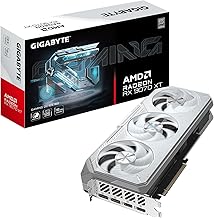
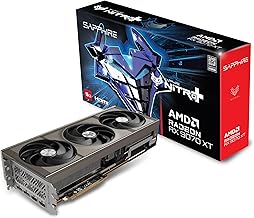
Each manufacturer brings its own take on the 9070 XT. The XFX Swift Gaming Edition uses a triple-fan cooler with one HDMI and three DisplayPort outputs, aimed at buyers who want maximum airflow. PowerColor’s Reaper keeps the design lean and efficient, while the ASUS Prime opts for a 2.5-slot layout with axial-tech fans and a reinforcing GPU Guard. GIGABYTE’s Gaming OC and Gaming OC ICE editions feature Hawk fans and server-grade thermal gel, the ICE version wrapped in an eye-catching white shroud, and ASRock’s Challenger offers a factory boost near 2970 MHz with triple-fan cooling. All are 16GB cards built for high-refresh gaming with PCIe 5.0 support.
Performance
Where the 9070 XT shines is delivering flagship-adjacent frame rates at a mid-to-high price. The RDNA 4 core and 16GB of GDDR6 power through 1440p at high refresh rates and hold up well at 4K, and that large memory buffer means you rarely have to compromise on texture quality. Factory-overclocked cards like the ASRock Challenger and GIGABYTE Gaming OC eke out extra performance, while DisplayPort 2.1a and HDMI 2.1b outputs feed the latest high-refresh monitors. Ray-tracing capability has taken a real step forward with this generation, narrowing the gap to competing cards, and AMD’s upscaling tech helps stretch performance further in supported titles.
Pros & Cons
- Flagship-adjacent frames: High-refresh 1440p and strong 4K at a fair price.
- 16GB memory: Plenty of VRAM for demanding textures and longevity.
- Improved ray tracing: RDNA 4 closes the gap on rivals.
- Varied cooler choices: Options from compact to triple-fan designs.
- RT still trails NVIDIA: Better than before, but not the RT leader.
- Power and connectors: Requires a suitable PSU setup.
- Larger models need space: Check case clearance for triple-fan cards.
Alternatives to Consider
Shoppers who prioritize ray tracing and AI upscaling above all might weigh NVIDIA’s RTX 5070 series. Those gaming strictly at 1080p can spend less on a lower tier. But if you want maximum raster performance per dollar with abundant VRAM, the 9070 XT is a compelling target. The XFX Swift and GIGABYTE Gaming OC deliver strong cooling, while the PowerColor Reaper suits value-focused builders.
Frequently Asked Questions
Is the Radeon RX 9070 XT worth buying?
For gamers chasing high-value 1440p and 4K performance, yes. Its strong raster output and 16GB of VRAM make it one of the better value cards in its class.
Does it handle ray tracing well?
RDNA 4 brings meaningful ray-tracing improvements over past Radeon cards. It performs respectably, though NVIDIA still holds an edge in the most demanding RT scenarios.
How much VRAM does it have?
All versions ship with 16GB of GDDR6, which is ample for high-resolution gaming and gives comfortable headroom for future, more memory-hungry titles.
Which cooler design is best?
Triple-fan models like the XFX Swift run cool and quiet under load, while 2.5-slot designs like the ASUS Prime fit more builds. Choose based on your case size and noise preference.
Verdict
The AMD Radeon RX 9070 XT is a smart choice for gamers who want near-flagship performance at a more reasonable price. With RDNA 4 efficiency, 16GB of GDDR6, and improved ray tracing, it excels at high-refresh 1440p and holds its own at 4K. Pick a well-cooled partner card such as the XFX Swift or GIGABYTE Gaming OC, ensure your power supply is up to the task, and you will have a capable, value-packed GPU for years to come.