Key takeaways
- VRAM capacity: At this budget, 16GB is the safer long-term buy. 8GB cards still deliver excellent 1080p performance, but 1440p with high textures or ray tracing can push past that buffer and cause sudden frame-time stutter that no amount of GPU power fixes.
- Target resolution and refresh rate: Match the card to your monitor, not to benchmark charts. A 1080p 144Hz display is well served by a mid-tier card, while 1440p gaming benefits meaningfully from the extra memory and bandwidth in the tier above.
- Upscaling and frame generation: NVIDIA’s DLSS 4 and AMD’s FSR both extend the useful life of a mid-range card considerably. Check which technologies your favourite games support — it can be worth more in practice than a 10% raw performance difference.
- Cooling and physical size: Dual-fan 2 to 2.5-slot designs fit almost any mid-tower, while triple-fan cards run cooler and quieter but need clearance. Measure your case before you buy, and check that zero-RPM idle modes are supported if noise matters to you.
- Power supply and connectors: Most cards in this bracket are modest on power draw, but verify your PSU wattage and available PCIe connectors. A quality 550–650W unit covers nearly every option here comfortably.
What's inside
Shopping for a graphics card under $500 has never been more confusing. NVIDIA’s RTX 50-series and AMD’s RDNA 4 lineup have both matured into wide, overlapping product stacks, and the gap between a card that’s genuinely good value and one that’s quietly overpriced can come down to a single spec — usually VRAM. Meanwhile, modern titles are getting hungrier: 8GB cards that felt comfortable a couple of years ago now stumble at 1440p with ray tracing and high-resolution textures enabled, even when the raw GPU horsepower is there.
This guide cuts through that noise. We’ve focused on cards that realistically sit at or below the $500 mark in 2026, weighing frame rates against VRAM capacity, upscaling support, cooling quality, and long-term headroom. Whether you’re building a 1080p high-refresh machine or a sensible 1440p gaming rig, the picks below represent the best value-for-money at this budget — plus a clear framework for deciding which trade-offs actually matter for your setup.
As an Amazon Associate we earn from qualifying purchases at no extra cost to you.




⚡ Save on Your Next PC — Amazon Prime
Prime members get fast free shipping on the systems above, plus early access to Prime Day & Black Friday PC deals. New members get a 30-day free trial.
Watch: Best Graphics Card Under $500 — Video Review
How to Choose Graphics Card Under $500
- VRAM capacity: At this budget, 16GB is the safer long-term buy. 8GB cards still deliver excellent 1080p performance, but 1440p with high textures or ray tracing can push past that buffer and cause sudden frame-time stutter that no amount of GPU power fixes.
- Target resolution and refresh rate: Match the card to your monitor, not to benchmark charts. A 1080p 144Hz display is well served by a mid-tier card, while 1440p gaming benefits meaningfully from the extra memory and bandwidth in the tier above.
- Upscaling and frame generation: NVIDIA’s DLSS 4 and AMD’s FSR both extend the useful life of a mid-range card considerably. Check which technologies your favourite games support — it can be worth more in practice than a 10% raw performance difference.
- Cooling and physical size: Dual-fan 2 to 2.5-slot designs fit almost any mid-tower, while triple-fan cards run cooler and quieter but need clearance. Measure your case before you buy, and check that zero-RPM idle modes are supported if noise matters to you.
- Power supply and connectors: Most cards in this bracket are modest on power draw, but verify your PSU wattage and available PCIe connectors. A quality 550–650W unit covers nearly every option here comfortably.
The Best Picks Reviewed
ASUS Dual RTX 5060 Ti 16GB OC
This is the sweet spot of the sub-$500 market: 16GB of GDDR7 paired with DLSS 4 makes it a genuinely capable 1440p card rather than a 1080p card with delusions of grandeur. The 2.5-slot Axial-tech cooler with 0dB idle keeps it quiet under load, and the three-year warranty adds real peace of mind.
XFX Swift Radeon RX 9060 XT 16GB
AMD’s RDNA 4 answer to the 5060 Ti brings the same 16GB buffer at typically lower street pricing, and the triple-fan Swift cooler is one of the better thermal solutions in this class. It’s the strongest raw-rasterisation-per-dollar pick here, though ray tracing performance still trails NVIDIA’s equivalent.
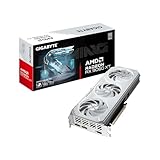
GIGABYTE Radeon RX 9060 XT Gaming OC ICE 16G
A polished white-themed alternative with server-grade thermal gel and a reinforced backplate, this card runs cool and quiet in a compact two-slot footprint. Performance is essentially identical to other 9060 XT 16GB models, so pick it if build aesthetics or case clearance are deciding factors.
ASUS Dual RTX 5060 8GB OC
For pure 1080p high-refresh gaming, the RTX 5060 remains excellent value, with DLSS 4 doing heavy lifting in demanding titles. The 8GB buffer is the obvious limitation — fine today at 1080p, but worth stepping up from if you plan to move to 1440p within the card’s lifetime.
GIGABYTE RTX 5060 WINDFORCE OC 8G
GIGABYTE’s WINDFORCE variant offers the same core silicon and PCIe 5.0 connectivity at what is often the lowest price on this list, making it the budget entry point into the RTX 50-series. Cooling is competent rather than exceptional, but it’s more than adequate for a card with this power envelope.
Frequently Asked Questions
Is 8GB of VRAM still enough in 2026?
At 1080p with sensible settings, yes — 8GB cards remain very playable and often deliver excellent frame rates. At 1440p, or with ray tracing and ultra texture packs enabled, you’ll increasingly run into the buffer, which is why we recommend 16GB if your budget stretches to it.
Should I choose NVIDIA or AMD at this price?
NVIDIA leads on ray tracing and DLSS 4 upscaling quality, while AMD typically offers more raw rasterisation performance and VRAM per dollar. If you play competitive titles at high frame rates, AMD is compelling; if you want the best visuals in single-player showcase games, NVIDIA has the edge.
What power supply do I need for these cards?
A good-quality 550W unit is sufficient for the RTX 5060 and most 9060 XT models, while 650W gives comfortable headroom for the 5060 Ti alongside a modern CPU. Prioritise a reputable brand and 80 Plus Bronze certification or better over sheer wattage.
Will these cards bottleneck my older CPU?
Possibly, particularly at 1080p where the CPU does more of the work. If you’re pairing one of these GPUs with a processor more than four or five generations old, expect some performance left on the table — though the impact shrinks considerably at 1440p.
Final Thoughts
If you want the best all-round card under $500 in 2026, the ASUS Dual RTX 5060 Ti 16GB OC is the pick — it combines a future-proof memory buffer, DLSS 4, and genuinely capable 1440p performance in a quiet, well-built package. The XFX Swift RX 9060 XT 16GB is the value champion for anyone prioritising raw frames per dollar, while the ASUS Dual RTX 5060 8GB remains a smart, cost-effective choice for dedicated 1080p high-refresh gamers who don’t need the extra headroom.