Key takeaways
- Target a PSU rated for roughly 1.5x your calculated peak draw.
- A 400W system pairs well with a 650W unit; a 550W system with an 850W.
- Extra headroom leaves room for a future GPU upgrade.
- Running at ~60% load keeps the fan quiet and extends component life.
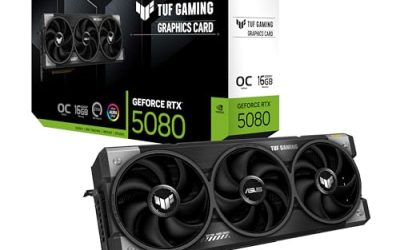
The power supply is the least glamorous part of a gaming build and the one most likely to be chosen carelessly, yet it powers everything else and a bad choice can cause instability, crashes, or a fried system. In 2026, with GPUs like the RTX 5080 and RX 9070 XT drawing serious power and producing sharp transient spikes, picking the right wattage and quality has never mattered more. Too little headroom and your PC shuts off mid-game; too much and you’ve wasted money on capacity you’ll never use.
This guide explains how to calculate the wattage you actually need, why headroom matters, how to read efficiency ratings, and how to verify a used or suspect PSU is healthy. A simple PSU tester like the LCD-screen units below lets you confirm a unit works before you build around it, saving hours of troubleshooting a dead system.
Our top picks


As an Amazon Associate we earn from qualifying purchases at no extra cost to you. Ratings are shown as listed on Amazon.
⚡ Save on Your Next PC — Amazon Prime
Prime members get fast free shipping on the systems above, plus early access to Prime Day & Black Friday PC deals. New members get a 30-day free trial.
Watch: How to Pick the Right PSU Wattage — Video Review
Add Up Your Real Power Draw
Start with the two components that dominate consumption: the GPU and CPU. A modern mid-range GPU pulls 200-300W under load, a high-end card 300-450W, while a gaming CPU adds 65-250W depending on the chip. Everything else (motherboard, RAM, SSDs, fans) totals maybe 50-80W combined. Add them up to get your system’s peak draw. A card maker’s recommended PSU wattage on the box already builds in a safety margin, so it’s a reliable starting point.
Add Headroom for Transients and Longevity
Never buy a PSU that just barely meets your total. Two reasons: modern GPUs spike well above their rated draw for milliseconds, and a PSU runs most efficiently and quietly at 50-70% load, not maxed out.
- Target a PSU rated for roughly 1.5x your calculated peak draw.
- A 400W system pairs well with a 650W unit; a 550W system with an 850W.
- Extra headroom leaves room for a future GPU upgrade.
- Running at ~60% load keeps the fan quiet and extends component life.
Understand Efficiency Ratings
The 80 Plus badge (White, Bronze, Gold, Platinum) tells you how much wall power reaches your components versus being lost as heat. For gaming builds, 80 Plus Gold is the sweet spot: typically 87-90% efficient, meaning less wasted electricity and less heat. Bronze is acceptable on a budget, while Platinum and Titanium cost more for marginal gains most gamers won’t notice on their power bill.
Match the Right Connectors
Wattage isn’t the only spec. Newer high-end GPUs use the 12VHPWR / 12V-2×6 connector, and you’ll want a PSU that either includes that cable natively (ATX 3.0/3.1 units) or ships with a proper adapter. Check that the PSU has enough PCIe 8-pin connectors for your card and that a modular unit includes the cables you need. ATX 3.x units are also built to handle GPU transient spikes far better than older designs, which is why they’re the safer choice for 2026 cards.
Test Before You Trust
Whether you buy new, buy used, or pull a PSU from an old build, verify it works before making it the foundation of your system. An inexpensive PSU tester with an LCD screen checks that every voltage rail (3.3V, 5V, 12V) is within spec in seconds, without powering a full system. This is invaluable when diagnosing a PC that won’t turn on, since a dead or out-of-spec PSU is a top suspect and a tester confirms it instantly.
Tips
- Buy from a reputable brand; wattage on a cheap unit’s label is often optimistic.
- Prefer fully modular units so you only install the cables you need, improving airflow.
- Check the warranty; quality PSUs come with 7-10 year coverage, a sign of confidence.
- Don’t reuse a decade-old PSU on a new high-end GPU; aging capacitors handle transients poorly.
Frequently Asked Questions
Is a higher-wattage PSU always better?
Up to a point. Extra headroom is good for efficiency and future upgrades, but a 1200W unit in a build that draws 400W just costs more and runs at a less efficient low load. Aim for about 1.5x your peak draw.
What happens if my PSU is underpowered?
The system may crash, restart, or fail to boot under load, especially during GPU-heavy scenes. Chronic underpowering stresses the unit and can eventually damage it or other components.
Does 80 Plus Gold matter for gaming?
Yes, Gold is the recommended balance of efficiency, heat, and cost. It wastes less power as heat than Bronze and stays quieter under load, without the price premium of Platinum or Titanium.
How do I know if my PSU is failing?
Random shutdowns, coil whine, burning smell, or a PC that won’t power on are warning signs. A PSU tester quickly confirms whether the voltages are in spec, ruling it in or out as the culprit.
Conclusion
Picking PSU wattage comes down to adding your real component draw, multiplying by about 1.5 for headroom, and choosing an 80 Plus Gold, ATX 3.x unit from a trusted brand with the right connectors. Keep the unit loaded around 60% for efficiency and longevity, and keep a cheap PSU tester on hand to diagnose power issues fast. Get the power supply right and every other component in your build runs stable for years.