Key takeaways
- Pure gaming: 16GB handles almost all games alone; 32GB adds headroom for the most demanding 2026 titles.
- Multitasking: 32GB shines with a browser, Discord, and streaming software open alongside the game.
- Modded games: Heavily-modded titles like Skyrim or city builders can consume well beyond 16GB.
- Future-proofing: 32GB extends your build’s useful life as game requirements climb.
- Cost: The jump from 16GB to 32GB is one of the cheapest meaningful upgrades available.
- Speed matters too: Running dual-channel with XMP/EXPO enabled matters more for FPS than raw capacity beyond your needs.
For years, 16GB of RAM was the undisputed sweet spot for gaming, enough for any title with headroom to spare. But 2026 has quietly shifted the goalposts. Modern AAA games now routinely request 12GB or more just for themselves, and the moment you add a browser, Discord, and a streaming overlay, 16GB starts to feel tight. The question of whether to buy 32GB or stick with 16GB is now a real one, and the answer depends on how you play.
This comparison examines what each capacity actually delivers in 2026 gaming, when the extra 16GB earns its keep, and whether your money is better spent elsewhere. We’ll look at kits spanning both DDR4 and DDR5 to help you decide, from cost-effective 16GB configurations to 32GB dual-channel kits.
Our top picks


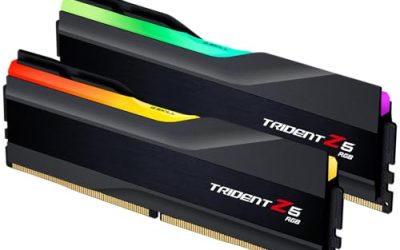
 Crucial 32GB DDR5 RAM Kit
- Product Group: Personal Computer
- Binding: Personal Computers


As an Amazon Associate we earn from qualifying purchases at no extra cost to you. Ratings are shown as listed on Amazon.
⚡ Save on Your Next PC — Amazon Prime
Prime members get fast free shipping on the systems above, plus early access to Prime Day & Black Friday PC deals. New members get a 30-day free trial.
Watch: 32GB vs 16GB RAM for Gaming — Video Review
Quick Verdict
In 2026, 32GB is the new recommended sweet spot for a gaming PC you want to last, especially if you multitask, stream, or play heavily-modded games. 16GB still runs virtually every game fine on its own, but leaves little room for background apps and future titles. If you’re building fresh, buy 32GB; if you already own 16GB and only game, an upgrade is optional rather than urgent.
Key Differences
- Pure gaming: 16GB handles almost all games alone; 32GB adds headroom for the most demanding 2026 titles.
- Multitasking: 32GB shines with a browser, Discord, and streaming software open alongside the game.
- Modded games: Heavily-modded titles like Skyrim or city builders can consume well beyond 16GB.
- Future-proofing: 32GB extends your build’s useful life as game requirements climb.
- Cost: The jump from 16GB to 32GB is one of the cheapest meaningful upgrades available.
- Speed matters too: Running dual-channel with XMP/EXPO enabled matters more for FPS than raw capacity beyond your needs.
16GB of RAM
Sixteen gigabytes still gets the job done for the majority of gamers. If you launch a game, close everything else, and play, a 16GB dual-channel kit like a DDR4 2x8GB or DDR5 set will feed nearly every title without issue, and you’ll rarely see the memory ceiling in typical single-tasking sessions.
The strain appears when you stack tasks. Alt-tab to a browser with a dozen tabs, run Discord with screen share, keep a streaming overlay active, and a demanding game can push total usage past 16GB, forcing Windows to swap to your SSD and causing stutter. 16GB is fine for focused gaming on a budget, but it’s increasingly the floor rather than the comfortable middle.
32GB of RAM
Thirty-two gigabytes is where a 2026 gaming build feels genuinely comfortable. It absorbs the most memory-hungry AAA games while leaving ample room for everything you run alongside them, browser, Discord, OBS, background downloads, without ever touching the swap file. For streamers, content creators, and anyone who plays heavily-modded games, it’s the difference between smooth and stuttery.
The best part is value. A 32GB dual-channel kit, whether DDR4 2x16GB for older platforms or DDR5 2x16GB for new builds, costs relatively little for the longevity and smoothness it buys. Just make sure you run it as a matched dual-channel pair with the XMP or EXPO speed profile enabled in BIOS, since running RAM at slow default speeds or single-channel throws away real gaming performance.
Which Should You Buy?
- Building a new PC in 2026: 32GB, the new sweet spot for longevity.
- Stream or create while gaming: 32GB, essential for smooth multitasking.
- Play modded or simulation games: 32GB, these titles are memory-hungry.
- Tight budget, game only: 16GB dual-channel is still perfectly playable.
- Already own 16GB and only game: The upgrade is nice-to-have, not urgent.
Frequently Asked Questions
Is 16GB still enough for gaming in 2026?
For playing games on their own, yes, 16GB runs nearly every title. The limitation shows when you multitask with browsers, Discord, and streaming software, or play memory-heavy modded games, where 32GB prevents stutter.
Will 32GB give me more FPS than 16GB?
Not directly, if you weren’t running out of memory. The FPS benefit of 32GB comes from avoiding the stutter caused by hitting the 16GB ceiling while multitasking. RAM speed and dual-channel operation affect FPS more than extra unused capacity.
Does RAM speed matter more than capacity?
Both matter, but only up to your needs. Once you have enough capacity, running a fast dual-channel kit with XMP/EXPO enabled gives more gaming benefit than piling on capacity you never use. Never run RAM single-channel or at default slow speeds.
Should I buy DDR4 or DDR5?
It depends on your platform. New Intel and AMD AM5 builds use DDR5. Older or budget builds on existing boards use DDR4, which is cheaper and still very capable for gaming. Buy whatever your motherboard supports.
Final Verdict
The RAM conversation has shifted: 16GB was the old sweet spot, and 32GB is the new one for 2026 builds meant to last. If you’re buying fresh, spend the modest extra for 32GB of matched dual-channel memory and enable XMP/EXPO, you’ll have headroom for the hungriest games and all your background apps. If you already own a fast 16GB kit and only game one thing at a time, you’re fine for now, but keep 32GB on your upgrade radar.