Key takeaways
- 1080p high refresh: Cards like the ASUS Dual RTX 5060 or XFX Radeon RX 9060 XT deliver smooth, high frame rates without overspending.
- 1440p: Step up to something like the RTX 5060 Ti 16GB, RX 9070 XT, or RTX 5070 for a sweet spot of speed and detail.
- 4K: High-end cards such as the RTX 5070 Ti or TUF Gaming RTX 5080 are built for pushing four times the pixels at playable frame rates.
- Refresh rate: A 240Hz monitor needs far more GPU muscle than a 60Hz panel at the same resolution, so factor in both numbers.
What's inside
- Watch: How to Choose a Graphics Card (2026 Guide) — Video Review
- Match the Card to Your Resolution and Refresh Rate
- Why VRAM Matters More Than Ever
- Ray Tracing, DLSS, and FSR
- Physical Fit, Power, and Connectors
- Balancing GPU Spend With the Rest of Your Build
- Tips
- Related Guides
- Frequently Asked Questions
- Conclusion
- Related Articles
- Related Guides
The graphics card is the heart of any gaming PC. More than any other component, it determines the resolution you can play at, the frame rates you can hit, and whether features like ray tracing and AI upscaling are on the table. It is also usually the most expensive single part, which makes choosing the right one the difference between a rig that feels perfectly tuned and one that either struggles or wastes money on power you cannot use.
- Watch: How to Choose a Graphics Card (2026 Guide) — Video Review
- Match the Card to Your Resolution and Refresh Rate
- Why VRAM Matters More Than Ever
- Ray Tracing, DLSS, and FSR
- Physical Fit, Power, and Connectors
- Balancing GPU Spend With the Rest of Your Build
- Tips
- Related Guides
- Frequently Asked Questions
- Conclusion
- Related Articles
- Related Guides
This guide explains how to read GPU specifications, how to match a card to your monitor and the games you play, and how to avoid the common traps of buying too little VRAM or the wrong tier for your resolution. By the end you will know exactly what to look for and how to get the most performance for your budget.
As an Amazon Associate we earn from qualifying purchases at no extra cost to you.


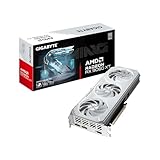


The cards above span the tiers most gamers actually shop, from efficient 1080p and 1440p options to high-end 4K performers, and they are the models we point people toward most often in 2026.
⚡ Save on Your Next PC — Amazon Prime
Prime members get fast free shipping on the systems above, plus early access to Prime Day & Black Friday PC deals. New members get a 30-day free trial.
Watch: How to Choose a Graphics Card (2026 Guide) — Video Review
Match the Card to Your Resolution and Refresh Rate
- 1080p high refresh: Cards like the ASUS Dual RTX 5060 or XFX Radeon RX 9060 XT deliver smooth, high frame rates without overspending.
- 1440p: Step up to something like the RTX 5060 Ti 16GB, RX 9070 XT, or RTX 5070 for a sweet spot of speed and detail.
- 4K: High-end cards such as the RTX 5070 Ti or TUF Gaming RTX 5080 are built for pushing four times the pixels at playable frame rates.
- Refresh rate: A 240Hz monitor needs far more GPU muscle than a 60Hz panel at the same resolution, so factor in both numbers.
Why VRAM Matters More Than Ever
Video memory holds textures, frame buffers, and assets, and in 2026 many games are hungry for it. An 8GB card like the RTX 5060 is fine for 1080p, but at 1440p and 4K with high textures and ray tracing you will want 12GB or ideally 16GB. Cards such as the RX 9060 XT 16GB, RX 9070 XT, and RTX 5080 give you that headroom, which prevents the stutter and texture pop-in that occur when a game runs out of memory. When two cards are close in raw speed, the one with more VRAM is usually the safer long-term buy.
Ray Tracing, DLSS, and FSR
Modern GPUs do more than push raw rasterized frames. Ray tracing adds realistic lighting and reflections but is demanding, so AI upscaling is what makes it playable. NVIDIA’s DLSS 4, available on the RTX 50-series like the RTX 5070 and 5080, and AMD’s FSR on Radeon cards such as the RX 9070 XT, render at a lower internal resolution and intelligently reconstruct a sharp image, often boosting frame rates dramatically. If you care about ray tracing or want extra frames in demanding titles, strong upscaling support should weigh heavily in your decision.
Physical Fit, Power, and Connectors
A powerful card is no good if it does not fit or your system cannot feed it. Check three things before buying: the card’s length against your case clearance, its slot thickness since many modern cards are 2.5 slots or more, and your power supply’s wattage and connector type. High-end models like the RTX 5080 draw significant power and may use newer power connectors, so confirm your PSU has the headroom and cables. Compact builds should look for smaller-form-factor cards such as SFF-ready designs that are built for tight cases.
Balancing GPU Spend With the Rest of Your Build
The best GPU for you is the one that fits the rest of your system. Pairing a flagship card with a weak CPU at 1080p leaves performance stranded, while a modest card at 4K will be the limiting factor no matter how strong your processor is. As a rule of thumb, spend the largest share of a gaming budget on the graphics card, but keep enough for a CPU, RAM, and power supply that can actually support it. That balance delivers better real-world results than sinking everything into the most expensive GPU you can find.
Tips
- Buy the GPU tier that matches your monitor; there is no benefit to a 4K card on a 1080p 60Hz screen.
- Prioritize 16GB of VRAM for 1440p and 4K to stay comfortable as games grow more demanding.
- Verify card length, slot thickness, and PSU wattage and connectors before you order.
- Weigh DLSS or FSR support heavily if you want ray tracing or extra frames in demanding titles.
Frequently Asked Questions
How much VRAM do I need for 1440p gaming?
Aim for at least 12GB, and 16GB is the more future-proof choice. Many 2026 titles at 1440p with high textures and ray tracing push past 8GB, so extra memory prevents stutter and pop-in.
Is NVIDIA or AMD better for gaming?
Both make excellent cards. NVIDIA tends to lead in ray tracing and DLSS image quality, while AMD often offers more VRAM and raw rasterized performance per dollar. Compare specific models in your budget rather than the brand alone.
Do I really need ray tracing?
It is optional. Ray tracing improves lighting and reflections but costs performance, so many players prioritize higher frame rates instead. If you do want it, a card with strong upscaling support makes it far more playable.
Will my power supply handle a new graphics card?
Check the card’s recommended PSU wattage and its power connectors against your supply. High-end cards draw more and may use newer connectors, so a marginal or older PSU should be upgraded to avoid instability.
Conclusion
Choosing a graphics card is about matching the right tier to your resolution and refresh rate, ensuring you have enough VRAM, and confirming the card fits your case and power supply. Decide how you actually play first, then pick the card that delivers smooth frame rates for that target without overspending. Get that balance right and your GPU will be the component that makes every game look and feel its best.