A great gaming TV is where visual fidelity and responsiveness meet. The current console generation and high-end PCs can push 4K at 120Hz with variable refresh rate, so the panel in front of you needs to keep up or you’re leaving performance on the table. The good news: 2026’s mid-range sets deliver features that were flagship-only a couple of years ago.
We evaluated the leading gaming TVs on input lag, refresh rate, HDR brightness, and how their smart platforms handle console and PC hookups. Below are the models that make games look and feel their best, plus a quick guide to the specs that genuinely matter for play.
Our top picks
 Samsung 55-Inch Class M70H Series
- Our advanced processor delivers brighter highlights and deeper…
- delivers one billion true-to-life colors, powered by advanced…
- Experience HDR picture quality with brighter highlights and…
 TCL 55" T7 4K QLED Google TV
- 4K UltraHD Resolution: Experience incredible detail with 4X…
- QLED (Quantum Dot Technology): Rich, vibrant colors covering…
- 120Hz Panel Refresh Rate: Watch action-packed movies, fast-paced…
 LG 65-Inch Class OLED evo AI 4K
- OLED Technology: Celebrating 12 years of perfecting award-winning…
- Brightness Booster: Our Brightness Booster technology magnifies each…
- Bright Room Ready: Verified by UL for Discomfort…
| Product | Key specs | |
|---|---|---|
| Samsung 55-Inch Class M70H Series | Our advanced processor delivers brighter highlights and deeper… delivers one billion true-to-life colors, powered by advanced… Experience HDR picture quality with brighter highlights and… | Check price |
| TCL 55" T7 4K QLED Google TV | 4K UltraHD Resolution: Experience incredible detail with 4X… QLED (Quantum Dot Technology): Rich, vibrant colors covering… 120Hz Panel Refresh Rate: Watch action-packed movies, fast-paced… | Check price |
| LG 65-Inch Class OLED evo AI 4K | OLED Technology: Celebrating 12 years of perfecting award-winning… Brightness Booster: Our Brightness Booster technology magnifies each… Bright Room Ready: Verified by UL for Discomfort… | Check price |
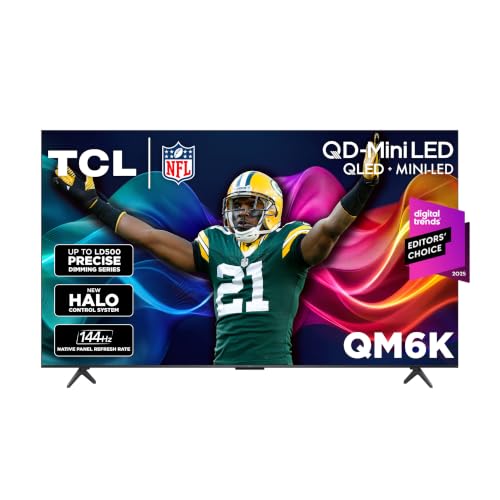 TCL 55 Inch Class QM6K Series | AFFORDABLE PREMIUM PERFORMANCE FOR SPORTS, GAMING & STREAMING QD-MINI LED BETTER BLACKS | Check price |
As an Amazon Associate we earn from qualifying purchases at no extra cost to you.
🎮 Get More From Your Setup — Free
Prime Gaming gives you free PC games every month, in-game loot, and a free Twitch channel sub — plus fast free shipping on all the gear above. New members get a 30-day free trial.
Watch: Best What’s The Best TV For Gaming — Video Review
How to Choose a Gaming TV
- Refresh rate and VRR: Aim for at least 120Hz with variable refresh rate support. Higher-Hz panels and VRR eliminate tearing and keep fast motion crisp.
- Panel type: OLED delivers perfect blacks and instant response; Mini LED QLED counters with higher brightness for well-lit rooms. Choose based on your lighting.
- Input lag and Game Mode: Low input lag is non-negotiable for competitive play. A dedicated auto game mode that switches instantly is a big convenience.
- HDMI 2.1: Full-bandwidth HDMI 2.1 ports unlock 4K/120 and VRR from consoles and GPUs. Confirm the count, since some sets only include one or two.
- Size and viewing distance: Bigger isn’t always better up close. Match 55-65 inches to typical living-room seating, and larger panels to bigger rooms.
The Best Gaming TVs Reviewed
LG C5 OLED evo (65″)
The all-round gaming champion. OLED’s instant pixel response, Filmmaker Mode, and AI upscaling make it stunning for both fast shooters and cinematic single-player titles. If your room isn’t blindingly bright, it’s hard to beat.
Hisense U7 Mini-LED (55″)
Outstanding value for high-refresh gaming, with a native 165Hz panel, VRR, Dolby Vision, and strong Mini-LED brightness. It’s the pick for players who want spec-sheet firepower without OLED pricing.
Samsung M80H Mini LED (55″)
A bright, punchy Mini LED set with 144Hz Motion Xcelerator and Samsung’s polished Gaming Hub. Excellent for daytime living rooms where OLED can look washed out.
TCL T7 QLED (55″)
A budget-friendly 144Hz QLED that punches above its price for sports and gaming. Smooth motion handling and Google TV make it a smart pick for a secondary or bedroom setup.
Samsung M70H Mini LED (55″)
A step down from the M80H with 120Hz and DLG support, this Vision AI set balances brightness and price well. A solid mainstream choice for mixed gaming and streaming.
Frequently Asked Questions
OLED or Mini LED for gaming?
OLED wins on response time and contrast in dim rooms; Mini LED wins on brightness for bright spaces and carries less burn-in worry. Both game beautifully with modern HDMI 2.1.
Is 120Hz enough, or do I need more?
For consoles, 120Hz is the ceiling anyway. High-end PC players can benefit from 144-165Hz panels, but 120Hz is plenty for the vast majority of gamers.
Does input lag really matter?
In competitive and reaction-heavy games, yes. Look for sets under roughly 10ms in Game Mode. Slower panels feel sluggish no matter how good the picture is.
Do I need HDMI 2.1 on every port?
Not every port, but you want enough full-bandwidth HDMI 2.1 inputs for your console and PC. Check specs carefully, since entry models sometimes limit high-speed ports.
Final Thoughts
The LG C5 OLED is the premium pick for image quality and response, while the Hisense U7 Mini-LED delivers the best high-refresh value. For bright rooms, the Samsung M80H is the standout that keeps games looking vivid all day.
FAQ
OLED or Mini LED for gaming?
Is 120Hz enough, or do I need more?
Does input lag really matter?
Do I need HDMI 2.1 on every port?
More from Amazon
Programs that pair well with the guide above. Offers and eligibility are set by Amazon and may change.
Free shipping on eligible items, Prime Video and more. Eligible new members can start with a free trial.
Start a Prime free trialAd-free music streaming. Eligible new subscribers can start with a free trial.
Try Music Unlimited freeA Prime membership for ages 18-24 with a trial period. Eligibility is set by Amazon.
See Prime for Young AdultsAudiobooks and podcasts to listen to on the go. Eligible new members can start with a free trial.
Try Audible freeAs an Amazon Associate we earn from qualifying purchases.