Key takeaways
- Refresh rate: Higher refresh rates like 144Hz or 165Hz deliver smoother motion, giving competitive players a clear edge in fast games.
- Resolution: Full HD is easy to drive and great for esports, while WQHD offers sharper detail if your GPU can handle it.
- Response time and adaptive sync: Low response times reduce blur, and FreeSync or G-Sync eliminate tearing for a cleaner image.
- Panel and curve: Curved screens boost immersion, especially on larger and ultrawide displays, while panel type affects color and viewing angles.
- Size and ergonomics: Match the size to your desk and viewing distance, and look for adjustable stands and eye-comfort features for long sessions.
What's inside
Your monitor is the window into every game you play, and it can make or break the experience regardless of how powerful your PC is. A great gaming screen delivers high refresh rates for buttery-smooth motion, low response times for crisp clarity, and rich color and contrast that bring worlds to life. Whether you chase competitive frame rates or cinematic immersion, the right display is one of the most impactful upgrades you can make.
With curved and flat panels, ultrawide and standard aspect ratios, and resolutions from Full HD to WQHD, choosing the right screen means matching it to your GPU and playstyle. Below we explain what genuinely matters when picking a gaming monitor, then review a range of standout options from immersive ultrawides to value-focused high-refresh panels.
As an Amazon Associate we earn from qualifying purchases at no extra cost to you.




🎮 Get More From Your Setup — Free
Prime Gaming gives you free PC games every month, in-game loot, and a free Twitch channel sub — plus fast free shipping on all the gear above. New members get a 30-day free trial.
Watch: Best Gaming PC Screen — Video Review
How to Choose the Right Gaming Monitor
- Refresh rate: Higher refresh rates like 144Hz or 165Hz deliver smoother motion, giving competitive players a clear edge in fast games.
- Resolution: Full HD is easy to drive and great for esports, while WQHD offers sharper detail if your GPU can handle it.
- Response time and adaptive sync: Low response times reduce blur, and FreeSync or G-Sync eliminate tearing for a cleaner image.
- Panel and curve: Curved screens boost immersion, especially on larger and ultrawide displays, while panel type affects color and viewing angles.
- Size and ergonomics: Match the size to your desk and viewing distance, and look for adjustable stands and eye-comfort features for long sessions.
The Best Gaming Monitors Reviewed
Samsung 34″ Odyssey G5 Ultrawide
The Odyssey G5 delivers an immersive 34-inch ultrawide WQHD experience with a 1000R curve, 165Hz refresh, and FreeSync Premium. It’s the top pick for players who want cinematic scale and smooth performance in one panel.
Alienware 34 Curved (AW3425DWM)
The Alienware 34 offers a 34-inch WQHD ultrawide with a fast 180Hz refresh, 1ms response, and a subtle 1500R curve. Its premium image quality and smooth motion make it a fantastic choice for immersive gaming.
Samsung 32″ Odyssey G55C
The 32-inch Odyssey G55C brings QHD resolution, a 1000R curve, 165Hz refresh, and HDR10 in a sharp, immersive package. It’s an excellent all-rounder for players who want detail and speed on a large curved screen.
Samsung 27″ Essential S3
The 27-inch Essential S3 offers a curved 100Hz panel with game mode and eye-comfort features at an accessible price. It’s a great value pick for casual gamers who want a comfortable, clean everyday display.
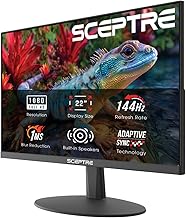
Sceptre 24″ Curved Gaming Monitor
The Sceptre 24-inch curved monitor delivers 1080p at up to 144Hz with built-in speakers and wide color coverage. Its budget-friendly price makes it an ideal entry point for smooth, immersive gaming on a smaller desk.
Frequently Asked Questions
Is a curved monitor better for gaming?
Curved monitors enhance immersion, especially at larger and ultrawide sizes, by wrapping the image around your field of view. For smaller screens the benefit is subtler.
What refresh rate do I need for gaming?
144Hz is the sweet spot for most gamers, offering smooth motion. Competitive players may want higher, while casual players are fine with 100Hz or above.
Should I choose 1080p or WQHD?
1080p is easier to drive and ideal for esports and budget builds, while WQHD offers sharper detail if your graphics card can push the extra pixels.
Do I need FreeSync or G-Sync?
Adaptive sync like FreeSync eliminates screen tearing and stutter, delivering a smoother image. It’s a highly worthwhile feature for any gaming monitor.
Final Thoughts
For immersive ultrawide gaming, the Samsung Odyssey G5 and fast Alienware 34 are standout choices, while the 32-inch Odyssey G55C is a superb curved all-rounder. Budget gamers will find excellent smooth performance in the affordable Sceptre 24-inch curved monitor.