Key takeaways
- Peak cooling: A 360mm AIO handles the hottest overclocked chips better than any air cooler; good air matches 240mm AIOs.
- Reliability: Air coolers have no pump to fail and never leak; AIOs have a pump with a finite lifespan.
- Noise: Both can be quiet; a large air cooler runs fans slowly, while AIO pump noise varies by model.
- Clearance: Tall air towers can block tall RAM or side panels; AIO blocks are compact but need radiator mounting space.
- Aesthetics: AIOs offer a cleaner CPU-area look and RGB radiators; air coolers are bulkier but simpler.
- Price: Quality air is cheaper for equivalent cooling; AIOs cost more for the same thermal result until you reach 360mm.
Cooling is where a lot of gamers overthink their build, agonizing over air versus water as if the wrong choice will cripple performance. The truth in 2026 is more reassuring: both a quality air cooler and a good all-in-one (AIO) liquid cooler will keep any gaming CPU comfortably in check. The real differences come down to noise, aesthetics, clearance, price, and how much thermal headroom you need for overclocking or the hottest chips.
This comparison lays out exactly where each cooling type wins, using coolers spanning both camps, from the acclaimed Thermalright Peerless Assassin 120 SE air tower to 240mm and 360mm AIOs like the ARCTIC Liquid Freezer III Pro. By the end you’ll know which style fits your case, your CPU, and your budget.
Our top picks



As an Amazon Associate we earn from qualifying purchases at no extra cost to you. Ratings are shown as listed on Amazon.
⚡ Save on Your Next PC — Amazon Prime
Prime members get fast free shipping on the systems above, plus early access to Prime Day & Black Friday PC deals. New members get a 30-day free trial.
Watch: Air vs Water Cooling for Gaming PCs — Video Review
Quick Verdict
For most gamers, a high-end dual-tower air cooler is the smart choice: it matches a 240mm AIO in cooling, costs less, and never leaks. Choose an AIO if you own a very hot or overclocked CPU, want a cleaner look with a small pump block instead of a huge tower, or have RAM-clearance issues. Air wins on reliability and value; liquid wins on peak cooling and aesthetics.
Key Differences
- Peak cooling: A 360mm AIO handles the hottest overclocked chips better than any air cooler; good air matches 240mm AIOs.
- Reliability: Air coolers have no pump to fail and never leak; AIOs have a pump with a finite lifespan.
- Noise: Both can be quiet; a large air cooler runs fans slowly, while AIO pump noise varies by model.
- Clearance: Tall air towers can block tall RAM or side panels; AIO blocks are compact but need radiator mounting space.
- Aesthetics: AIOs offer a cleaner CPU-area look and RGB radiators; air coolers are bulkier but simpler.
- Price: Quality air is cheaper for equivalent cooling; AIOs cost more for the same thermal result until you reach 360mm.
Air Cooling
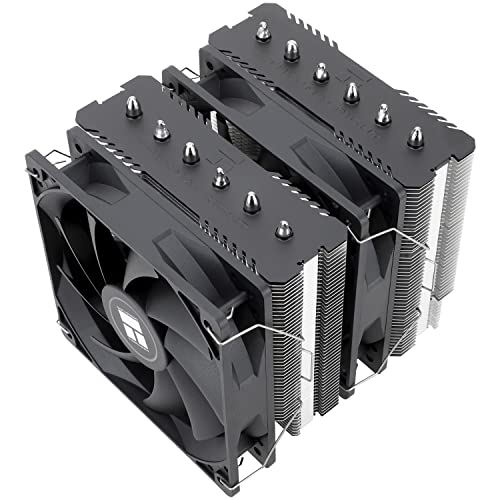
Air cooling uses a heatsink of metal fins and heat pipes with one or two fans, and modern dual-tower designs are shockingly capable. A cooler like the Thermalright Peerless Assassin 120 SE, with six heat pipes and twin fans, tames mainstream and even many high-end gaming CPUs while costing a fraction of a liquid setup. There’s no pump to wear out, nothing to leak, and it simply works for a decade.
The downsides are size and looks. Big air towers are heavy and tall, so check RAM height and case width clearance before buying, and they dominate the visual space around the CPU. But if you value reliability, value, and set-and-forget simplicity, air cooling is unbeatable for the money.
Water Cooling (AIO)
An all-in-one liquid cooler moves heat from a compact CPU block through tubes to a radiator mounted on the case, spreading heat over a larger surface for potent cooling. A 240mm unit like the Thermalright Aqua Elite matches a strong air cooler, while a 360mm model like the ARCTIC Liquid Freezer III Pro pulls ahead on the hottest chips and heavy overclocks, keeping temps lower under sustained all-core loads.
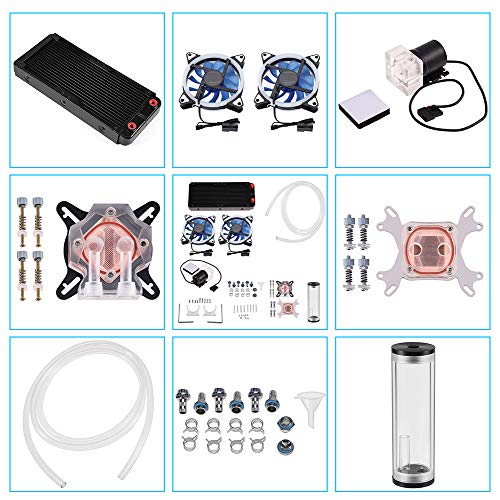
AIOs also free up space around the CPU socket for tall RAM and give a cleaner, often RGB-lit aesthetic. The tradeoffs are cost and the pump: it’s a moving part with a lifespan of several years, and there’s a small long-term leak risk, though modern sealed units are very reliable. Custom open loops exist for enthusiasts but add cost and maintenance most gamers don’t need.
Which Should You Buy?
- Best value and reliability: High-end air cooler like the Peerless Assassin 120 SE.
- Very hot or overclocked CPU: 360mm AIO for maximum sustained cooling.
- Tall RAM or tight CPU clearance: AIO for its compact block.
- Clean look with RGB: AIO for the tidy socket area and lit radiator.
- Set-and-forget for a decade: Air, with no pump to ever fail.
Frequently Asked Questions
Is water cooling better than air cooling?
Only at the extremes. A 360mm AIO beats air on the hottest overclocked chips, but a good air cooler matches a 240mm AIO for less money and greater reliability. For most gaming CPUs, either keeps you well within safe temps.
Can an AIO leak and destroy my PC?
Modern sealed AIOs rarely leak, but the risk isn’t zero and the pump will eventually wear out after several years. Air coolers eliminate this concern entirely, which is why many builders prefer them for peace of mind.
Does an air cooler fit in my case?
Check two things: your case’s maximum CPU cooler height and whether the tower clears your RAM. Tall air coolers can block tall RGB memory. AIOs avoid this but need radiator mounting space in the front or top.
Is a 240mm or 360mm AIO worth it over air?
A 240mm AIO is roughly equal to a top air cooler, so buy it for aesthetics or clearance, not cooling. A 360mm is worth it for hot flagship CPUs and heavy overclocking where you need every degree of headroom.
Final Verdict
Don’t let the air-versus-water question stall your build; both keep gaming CPUs cool. For the best mix of value, reliability, and quiet performance, a high-end dual-tower air cooler like the Peerless Assassin is the pick for the majority of gamers. Reach for a 360mm AIO only if you run a very hot or overclocked chip, need the CPU-area clearance, or want the cleaner liquid-cooled aesthetic. Match the cooler to your CPU’s heat and your case, and you’re set.