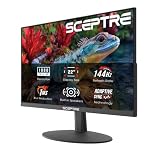
Key takeaways
- Perfect blacks and infinite contrast that no LCD can match.
- 0.03ms response delivers class-leading motion clarity.
- Wide DCI-P3 coverage for stunning, accurate color.
- Full adaptive sync across G-Sync and FreeSync ecosystems.
What's inside
The 280Hz OLED gaming monitor represents the current pinnacle of what enthusiast displays can offer: the perfect black levels and instant pixel response of OLED married to a refresh rate fast enough for competitive esports. For years, gamers had to choose between OLED image quality and high-refresh smoothness. That compromise is finally over.
With QD-OLED and W-OLED panels now hitting 280Hz at 1440p, the question is no longer whether to buy one but which one fits your setup and budget. We compared the leading contenders to sort the genuine standouts from the merely good, focusing on motion clarity, color accuracy, and long-term reliability.
As an Amazon Associate we earn from qualifying purchases at no extra cost to you.


🎮 Get More From Your Setup — Free
Prime Gaming gives you free PC games every month, in-game loot, and a free Twitch channel sub — plus fast free shipping on all the gear above. New members get a 30-day free trial.
Watch: Oled 280hz Monitor: Review & Buyer’s Guide — Video Review
Design & Build
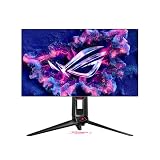
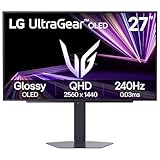
These panels share a common DNA: ultra-thin OLED stacks, near-borderless bezels, and premium metal stands with full height, tilt, and pivot adjustment. The ASUS ROG XG27AQWMG stands out with its tandem OLED structure and a neo proximity sensor that dims the screen when you step away, extending panel life. The LG 27GX700A leans into a glossy TrueBlack coating that makes colors pop, while GIGABYTE’s MO27Q2A adds a Type-C KVM for effortless device switching. Build quality across this tier is uniformly excellent, and most include VESA mounts for arm setups.
Performance
Motion performance is where these monitors justify their price. The 0.03ms gray-to-gray response time on every model here eliminates the ghosting that plagues even fast IPS panels. The AOC Agon Pro AG276QZD2 and INNOCN 2780s both leverage QD-OLED for exceptionally vivid, wide-gamut color covering 99 percent of DCI-P3. G-Sync and FreeSync Premium Pro support keep tearing at bay, and HDR TrueBlack 400 or 500 certification means highlights genuinely sparkle against inky shadows. At 280Hz, fast-paced shooters feel razor sharp, and the difference over a 165Hz panel is immediately obvious in blur-busting clarity.
Pros & Cons
- Perfect blacks and infinite contrast that no LCD can match.
- 0.03ms response delivers class-leading motion clarity.
- Wide DCI-P3 coverage for stunning, accurate color.
- Full adaptive sync across G-Sync and FreeSync ecosystems.
- Premium pricing keeps these out of budget territory.
- Burn-in risk remains a consideration for static content.
- Peak SDR brightness trails high-end LCDs in bright rooms.
Alternatives to Consider
Shoppers chasing the best color should look at the QD-OLED trio: the INNOCN 2780s, AOC Agon Pro, and GIGABYTE MO27Q2A. Those who prefer a glossy, punchy image with strong G-Sync integration will love the LG 27GX700A and ASUS ROG XG27AQWMG. If value matters most, the INNOCN 2780s frequently undercuts the big brands while including built-in speakers. The W-OLED GIGABYTE MO27Q28GR is a solid pick for anyone sensitive to text fringing, as W-OLED handles subpixel layouts differently than QD-OLED.
Frequently Asked Questions
Is 280Hz noticeably better than 240Hz?
The jump is subtle but real, especially in competitive shooters. Paired with OLED’s instant response, 280Hz produces some of the cleanest motion available on any consumer display today.
Should I worry about OLED burn-in?
Modern panels include pixel-shifting, logo dimming, and proximity sensors like the one on the ASUS ROG model to mitigate burn-in. With normal varied use, it is unlikely to be an issue for years.
QD-OLED or W-OLED, which is better?
QD-OLED, found in the INNOCN and AOC models, tends to offer richer color volume. W-OLED, like the GIGABYTE MO27Q28GR, can render sharper text. Both look spectacular in games.
Do these work with consoles?
Yes. Models with HDMI 2.1, including the ASUS ROG XG27AQWMG, support PS5 and Xbox Series X at high frame rates, though the panels shine brightest when driven by a capable PC.
Verdict
A 280Hz OLED monitor is the most complete gaming display you can buy in 2026, blending flawless image quality with esports-grade speed. The ASUS ROG XG27AQWMG earns our top recommendation for its clever panel-preserving features and glossy TrueBlack image, while the LG 27GX700A is a close second. Bargain-conscious buyers should not overlook the INNOCN 2780s, which delivers QD-OLED brilliance for less.