Key takeaways
- Contrast and black level: OLED produces true black with effectively infinite contrast, so dark scenes have no backlight glow. IPS typically lands around 1000:1, and shadows look grey rather than black in a dark room.
- Response time: OLED panels are rated at 0.03ms — roughly fifteen times faster than the 0.5ms IPS figure — which eliminates smearing behind moving objects and removes any need for overdrive tuning.
- Brightness: IPS holds high brightness across the entire screen indefinitely. OLED hits spectacular HDR highlights but dims full-field white, which matters in a sunlit room.
- Burn-in risk: Static elements can cause permanent image retention on OLED. Modern panels mitigate this with pixel refresh cycles, logo dimming, and three-year burn-in warranties, but IPS carries no risk at all.
- Text rendering: OLED subpixel layouts can produce slight colour fringing on small text. IPS uses a conventional RGB stripe and remains the cleaner choice for heavy productivity work.
- Price: A fast IPS panel costs substantially less than any comparable OLED, freeing budget for a GPU upgrade.
What's inside
Choosing a gaming monitor in 2026 comes down to one fundamental question before resolution, refresh rate, or panel size: how do you want your pixels lit? OLED panels light each pixel individually, delivering true black and near-instant response. IPS panels use a backlight behind a liquid crystal layer, trading absolute contrast for brightness, durability, and a much friendlier price. Both technologies have matured dramatically, and both are genuinely excellent — which is exactly why the decision is harder than it used to be.
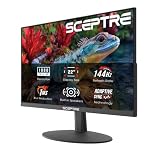
What’s changed recently is the collapse in OLED pricing. A 27-inch 1440p QD-OLED at 240Hz was a halo product two years ago; today it’s mainstream, and 480Hz OLED panels like the LG 27GX790A-B have pushed the ceiling higher still. Meanwhile, fast IPS hasn’t stood still — panels such as the AOC 25G51Z now hit 260Hz with a 0.5ms response for a fraction of the cost. The right answer depends entirely on what you play and where you play it.
As an Amazon Associate we earn from qualifying purchases at no extra cost to you.


⚡ Save on Your Next PC — Amazon Prime
Prime members get fast free shipping on the systems above, plus early access to Prime Day & Black Friday PC deals. New members get a 30-day free trial.
Watch: OLED vs IPS Gaming Monitor: 2026 Comparison — Video Review
Quick Verdict
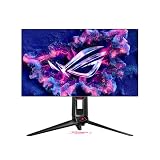
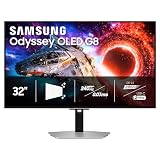
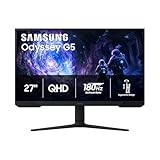
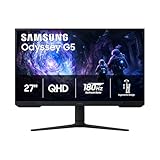
Buy OLED if image quality is the priority and you play a varied library of single-player, story-driven, or visually rich games. The Samsung Odyssey OLED G6 and LG 27GS93QE are the sweet spot for most people, while the Acer Predator X27U W1 adds a more adjustable stand and full HDMI 2.1 connectivity. Buy IPS if you’re a competitive FPS player on a budget, game in a bright room, or leave static HUDs and desktop windows on screen for hours — the AOC 25G51Z delivers tournament-grade motion clarity without the premium or the burn-in caveat.
Key Differences
- Contrast and black level: OLED produces true black with effectively infinite contrast, so dark scenes have no backlight glow. IPS typically lands around 1000:1, and shadows look grey rather than black in a dark room.
- Response time: OLED panels are rated at 0.03ms — roughly fifteen times faster than the 0.5ms IPS figure — which eliminates smearing behind moving objects and removes any need for overdrive tuning.
- Brightness: IPS holds high brightness across the entire screen indefinitely. OLED hits spectacular HDR highlights but dims full-field white, which matters in a sunlit room.
- Burn-in risk: Static elements can cause permanent image retention on OLED. Modern panels mitigate this with pixel refresh cycles, logo dimming, and three-year burn-in warranties, but IPS carries no risk at all.
- Text rendering: OLED subpixel layouts can produce slight colour fringing on small text. IPS uses a conventional RGB stripe and remains the cleaner choice for heavy productivity work.
- Price: A fast IPS panel costs substantially less than any comparable OLED, freeing budget for a GPU upgrade.
OLED Gaming Monitors
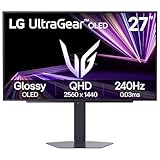
OLED’s advantage isn’t a spec-sheet win — it’s immediately visible. Per-pixel lighting means a starfield looks like actual stars against actual black, and HDR highlights punch out of dark scenes rather than washing the whole frame. The 0.03ms response of panels like the LG 27GX704A-B and 27GS93QE also means motion clarity is limited only by refresh rate, so a 240Hz OLED looks noticeably cleaner in motion than a 240Hz LCD. The LG 27GX790A-B pushes this to 480Hz with DisplayPort 2.1, which is genuinely transformative in fast shooters if your GPU can feed it.
The trade-offs are real but manageable. Full-screen brightness is modest, so a bright room needs blinds or a matte panel — Samsung’s glare-free coating on the Odyssey OLED G6 handles reflections particularly well. Burn-in remains a consideration if you keep the same taskbar and HUD on screen eight hours a day, though built-in safeguards and three-year warranties from LG, Samsung, and Acer have made this a low-probability concern for typical mixed use.
IPS Gaming Monitors
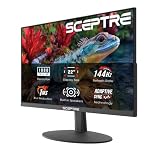
Fast IPS is the pragmatic choice, and in competitive gaming it’s arguably the smarter one. The AOC 25G51Z runs 1080p at an overclocked 260Hz with G-SYNC compatibility, and the smaller 25-inch panel keeps the entire playfield inside your central vision — a reason many esports professionals still prefer this size over 27-inch. Lower resolution also means high frame rates are achievable on mid-range hardware rather than requiring a flagship GPU.
IPS also wins on peace of mind. There’s no burn-in, no pixel-refresh routine, no dimming when you open a white document, and no anxiety about leaving a static scoreboard on screen. Colour accuracy is strong, viewing angles are wide, and features like a zero-bright-dot guarantee and VESA mounting cover the practical bases. What you give up is contrast: dark games look flatter, and HDR is nominal rather than transformative.
Which Should You Buy?
- For competitive FPS on a budget: pick the AOC 25G51Z — 260Hz, low input lag, and no burn-in worry during marathon sessions.
- For the best all-round image quality: pick the Samsung Odyssey OLED G6 or LG 27GS93QE for QHD 240Hz OLED at a sensible price.
- For maximum frame rate on a high-end GPU: pick the LG 27GX790A-B and its 480Hz DisplayPort 2.1 panel.
- For console gaming: pick the Acer Predator X27U W1, with dual HDMI 2.1 inputs, an ergonomic stand, and built-in speakers.
- For mixed work and play: pick IPS if you spend all day in spreadsheets, or the LG 27GX704A-B if gaming dominates and you can vary on-screen content.
Frequently Asked Questions
Is OLED burn-in still a problem in 2026?
Far less than it once was. Current panels use pixel-shifting, logo dimming, and automatic refresh cycles, and manufacturers including LG and Samsung back their gaming OLEDs with three-year burn-in coverage. Heavy static-content users should still lean IPS, but typical gaming and browsing use is low risk.
Is 480Hz actually noticeable over 240Hz?
Yes, though with diminishing returns. The jump from 240Hz to 480Hz on the LG 27GX790A-B produces visibly sharper motion in fast pans, but you need frame rates to match — otherwise a 240Hz OLED delivers nearly identical results for less.
Does OLED look worse in a bright room?
It can. OLED full-screen brightness is lower than IPS, so daylight glare is the main enemy. Matte or glare-free coatings, like the one on the Samsung Odyssey OLED G6, help considerably.
Should I choose 1080p or 1440p?
1440p is the better default for image quality and desktop space. 1080p at 25 inches, as on the AOC, remains popular in competitive play because it’s easier to drive at very high frame rates.
Final Verdict
OLED is now the default recommendation for anyone who wants the best-looking gaming monitor and plays a broad range of titles — the contrast, HDR impact, and 0.03ms motion clarity are advantages IPS simply cannot replicate. But fast IPS remains the right call for budget-conscious competitive players, bright-room setups, and anyone who leaves static content on screen all day. Match the panel to how you actually play, and either choice will serve you well.