Key takeaways
- Immersive curved gaming without the cost of a true bendable panel.
- High refresh rates up to 240Hz for smooth, competitive play.
- Ultrawide options that replace multi-monitor setups.
What's inside
The dream of one monitor that does everything, flat for work and curved for immersive gaming, is what makes bendable displays so intriguing. True bendable OLED monitors let you physically adjust the curvature on demand, but they remain rare and expensive. For most gamers, the practical path to that immersive curved experience is a fixed-curve gaming monitor at a fraction of the price, and that is where the real value lies today.
To help you decide between chasing a genuine bendable panel and buying a proven curved gaming display, we compared the fixed-curve monitors that deliver the immersion most people actually want, from SANSUI and Sceptre to the Alienware and INNOCN ultrawides. Here is how they compare.
As an Amazon Associate we earn from qualifying purchases at no extra cost to you.




🎮 Get More From Your Setup — Free
Prime Gaming gives you free PC games every month, in-game loot, and a free Twitch channel sub — plus fast free shipping on all the gear above. New members get a 30-day free trial.
Watch: Bendable Gaming Monitor: Review & Buyer’s Guide — Video Review
Design & Build
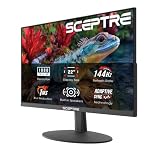
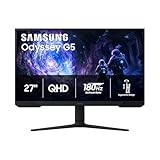
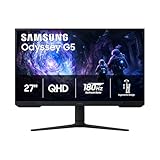
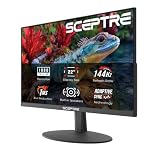
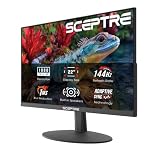
Fixed-curve gaming monitors deliver the wraparound feel without the bendable premium. The SANSUI 32-inch and Sceptre 24-inch use 1500R curves with metal or sturdy stands, while the Alienware AW3425DWM 34-inch ultrawide brings a premium 1500R WQHD design with refined styling. The INNOCN 49-inch super-ultrawide takes the immersion to its extreme with a sweeping 32:9, 1800R panel and a height and tilt-adjustable stand. The Samsung Odyssey G5 27-inch offers a flatter QHD gaming option for those who prefer less curve. Build quality centers on stable stands and VESA mounting for flexibility.
Performance
Speed and immersion define these panels. The SANSUI 32-inch runs a fast 240Hz FHD with 1ms MPRT and HDR for fluid competitive play, while the Alienware 34-inch delivers 180Hz WQHD with FreeSync Premium for a sharper, immersive ultrawide experience. The INNOCN 49-inch spans 3840×1080 at 144Hz with 99 percent sRGB and USB-C, effectively replacing a dual-monitor setup. The Sceptre 24-inch and Samsung Odyssey G5 27-inch cover budget and QHD sweet spots respectively. All support adaptive sync to keep gameplay tear-free, and higher refresh rates reward fast-paced genres.
Pros & Cons
- Immersive curved gaming without the cost of a true bendable panel.
- High refresh rates up to 240Hz for smooth, competitive play.
- Ultrawide options that replace multi-monitor setups.
- Fixed curvature cannot flatten for work like a genuine bendable display.
- Super-ultrawide panels demand a capable GPU and plenty of desk space.
Alternatives to Consider
If you want maximum immersion, the INNOCN 49-inch super-ultrawide or Alienware 34-inch WQHD deliver a wraparound experience. For fast competitive play on a budget, the SANSUI 32-inch 240Hz is a standout, and the Sceptre 24-inch is the value entry point. Those who prefer a flatter, sharper image should consider the Samsung Odyssey G5 27-inch QHD. A true bendable OLED remains a premium niche for now.
Frequently Asked Questions
What is a bendable monitor?
A true bendable monitor lets you physically flex the panel between flat and curved. They exist but are expensive, so fixed-curve displays are the practical choice for most.
Is a curved monitor better for gaming?
For immersive single-player and ultrawide gaming, yes. The curve draws you in and reduces edge distortion on large screens.
Do I need a strong GPU for these?
High refresh rates and ultrawide resolutions benefit from a capable graphics card, so match your GPU to the panel’s resolution and frame rate.
How much curve should I choose?
A 1500R or 1800R curve offers strong immersion on larger screens, while flatter panels suit those who split time between gaming and detailed work.
Verdict
Until true bendable OLEDs become affordable, a quality fixed-curve monitor is the smart buy. For immersion, the INNOCN 49-inch and Alienware 34-inch lead; for fast, budget-friendly gaming, the SANSUI 32-inch 240Hz is the standout. Choose based on how much you value curvature versus a flat work surface.