Key takeaways
- Buy memory as a matched kit of two sticks rather than two separate modules to guarantee they run together at rated speed.
- Enable XMP or EXPO in the BIOS immediately after building, or your fast kit will quietly run far below its advertised speed.
- Match the form factor to your machine: DIMM for desktops, SODIMM for laptops and many mini PCs.
- Prioritize a 6000MHz CL30 to CL36 kit over slower high-capacity sets, since balanced speed and timings help gaming more than excess capacity.
What's inside
Few PC-building questions generate as much confusion as how much memory a gaming rig really needs. RAM sits in a strange spot: too little and games stutter, hitch, or refuse to load, but far too much and you are simply spending money that would have bought a better graphics card. The right amount is a moving target that shifts with each new console generation and game engine, and 2026 has quietly moved the goalposts again as open-world titles and background apps grow hungrier.
This guide cuts through the noise and tells you exactly how much RAM to buy, what speed and configuration actually matter for gaming, and how to avoid the mistakes that leave performance on the table. You will learn why running two sticks beats one, why DDR5 speed and timings matter more than raw capacity past a certain point, and how to leave room for the future. Our recommended DDR5 kits above make it easy to match a proven, correctly configured set to your build.
As an Amazon Associate we earn from qualifying purchases at no extra cost to you.




⚡ Save on Your Next PC — Amazon Prime
Prime members get fast free shipping on the systems above, plus early access to Prime Day & Black Friday PC deals. New members get a 30-day free trial.
Watch: How Much RAM Do You Need for Gaming in 2026? — Video Review
The 2026 Sweet Spot: 32GB
For most gamers building in 2026, 32GB is the new default. It comfortably runs modern titles alongside a browser, chat app, and game launcher without forcing the system to swap data to slower storage. While 16GB still works for lighter or older games, newer releases increasingly use more, and 32GB gives you breathing room that keeps frame times smooth for years. Only content creators and heavy multitaskers who also game need to consider stepping up to 64GB.
Always Run in Dual Channel
How your memory is arranged matters as much as how much you have. A single large stick runs in single channel and can noticeably choke a graphics card, while two matched sticks run in dual channel and roughly double the effective bandwidth. This is why a 32GB kit sold as two 16GB modules is the right way to buy: it guarantees dual-channel operation out of the box. Kits like the CORSAIR Vengeance and Patriot Viper Venom sets above are sold in matched pairs for exactly this reason.
Speed and Timings on DDR5
On current DDR5 platforms, memory speed and latency genuinely affect gaming performance, especially on AMD systems where the CPU is sensitive to memory tuning. A kit rated around 6000MHz with tight CL30 to CL36 timings is the recognized sweet spot in 2026, offering excellent performance without paying a premium for extreme speeds that deliver diminishing returns. Just as important, you must enable the kit’s XMP or EXPO profile in the BIOS, because otherwise it defaults to a much slower baseline speed.
Don’t Forget Laptop vs Desktop Memory
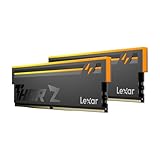
Memory is not universally interchangeable, and the physical form factor must match your machine. Desktops use full-size DIMM modules, while laptops and many compact systems use smaller SODIMM sticks. Buying the wrong type is a common and frustrating mistake, so confirm your platform before ordering. A kit like the Crucial SODIMM set above is designed specifically for laptops and small-form-factor builds, whereas the Vengeance and Lexar Thor Z kits are desktop DIMMs.
Plan for Headroom, Not Excess
The smartest memory buy leaves a little room to grow without wildly overspending. Filling both of a board’s two slots with a 32GB kit today is cleaner and often faster than starting with one stick and adding another later, since mismatched modules can refuse to run at rated speed. If you truly expect to need more down the line, a motherboard with four slots gives you an upgrade path, but for the vast majority of gamers a well-chosen 32GB dual-channel kit is all they will need this generation.
Tips
- Buy memory as a matched kit of two sticks rather than two separate modules to guarantee they run together at rated speed.
- Enable XMP or EXPO in the BIOS immediately after building, or your fast kit will quietly run far below its advertised speed.
- Match the form factor to your machine: DIMM for desktops, SODIMM for laptops and many mini PCs.
- Prioritize a 6000MHz CL30 to CL36 kit over slower high-capacity sets, since balanced speed and timings help gaming more than excess capacity.
Frequently Asked Questions
Is 16GB still enough for gaming in 2026?
It remains playable for many titles, particularly esports and older games, but an increasing number of new releases benefit from more, especially when you keep other apps open. If you are building fresh, 32GB is the safer choice that will stay comfortable far longer.
Does faster RAM actually improve frame rates?
Yes, within reason. On DDR5 systems, moving from slow baseline memory to a 6000MHz CL30 kit can measurably improve frame rates and smoothness, especially on AMD platforms. Beyond that sweet spot the gains shrink quickly, so extreme-speed kits are rarely worth their premium for gaming.
Can I mix different RAM kits?
It is best avoided. Mixing kits of different speeds, timings, or capacities can cause instability or force all sticks to run at the slowest common settings. Buying a single matched kit that meets your total capacity from the start is the reliable approach.
Should I get 64GB for future-proofing?
For pure gaming, 64GB is overkill in 2026 and the money is better spent on your graphics card or CPU. It only makes sense if you also do heavy content creation, run virtual machines, or keep dozens of demanding applications open alongside your games.
Conclusion
For gaming in 2026, the answer is refreshingly clear: a 32GB kit of DDR5, bought as a matched pair, running around 6000MHz with tight timings and its XMP or EXPO profile enabled. That combination gives you smooth frame times today, headroom for tomorrow’s releases, and no wasted spending on capacity or speed you will never use. Match the form factor to your system, buy the right kit once, and memory becomes one part of your build you can happily forget about.