Key takeaways
- Pixel density: A 27″ 4K panel delivers roughly 163 PPI versus about 109 PPI for 27″ 1440p — noticeably crisper text, foliage, and distant detail. At 32″, 4K keeps a healthy ~138 PPI while 1440p drops to a softer ~92 PPI.
- GPU demand: 4K requires more than double the rendering work. Expect roughly a 40–50% frame-rate drop versus 1440p at identical settings without upscaling.
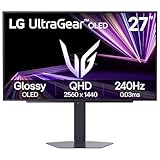
- Refresh ceiling: 1440p panels routinely hit 165–360Hz cheaply. 4K tops out lower for the money, though 160Hz IPS is now standard and 240Hz OLED exists at the premium end.
- Price per inch: A 32″ QHD curved display costs a fraction of a comparable 32″ 4K OLED, and less than most 27″ 4K panels.
- Console fit: PS5 and Xbox Series X output native 4K over HDMI 2.1 at up to 120Hz. 1440p works but leaves capability on the table.
- Dual-mode flexibility: Newer 4K panels can switch to a lower resolution at far higher refresh — the Acer VG270K V4 runs 320Hz in its DFR mode, and the ROG XG27UCSR does 1080p at 324Hz.
What's inside
- Watch: 1440p vs 4K Gaming Monitor: 2026 Guide — Video Review
- Quick Verdict
- Key Differences
- 1440p Gaming Monitors: The Frame-Rate Sweet Spot
- 4K Gaming Monitors: Detail, Console Readiness and Desktop Space
- Which Should You Buy?
- Related Guides
- Frequently Asked Questions
- Final Verdict
- Related Articles
- Related Guides
Choosing between 1440p and 4K used to be a simple budget question. In 2026 it is a genuine trade-off between raw frame rates and raw detail, because both resolutions now ship on panels that would have been flagship-tier three years ago. QHD monitors regularly hit 165Hz or higher for under $250, while 4K has quietly crossed the threshold from “cinematic but sluggish” to legitimately fast, with 160Hz IPS panels at mainstream prices and 240Hz QD-OLED at the high end.
- Watch: 1440p vs 4K Gaming Monitor: 2026 Guide — Video Review
- Quick Verdict
- Key Differences
- 1440p Gaming Monitors: The Frame-Rate Sweet Spot
- 4K Gaming Monitors: Detail, Console Readiness and Desktop Space
- Which Should You Buy?
- Related Guides
- Frequently Asked Questions
- Final Verdict
- Related Articles
- Related Guides
The deciding factor is no longer the monitor — it is your GPU, your seating distance, and the kind of games you actually play. A 1440p display lets a mid-range card push triple-digit frame rates with settings maxed. A 4K display delivers roughly 2.25× the pixels, which transforms open-world detail and text clarity but demands considerably more silicon (or aggressive upscaling) to keep frames high. Below we break down where each resolution wins, and which panels are worth your money right now.
As an Amazon Associate we earn from qualifying purchases at no extra cost to you.


⚡ Save on Your Next PC — Amazon Prime
Prime members get fast free shipping on the systems above, plus early access to Prime Day & Black Friday PC deals. New members get a 30-day free trial.
Watch: 1440p vs 4K Gaming Monitor: 2026 Guide — Video Review
Quick Verdict
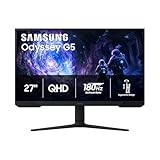
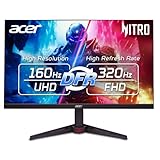
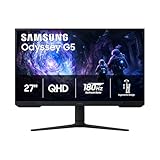
Pick 1440p if you play competitive shooters, own a mid-range GPU, or want the highest possible frame rate per dollar — something like the 32″ Samsung Odyssey G55C gives you a big curved 165Hz canvas without punishing your graphics card. Pick 4K if you play story-driven or open-world games, own a current high-end GPU or a PS5/Xbox Series X, or use the same screen for creative and desktop work. Monitors like the Acer Nitro VG270K V4 or the ASUS ROG XG27UCSR now offer 4K sharpness *and* high-refresh modes, which makes the old “sharp or fast, pick one” compromise much less painful.
Key Differences
- Pixel density: A 27″ 4K panel delivers roughly 163 PPI versus about 109 PPI for 27″ 1440p — noticeably crisper text, foliage, and distant detail. At 32″, 4K keeps a healthy ~138 PPI while 1440p drops to a softer ~92 PPI.
- GPU demand: 4K requires more than double the rendering work. Expect roughly a 40–50% frame-rate drop versus 1440p at identical settings without upscaling.
- Refresh ceiling: 1440p panels routinely hit 165–360Hz cheaply. 4K tops out lower for the money, though 160Hz IPS is now standard and 240Hz OLED exists at the premium end.
- Price per inch: A 32″ QHD curved display costs a fraction of a comparable 32″ 4K OLED, and less than most 27″ 4K panels.
- Console fit: PS5 and Xbox Series X output native 4K over HDMI 2.1 at up to 120Hz. 1440p works but leaves capability on the table.
- Dual-mode flexibility: Newer 4K panels can switch to a lower resolution at far higher refresh — the Acer VG270K V4 runs 320Hz in its DFR mode, and the ROG XG27UCSR does 1080p at 324Hz.
1440p Gaming Monitors: The Frame-Rate Sweet Spot
QHD remains the most sensible resolution for the majority of PC gamers, and the reason is simple: it scales beautifully with mid-tier hardware. A card in the $400–600 bracket can hold well above 100fps in most modern titles at high settings, which matters far more for perceived smoothness than the extra pixels would. In competitive shooters, motion clarity and input latency beat sharpness every time.
The 32″ Samsung Odyssey G55C illustrates the value case perfectly. You get a 1000R curved VA panel, 165Hz, 1ms MPRT, HDR10 and FreeSync in a size that would cost substantially more in 4K. The trade-off is pixel density — at 32″, QHD looks slightly soft up close, so sit a little further back or consider a 27″ QHD alternative if you work in text-heavy applications. For pure gaming immersion at a mainstream budget, it is hard to argue with.
4K Gaming Monitors: Detail, Console Readiness and Desktop Space
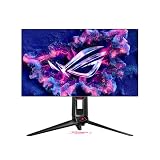
4K has become genuinely viable for gaming rather than just a productivity luxury. The Acer Nitro VG270K V4 packs a 27″ IPS panel with 160Hz, 0.5ms response, dual HDMI 2.1 ports and FreeSync Premium — a strong console-and-PC hybrid. The ASUS TUF VG27UQ1A covers similar ground with 160Hz, ELMB Sync and 95% DCI-P3 coverage, while the ROG XG27UCSR adds USB-C, G-SYNC compatibility and a 324Hz dual-mode trick for competitive sessions.
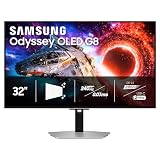
Further up the stack, the ASUS ROG PG32UCDMR is the enthusiast pick: 32″ QD-OLED, 4K at 240Hz, 0.03ms response, true 10-bit colour, 99% DCI-P3, 90W USB-C and OLED Care Pro burn-in protection. If you want a cheaper large-format route, the CRUA 32″ 4K 160Hz curved VA offers a 1500R panel with HDMI 2.1 and DP 1.4 at a fraction of the OLED price, trading contrast consistency and response time for value.
Which Should You Buy?
- For competitive FPS: pick 1440p, or a dual-mode 4K panel like the ROG XG27UCSR that drops to 1080p at 324Hz.
- For single-player and open-world games: pick 4K — the Acer Nitro VG270K V4 or ASUS TUF VG27UQ1A hit the value sweet spot.
- For PS5 or Xbox Series X: pick 4K with HDMI 2.1, so 120Hz output is fully supported.
- For a big screen on a budget: pick the 32″ Samsung Odyssey G55C, or the CRUA 32″ 4K if sharpness matters more than motion.
- For creators and no-compromise enthusiasts: pick the ASUS ROG PG32UCDMR QD-OLED.
Frequently Asked Questions
What GPU do I need for 4K gaming in 2026?
For 60fps at high settings, a current upper-mid-range card is the realistic floor. To make use of a 160Hz+ 4K panel in demanding titles you will want a high-end GPU plus DLSS or FSR upscaling, which is now standard practice rather than a compromise.
Is 1440p still worth buying?
Absolutely. QHD delivers the best frames-per-dollar of any resolution and remains the competitive standard. Unless you specifically want desktop sharpness or console-native output, it is still the safest recommendation for most builds.
Does 27″ or 32″ matter more at 4K?
At 27″, 4K is extremely sharp but may require Windows scaling for comfortable text. At 32″, density is more relaxed and games feel more immersive. Both are excellent; choose based on desk depth and viewing distance.
Should I worry about OLED burn-in?
Far less than you used to. Panels like the PG32UCDMR include pixel-shifting, logo dimming and panel refresh routines under OLED Care Pro. Varied content and sensible desktop habits make burn-in unlikely within a typical ownership period.
Final Verdict
If your priority is frame rate, responsiveness and value, 1440p is still the smart default — and a 32″ 165Hz curved panel like the Odyssey G55C delivers a lot of screen for the money. If you have the GPU headroom, play visually rich games, or want one display that handles a console and creative work as well as gaming, 4K is now fast enough to recommend without hesitation. Buy a 4K panel with HDMI 2.1 and a dual-mode option, and you effectively get both resolutions in one monitor.