Key takeaways
- Choose your resolution based on the graphics card you can afford, since a great monitor is wasted if your GPU cannot feed it.
- For most gamers in 2026, a 27-inch 1440p monitor at 165Hz or higher is the best all-around balance of clarity and smoothness.
- Match resolution to screen size: do not run 1080p on a large panel or expect a mid-range card to handle 4K comfortably.
- Prioritize refresh rate for competitive games and resolution for immersive single-player titles when your budget forces a choice.
What's inside
Resolution is one of the biggest decisions a gamer makes, because it shapes not only how sharp your games look but also how much you need to spend on the graphics card that drives them. The debate between 1080p, 1440p, and 4K is not about which number is objectively best; it is about finding the balance of clarity, frame rate, and cost that fits your games, your screen size, and your budget. Pick the wrong resolution and you either leave visual quality on the table or saddle yourself with a GPU bill that never quite delivers smooth performance.
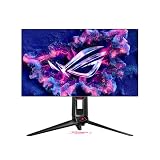
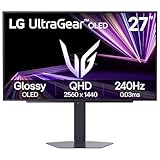
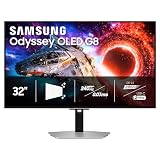
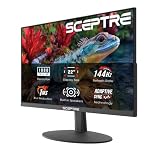
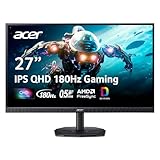
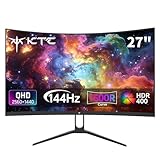
This guide compares the three resolutions honestly, explaining what each one looks like in practice, the graphics power each demands, and which type of gamer each suits best. You will learn how screen size and viewing distance change the equation, why refresh rate deserves a seat at the table, and how to avoid the common trap of buying more resolution than your hardware can feed. Our recommended 1440p monitors above show why this middle resolution has become the modern sweet spot.
As an Amazon Associate we earn from qualifying purchases at no extra cost to you.




⚡ Save on Your Next PC — Amazon Prime
Prime members get fast free shipping on the systems above, plus early access to Prime Day & Black Friday PC deals. New members get a 30-day free trial.
Watch: 1080p vs 1440p vs 4K for Gaming — Video Review
1080p: Fast, Affordable, Still Relevant
1080p remains the most accessible resolution and the easiest to drive at very high frame rates. For competitive players who care more about hitting 240 frames per second than counting individual pixels, a fast 1080p panel paired with a mid-range card is a proven, cost-effective combination. The trade-off is sharpness, which becomes more noticeable on larger screens where the pixels are spread thin. On a 24-inch monitor, though, 1080p still looks clean and responsive.
1440p: The Modern Sweet Spot
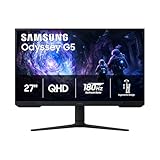
1440p, also called QHD, has become the resolution most gamers should target in 2026. It delivers a clear jump in sharpness over 1080p while remaining far easier to drive than 4K, so a strong mid-range or upper-tier card can push high refresh rates without strain. On a 27-inch monitor the pixel density looks crisp and detailed, making it ideal for both fast shooters and immersive single-player games. Panels like the Samsung Odyssey G5, ASUS TUF VG27AQ3A, and LG Ultragear above show why this is where most of the market has settled.
4K: Stunning but Demanding
4K delivers breathtaking detail and is genuinely transformative in slower, visually rich games where you can savor the scenery. The catch is the graphics power required: driving 4K at high frame rates demands a top-tier, expensive GPU, and even then you often lean on upscaling technology to keep things smooth. For gamers who prioritize visual spectacle over the highest frame rates and who have the hardware budget to match, 4K is the pinnacle, but it is overkill for many.
Screen Size and Viewing Distance Matter
Resolution never exists in isolation; it works together with screen size to determine how sharp an image actually appears. The same 1440p resolution looks razor-sharp on a 27-inch monitor but softer on a 32-inch one, because the pixels are stretched across more area. As a rough guide, 1080p suits screens up to 24 inches, 1440p shines from 27 to 32 inches, and 4K earns its keep on 32 inches and larger. Match resolution to size and you get the cleanest image for your money.
Don’t Forget Refresh Rate
Chasing resolution alone can lead you to neglect refresh rate, which arguably matters just as much for how a game feels. A high refresh rate makes motion look fluid and inputs feel instant, and most gamers would rather have smooth 1440p at 180Hz than choppy 4K at a lower rate. Because your graphics card has a finite amount of power, the smart move is to balance resolution and refresh rate together rather than maxing one at the expense of the other.
Tips
- Choose your resolution based on the graphics card you can afford, since a great monitor is wasted if your GPU cannot feed it.
- For most gamers in 2026, a 27-inch 1440p monitor at 165Hz or higher is the best all-around balance of clarity and smoothness.
- Match resolution to screen size: do not run 1080p on a large panel or expect a mid-range card to handle 4K comfortably.
- Prioritize refresh rate for competitive games and resolution for immersive single-player titles when your budget forces a choice.
Frequently Asked Questions
Is 1440p worth it over 1080p?
For most gamers, yes. 1440p offers a clear improvement in sharpness and detail on a 27-inch screen while remaining much easier to drive than 4K. As long as your graphics card can handle it, the upgrade from 1080p is one of the most noticeable visual improvements you can make.
Do I need an expensive GPU for 4K gaming?
Generally yes. Running 4K at high frame rates requires a top-tier graphics card, and even then modern upscaling is often used to maintain smoothness. If your GPU budget is limited, 1440p delivers a far better experience than 4K running poorly.
What resolution is best for competitive gaming?
Competitive players usually favor 1080p or 1440p because those resolutions let a card push the very high frame rates that matter in fast shooters. The extra detail of 4K is less valuable when your priority is maximum responsiveness and fluid motion.
Can my eyes even tell the difference at 4K?
It depends on screen size and how close you sit. On a large display viewed up close, 4K’s extra sharpness is clearly visible, but on a smaller screen at a normal distance the difference over 1440p shrinks. This is why matching resolution to screen size matters so much.
Conclusion
There is no single winner in the 1080p versus 1440p versus 4K debate, only the right choice for your games, screen size, and graphics budget. 1080p keeps competitive frame rates high and costs low, 4K delivers unmatched spectacle for those with the hardware to feed it, and 1440p sits comfortably in the middle as the sweet spot for most gamers in 2026. Balance resolution with refresh rate and match it to your GPU, and you will land on a setup that looks and feels great without overspending.